This blog post is the fifth in a series on South Asian folk Islam and its rituals. Click here to go to the first of these articles. Understanding the rituals of Folk Islam provides insight into the beliefs and practices of folk Muslims.
For some, it is strange to explore the worldview of folk Muslims. Many people think of Muslims as being stoic orthodox people who study and obey the Qur’an similarly to how evangelical Christians study and obey the Bible. Within Islam, there are vast numbers of Muslims who do follow orthodox Islam (click here for a discussion on three poles of South Asian Islam). However, the influence of Islamic folk practices on ordinary Muslims is profound and often overlooked. This lesson continues a look at folk Islamic practices by looking at tawiz (sometimes pronounced tabiz).
Tawiz are amulets that are commonly worn by Muslims in South Asia. Tawiz are black boxes on a black string that contain either written verses of the Qur’an, names of Allah, or prayers (Urdu dua). Similar amulets were used in Judaism, as seen in Matthew 23:5, where Jesus accused the scribes and Pharisees of enlarging their phylacteries to be seen by others. As with Muslims, the Pharisees used these as protective amulets that contained verses from Scripture or prayers. Making tawiz is a crucial function of spiritual leaders among folk Muslims.
A Hadith reports that Muhammad offered short prayers or recited verses from the Qur’an and then breathed on those for whom he recited these prayers. His companions did the same and begin writing these prayers or verses on paper and making tawiz. Now, tawiz exist for almost every purpose. For example, when my friend Muhammad began to follow Jesus, he did not have a job. So, his mother went to a dargah and had a tawiz made by her pir (click here to learn about Pirs and dargahs). Muhammad did not know what to do because he had not told his parents about his decision to follow Jesus. His mother was seeking a meeting with him to tie the tawiz on him, but he knew that he could not do this as a follower of Jesus. For Muhammad’s mother, the tawiz was a practical and powerful expression of her Islamic faith.
It is helpful to see how the tawiz relates to ordinary Muslims’ understanding of how the world works. There is a famous article by Paul Hiebert called “The Flaw of the Excluded Middle.” Hiebert’s premise was that many Westerners have a hard time understanding animistic or folk cultures. Westerners have a low perception of invisible spiritual forces and powers that are at work all around us. South Asian folk Muslims tend to have a heightened focus on spiritual forces and powers that are all around us. Westerners tend to focus on science and scientific answers to issues and problems. Folk Muslims often believe spiritual forces are at work in situations where a Westerner would apply scientific principles. Hiebert said that evangelical Christians often focus on the scientific and the eternal, such as heaven and hell while excluding the present spiritual forces at work in our day to day lives, thus the flaw of the excluded middle.
In The Unseen Face of Islam, Bill Musk applied Hiebert’s principle to folk Islam and developed the following chart.[1]
Cosmology of Popular Islam. Scan from Bill Musk, The Unseen Face of Islam: Sharing the Gospel with Ordinary Muslims at Street Level (Oxford: Monarch Books, 2003), 174.
Studying this chart helps us understand how folk Muslims perceive the world around them. On the left side are the words “this-worldly realm” and “other-worldly realm.” This-worldly realm means those being and powers that are around us at all times. In contrast, the other-worldly realm is distant and separate from us. On the right side are the terms “empirical phenomena” and “trans-empirical phenomena.” By empirical, Musk means what can and cannot be scientifically measured or observed. Animals, plants, and drugs can be scientifically observed and measured. Magic, curses, and spiritual beings cannot be scientifically observed and measured. For many folk Muslims, those things that are “this-worldly” and “trans-empirical” are the actual controlling forces in the world. These powers and beings exist in what Hiebert calls “the forgotten middle.”
The use of tawiz in South Asia is one example of a spiritual cure. It is an attempt by “living holy men” called pirs to provide spiritual power to their followers in the form of an object to ward of unseen spiritual forces, such as the evil eye, jinn, or magic. Often when a folk Muslim is sick, has a bad crop, has an accident, or loses their job, the source of their bad fortune is assumed to be unseen spiritual forces rather than scientifically observable causes.
Therefore, when ministering to folk Muslims, the “excluded middle” cannot be neglected. One of the most practical ways that Christians can minister is to seek for specific prayer requests from Muslim seekers and to pray for those requests. A folk Muslim will rarely refuse prayer from a Christian. As we pray, we demonstrate to Muslims the kind of relationship that we have with God. Often after praying for a Muslim, they are startled and tell me that they can see that I actually know God. As we continue to pray, we hope that God will show His power in the life of folk Muslims and answer these requests as a way of opening their hearts to the gospel.
There is some controversy about how to pray for Muslims. Some argue that we should follow the formulaic bismillah approach in prayer that Muslims often use. These prayers begin with the formulaic “In the name of Allah, most gracious, most merciful” that starts almost every Surah of the Qur’an. In contrast, I want to pray for my Muslim friends in the name of Jesus. To do this, I usually inform a Muslim that I am about to pray for that I am a disciple of Jesus. Therefore, I will pray for them in the way that Jesus taught His disciples. Then I begin with something like, “Our Father who lives in heaven” or “Father God.” I generally finish my prayers by saying, “I pray this through (Urdu ke vasile se) Hazrat Isa al-Masih. Amen.”
When Islam first spread to South Asia, it spread through Shia Muslims, first to the Sindh and then to the area around Lucknow. The father of Pakistan, Muhammad Ali Jinnah, was a secular Shia.[1] Today, Pakistan and India have significant Shia populations of at least 20 million per country.[2] Despite this large population, there are almost no gospel workers focused on South Asian Shias.
The purpose of this blog post is to help readers understand South Asia Shia Muslims to better share the good news of Jesus with them.
An artistic rendering of the Panchtan Pak. At the center is Allah. Top center is Muhammad then clockwise, the names Ali, Hasan, Husayn, and Fatimah (in Arabic). Symbols like this for the Panchtan Pak are common among Shia Muslims.
The Panchtan Pak[3]: Muhammad, Fatimah, Ali, Hasan, and Husayn
Go to an imambara (a South Asian Shia house of worship). You will see five names written in Arabic script, often in various banners, around the imambara. Those five names are Muhammad, Fatimah, Ali, Hasan, and Husayn. The significance of these five figures cannot be underestimated for Shias. Here are some brief details about each of the five:
Muhammad (570-632 AD). The prophet of Islam.
Fatimah (d. 632 AD). Daughter of Muhammad, wife of Ali, and mother of Hasan and Husayn. Often considered the ultimate Muslim woman, especially among Shias. Shias view Fatimah with a similar reverence that Catholics have for Mary.
Ali (d. 661 AD). Cousin of Muhammad, husband of Fatimah, father of Hasan and Husayn. Served as the fourth rightly guided Caliph from 656-661 AD. Ali is considered the first Imam by Shia Muslims. The teachings and writings of Ali are collected in the Nahjul Balaghah, which is a book of significance for Shia. When Ali became Caliph, a civil work broke out among Muslims, during which Ali was killed. The death of Ali signified a decisive split between Sunnis and Shias in 661 AD.
The first three rightly guided Caliphs were (1) Abu Bakr (632-634 AD), (2) Umar (634-644 AD), and (3) Uthman (644-656 AD). Most Shias believe that Ali should have been the leader of Islam during the period these other men led.
Hasan (d. 670 AD). Grandson of Muhammad, eldest son of Ali and Fatimah. Shias consider Hasan to be the second Imam. Most believe Hasan was poisoned at the direction of Mu’awiya. Mu’awiya became the Caliph of the Umayyad Caliphate, which was formed after the death of Ali.
Husayn (d. 680 AD). Grandson of Muhammad, second son of Ali and Fatimah. Shias consider Husayn to be the third Imam. Husayn was one of 70 men attacked by 4,000 Umayyad troops in the Battle of Karbala. The Umayyads attacked when Husayn refused to submit to Mu’awiya’s authority. Husayn’s death is considered sacrificial by the Shia community and is remembered in the annual Muhurram celebrations. Husayn’s tomb at Karbala is Shias’s most important pilgrimage site today.
Adoration of the Panchtan Pak is central to Shia thought.[4] For example:
Shias believe that the Panchtan Pak were without sin and infallible in their teaching.
Many Shias believe that the Panchtan Pak were created before Adam before the foundation of the world. The five are often considered the hand of Allah, through whom Allah made the world. In this view, they existed as mystical lights and later came into the world.
For Shias, Muhammad was the last and greatest prophet, and therefore, Muhammad’s life and teaching are central. However, a common phrase among Shias is, “Live like Ali; die like Husayn.” As a result, the lives and teaching of all the Panchtan Pak are of central importance. Shias find great importance in reading the Nahjul Balaghah, which contains the teachings and writings of Ali.
Fatimah is considered the ideal Muslim woman who connects the rest of the Panchtan Pak.
Husayn’s death is the focus of Muhurram, which is the most important Shia celebration., Husayn’s tomb in Karbala is a focus of worship and pilgrimage among Shias.
The Imamate
Most Shias in South Asia are Twelvers, although the Nazari’s of Pakistan are also a significant community. Twelvers believe in Twelve Imams. The Twelve Imams are:
Muhammad, son of Hasan (b. 870 AD). Called al-Mahdi by Shias and considered still alive in hiding until the end times, when he will come with Jesus as the deliverer of Shia Islam and bring justice to the world. The al-Mahdi disappeared in 878 AD and has communicated through intermediaries since.
Waiting for the al-Mahdi to come in the last days is central to religious Shia Muslims. Their end-time view of the al-Mahdi coming to bring justice is like the Christian view about the second coming of Jesus. In the Shia view, Jesus will also come in submission to the al-Mahdi.
In remembrance of the Imams, Shias in South Asia gather in imambaras, especially during Muhurram.[6]Imambara derives from a Persian term for “house of the Imams” and is a place to revere the Panchtan and the Twelve Imams. Imambaras generally house replicas of the tomb of Husayn that are called Taziah.[7] In Lucknow, Uttar Pradesh, two famous Imambaras are now tourist attractions.
Orthodox Shia Islam. Most Orthodox Shias focus primarily on Muhammad and the Qur’an. Many Christians will not even realize that they are talking to a Shia until later since many beliefs of Shias and Sunnis are similar. Orthodox Shias tend not to want to talk about the Panchtan and other issues until the question of Muhammad and the Qur’an is settled.
Folk Shias and Sufis. Historically, many Sufis in South Asia were Shia. Kwaja Moinuddin Chishti, whose tomb is in Ajmer, Rajasthan, India, was a Shia. The reason is that Shias give great respect to the family lineage of Muhammad. There is a caste of Muslims called the Sayyid in South Asia that claim to descend from the tribe of Muhammad. Most of the original Sufis that preached Islam in South Asia were Sayyid and claimed descent from Muhammad as part of their authority. In Sufi Islam, a silsila that traces a spiritual ancestry from Muhammad through Ali is essential. As a result, folk Islam is strong in Shia Islam in South Asia and has many expressions. Many folk Shia give great respect to the Panchtan.
Secularism and Shias. At the same time, many Shias are hard-working and secular-minded. Shias have put a significant emphasis on secular education with the result that many Shias are intelligent and open-minded. Because of their education and open-mindedness, many Shias are happy to read the Injeel (New Testament) and have open conversations about the gospel.
Tips for Evangelism
Muhurram as an open door for friendship. Shias love outsiders to come and learn about their faith, especially during Muhurram. If you want to build inroads among Shias, find when Muhurram is and make plans to visit your local Shia community. Go ready to learn and listen, but also to appropriately share about your own faith. Muhurram is an excellent opportunity for building friendships.
The martyrdom of Husayn and the death of Jesus. The centrality of Husayn’s martyrdom is mirrored in our faith with the death of Jesus. Do not be surprised if a Shia interjects with this story when you share the gospel. Likewise, suppose your Shia friend shares about the death of Husayn. In that case, it is an appropriate time for you to ask if you can share about the sacrificial death of Jesus and what it means for you. In my experience, our gospel presentation also functions well among Shias. Click here for a blog post on that tool.
The Panchtan Pak and the preeminence of Jesus. The Panchtan Pak are a significant barrier to Shias understanding the gospel. Their minds will automatically compare Jesus with these five as you share. The Five Special Things about Jesus are a great tool to use with Shias to demonstrate the uniqueness and greatness of Jesus. The Five Special Things are: (1) His birth, (2) His miracles, (3) His teaching, (4) Hiss death, and (5) His resurrection. These five things are part of our gospel tool (click here).
Because Shias are a smaller community, they tend to be non-violent. Shias in South Asia are often the victims of attacks by Sunnis but rarely attack other communities. They want peace with others and are very open to religious discussions.
Last, pray for your Shia friends!
Subscribe to No Cousins Left to receive updates from each our blog posts!
[1] Jinnah famously converted from Ismaili Shia Islam to being a Twelver Shia to avoid conflict control by the Aga Khan.
[2] Research on the number of Shia per country is weak. After Iran, Pakistan and India may have the second and third largest Shia populations. However, the Shia population in Iraq is similar. Iran has the largest Shia population in the world.
[3] Panjtan Pak is the South Asian name for these five figures and derives from Persian. In Arabic, they are called Ahl al-Kisa.
[4] Note that multiple Shia Islam schools do not agree about their nature. What is written here is from my experiences interacting with South Asian Shias.
[5] Another Shia Muslim sect called Ishmailis holds that Ishmael, son of Ja’far (d. 775 AD), was the seventh and last imam.
[6] Shias build imambaras in South Asia, but most Shias globally do not use them.
[7] Taziah is also used in reference to plays about the martyrdom of Husayn that are common during Muhurram.
A pulpit inside of an imambara, a Shia place of worship.
In 1791, William Carey published An Enquiry, effectively launching the modern missions movement. His argument was that Christians needed to take up the Great Commission by forming mission boards to launch missionaries to the nations. Carey led the charge by going to India in 1792. In An Enquiry, Carey detailed the greatest centers of lostness in the world, making special note of a sizeable Muslim population that had not heard the gospel of our Lord Jesus (Carey, 62, 64).
The barriers that stop Christians from loving their Muslim neighbors are less about issues within the Muslim community and more about our hearts. The most significant obstacles preventing Christians from ministering to Muslims are heart issues. Until these heart issues are appropriately addressed, there is no benefit in training them to share the gospel with Muslims. Therefore, the purpose of this blog post is to help Christians identify and address the heart issues that inhibit them from being used by God to reach Muslims.
The first three barriers (Fear, Anger, and Hopelessness) are heart issues. The last two barriers (language/culture and lack of ministry tools) are what training can provide.
Heart Barrier #1 – Fear. Many Christians are afraid of Muslims, and therefore, they will not go to them to share the gospel.
Let me share a common experience that I have had. It is common that when I train a group of people how to share the gospel with Muslims, I can see their hearts close as I teach. Smiles turn into frowns, and arms become defensively crossed.
Inside the minds of my listeners, there is often a dialogue that goes something like this: “Doesn’t this guy know that Muslims are dangerous? If we go and try to do what this guy says, we’re going to get killed! We can’t go talk to Muslims about Jesus!”
I call this inner dialogue the fear barrier. Fear is the strongest barrier that keeps Christians from talking to Muslims about Jesus. Here are four ways that the fear barrier can be dispelled.
Trusting in God to protect us. My favorite verse on this subject is “Do not fear, for I am with you; do not be afraid, for I am your God. I will strengthen you; I will help you; I will hold on to you with my righteous right hand” (Isaiah 41:10). In fact, the most common command in Scripture is, “Do not fear.” Ultimately, we do not need to fear when doing God’s will because He is our defender. He will protect us.
Remember that “to live is Christ and to die is gain” (Philippians 1:21). Even though God is our defender, it does not mean that we will not die while doing His work. Jesus was crucified while teaching God’s Word. Likewise, almost all His apostles died violent deaths for proclaiming the gospel. While Paul awaited execution in Rome, he wrote, “The Lord will rescue me from every evil work and will bring me safely into His heavenly kingdom” (2 Timothy 4:18). While expecting to die physically, Paul trusted God to safely bring him into His kingdom. The gospel means that we have no fear of death. Even if we were to die while proclaiming the gospel, we are taken immediately into the presence of our God.
Knowing that Muslims are without eternal hope. In contrast to our hope, if our Muslim neighbor dies today, then they go before the judgment seat of Christ (Heb 9:27). They are without hope in His judgment. If we truly believe the gospel, our eternal future is secure in Christ! How we can withhold this message that brings eternal hope from those who have never heard (Rom 10:9-15).
Realizing that most Muslims are peaceful people. While many Christians believe that Muslims are violent people, the reality is that most Muslims simply want to live peaceful and quiet lives. In fact, the number of Muslims who seek to express their religion violently is minimal when we consider Muslims in South Asia. For this point, the Muslim Triangle is helpful. Secular and folk Muslims, as a rule, are not violent in their faith. Since folk Islam is the most common expression of Islam in South Asia, we know that ordinary Muslims in South Asia tend to be non-violent. In addition, most of the major orthodox Muslim groups in South Asia reject violence in the name of Islam.[1] Therefore, we can have confidence that most South Asian Muslims desire to live peaceful lives.[2]
To learn more about the Muslim triangle, click here!
Heart Barrier #2 – Anger. Many Christians are angry with Muslims, and therefore, they do not want to share the gospel with them. For some, anger is not the right word. Instead, bitterness or animosity would be more appropriate. What I mean is that many Christians see Muslims as other than themselves and do not have a love for their Muslim neighbors. One good biblical picture of this animosity is the prophet Jonah. God sent him to proclaim a message of repentance and forgiveness to Nineveh, who were the enemy of his people. Because Jonah hated the people of Nineveh, he sought to disobey by traveling the opposite direction from Nineveh. Likewise, many Christians are not ready to share the gospel with Muslims because they do not have the love of Christ for Muslims.
However, Jesus died for Muslims, just like He did for everyone else. Revelation 5:9 praises Jesus, saying, “You purchased people for God by Your blood from every tribe and language and people and nation.” It is clear, from this verse, that Jesus died for every type of person on the planet, including every Muslim people group. Therefore, God loves Muslims!
If God loves Muslims and we do not, our hearts are not like God’s. So, we need to ask God to transform our lives, and we should ask God to give us His love for Muslim peoples!
Jesus taught us that there is no benefit of only loving people like us. In fact, He taught us to love our enemies (Matthew 5:43-47). Therefore, if you feel in your heart that Muslims are your enemy, then your biblical obligation is to love them. Let me suggest that you pick a Muslim group or country and pray daily for that group to begin loving them. As you pray for them, God will undoubtedly change your life and help you love them as He loves them.
Finally, Jesus provided the best model of loving those who did not love Him. When He was being crucified, He said, “Father, forgive them because they do not know what they are doing” (Luke 23:34). To be like Jesus means to have a heart ready to forgive others, even if they were killing you. In fact, Stephen followed the same example when he died for proclaiming the gospel and was the first martyr in the book of Acts. As he died, he said, “Lord, do not hold this sin against them!” (Acts 7:60)
Heart Barrier #3 – Hopelessness. Many Christians do not believe Muslims can come to Christ, and therefore, they do not think it is worth it to minister among them. Perhaps my favorite story about this issue is a friend whose father was a Muslim-background believer. He was unwilling to share the gospel with his Muslim neighbors despite his background. He would tell me, “It is impossible for a Muslim to come to Christ!” I kept reminding him about how the Lord drew his father to Christ, so he said, “It is very difficult for Muslims to come to Christ.”
So, I asked him how long it had been since he had shared the gospel with a Muslim, and he admitted that it had been more than ten years. So, finally – perhaps even just to make me quiet – he agreed to try. A few weeks later, this same man excitedly told me how he had shared the gospel with one Muslim man and how that man had repented and believed!
Sometimes, Muslim ministry is slow. However, the Lord is in control. If we say that Muslims can’t come to Christ, we are really saying that Muslims are the one people group on earth strong enough to resist God’s will! Our God made the heavens and the earth. He brought His people out of Egypt through Moses. He raised Jesus from the dead. Our God can do all things! Perhaps the greatest antidote to the hopelessness barrier is to meet Muslims who have come to Christ and hear their stories. In fact, more Muslims are coming to Christ now than at any other time in history. Across South Asia, many thousands of Muslims are coming to Christ. Also, significant movements of Muslims to Christ have happened in countries like Indonesia, Ethiopia, Algeria, and Iran. If you want to learn more about Muslims coming to Christ, I recommend reading David Garrison’s A Wind in the House of Islam.
Summarizing the Heart Barriers
Suppose the three heart barriers of Fear, Anger, and Hopelessness are not addressed. In that case, no amount of training about reaching Muslims with the gospel will be effective. The question is, are you ready to let God change your heart? Are you prepared to love Muslims and work among them? Our God has a great desire to bring Muslims into His kingdom, and he is ready to use you if your heart is ready to be soft towards Him. Please stop now and pray that God will take away your Fear, Anger, and Hopeless. Ask that He will replace it with His love for Muslim peoples.
Now that we have addressed the three heart barriers, we can briefly discuss the last two barriers. These are practical barriers that can be given in training settings.
Barrier #4 – Language and Culture. To communicate the gospel with Muslims, we should learn some language and culture. I am going to give advice for multiple settings here.
For those serving among Muslims in the West. To start your work, you don’t have to learn a Muslim language (but you may want to after some time!). In fact, you probably serve among Muslims who speak multiple languages. It is not practical or possible for you to learn all these languages. However, it will be helpful for you to learn some critical Arabic phrases and some Muslim culture. A great first step would be to read Nabeel Qureshi’s Seeking Allah, Finding Jesus. You will discover how a Muslim in the West perceives the West and some key Arabic phrases that most Muslims use. Also, begin by learning one Arabic term, assalamu alaikum. This is the most common greeting for Muslims around the world. Whenever you see someone you think might be a Muslim, simply say this phrase with a smile. No doubt, you will build many relationships!
For expatriate workers in South Asia. Work diligently to master at least one local language! One of my most joyful tasks is to disciple Muslim-background believers in Urdu, digging through the Bible with them. As my ability to speak Urdu increases, my usefulness to local believers increases. Please do not disregard language study!
For South Asian Christians. Many Christians speak in Hindustani (India) or Urdu (Pakistan) that is very different from the Urdu that Muslims use. Therefore, the gospel is misunderstood when they share it with Muslims. South Asian Christians can learn how to speak in a Muselmani version of their language with minimal effort.
Barrier #5 – Lack of Ministry Tools. Many Christians do not know how to communicate the gospel with Muslims or disciple those ready to believe. Thankfully, we are beginning to add more and more tools for this to our blog!
We will continue to blog more and more of our tools on sharing the gospel with Muslims, disciple Muslim-background believers, and plant churches among Muslims. Subscribe below to No Cousins Left to get these updates!
[1] For example, Deobandis and Tablighi Jamaat tend towards non-violence and are two of the largest orthodox schools of Islam in South Asia. However, it has been noted that those few Muslims who have become extremists first became orthodox, often through the Deobandis and Tablighi Jamaat movements. They then take the next step into violent extremism. In fact, some have mistaken these two movements as advocating extremism because most terrorists from Muslim backgrounds in South Asia have been influenced by one or both schools.
[2] In South Asia, sectarian violence between religious communities can sometimes make whole communities appear violent. The prime example was the violence between Hindus and Muslims during Partition. During that period, both communities killed large numbers of the other community. This sectarian violence between religious communities is different from Muslims, who are violent for pursuing religious goals. In fact, a significant amount of this religious violence is because something disturbs the communal peace, resulting in violence from both communities.
This blogpost was written for a training manual.Therefore, it is in a bullet point style. This blog post is a continuation of special issues in discipling Muslim-background believers (MBBs).
Persecution is normal for MBBs. The Bible describes persecution as a normal experience for followers of Jesus. Therefore, MBBs should be taught that persecution is normal as they begin to follow Jesus. Efforts to completely eliminate persecution lead to unbiblical compromise. Jesus told His disciples, “I am sending you out like sheep among wolves” (Matt 10:16a). When He sent them, He knew that most of His closest disciples would die for obeying His commands. But our Lord sent them anyways. Persecution is a normal part of the Christian life. Paul told Timothy, “all who want to live a godly life in Christ Jesus will be persecuted” (2 Tim 3:12). There are a few ways we need to apply this to our lives.
First, if we share the gospel with Muslims, we must know that the people we share could face persecution – even death – because of the gospel we brought to them. However, if the gospel is true (and it is!), then it is the only hope for Muslims to be reconciled to God through Jesus Christ. To share the gospel with Muslims, we must fully believe that it is better to have eternal life with Christ than have a long life on earth.
Second, if we want to call Muslims to follow Jesus, we need to be ready to stand with them and face persecution.
Persecution should be avoided and reduced when possible. While persecution is a normal experience for MBBs, not all persecution is necessary or helpful. While Jesus told His disciples that He was sending them as lambs among wolves, He finished that verse by saying, “be shrewd as serpents and as innocent as doves” (Matt 10:16b). Sometimes, foolish actions by MBBs or those working with them lead to excess persecution. We need to be shrewd and innocent as we disciple MBBBs in the early stages. Here are five activities that can invite undue persecution:
Unforgiveness or bitterness in MBBs. Some MBBs are angry with Islam when they first follow Jesus. I was introduced to one young believer who was facing significant persecution as a new believer in Jesus. As I talked to him, I realized that he had considerable anger in his heart towards his father and the whole Muslim community for deceiving him. As a result, he had significant bitterness that led him to disrespect his father and the leaders of his childhood mosque. The young man asked me to help him flee from his family and community. Instead, I mentored him to help him walk through his bitterness. When he forgave his father, he was able to confess his own shortcomings to his father. The result was that he was restored in fellowship with his family and lived publicly as a follower of Jesus in his family’s home. As the character of MBBs is transformed, their family will notice. As they live holier and holier lives, their society is less likely to attack them.
Changes in behavior that move MBBs outside of cultural norms. Many years ago, I was in Central Asia when some young Muslim college students repented and believed in Jesus. In our foolishness, we did not adequately think through cultural issues. Within a few weeks, these young men began wearing Western clothes, even shorts, to class. They took on not only Christ but also many aspects of our Western culture. When it became known that these young men had been baptized in Jesus’ name, a significant part of the offense was how Westernized the young men had become. Instead, MBBs should retain their culture while separating from Islam religiously.
MBBs attacking Islam, the Qur’an, or Muhammad. The brother above, with the unforgiveness issues, took out his anger by sending an article to his Muslim friends that Muhammad was demon-possessed and an immoral man. His friends passed that article to their imam, which eventually led to a fatwa being written against the young man. If the young man had been trained in better ways to proclaim Jesus to his friends, the offense would have been reduced. The persecution would likely have also been reduced, or perhaps not have occurred.
Financial help, especially from foreigners. Years ago, my MBB friend was attacked by others in his village, resulting in a broken arm. Unfortunately, there was no medical care available in that brother’s village. His fellow villagers told him that he should ask Jesus to help him, and they refused to help him go to the hospital. I offered to go pick up this MBB brother and get him appropriate medical care. But this MBB brother was wiser than me. He said, “If you come to pick me up from my village, I will never be able to come back. Then who will bring the gospel to my people?” I prayed with grief for this brother daily for about a week. Then, this MBB brother called me and told me, “The village elders made a decision. They said that I was living like a better Muslim than the rest of the village. They made the men who beat me publicly apologize, take me to the hospital, and even pay for my medical care!” If I had swooped in and helped, then this brother might not be a witness to his own people today.
Being baptized by outsiders. In some contexts, outsiders, especially foreigners, baptizing MBBs has led to MBBs being rejected by their community. Ideally, MBBs or near culture workers baptize MBBs.
Persecution and MBB evangelism. MBBs often face persecution as they go public in their faith and proclaim Jesus as Lord (read here about MBBs going public in their faith). This persecution of MBBs can be reduced as they are trained in ways to share the gospel that are culturally sensitive (here is how we train MBBs to share the gospel). However, the gospel is ultimately offensive to many Muslims! If an MBB is genuinely transformed by the power of Christ, they will also want their families to follow Jesus. Evangelism should not be discouraged by new MBBs to avoid persecution. Instead, efforts should be taken to prepare MBBs to stand in the persecution that comes from sharing Christ.
Levels of persecution against MBBs through analysis of persecution in Pakistan. In 2005, Edward Evans wrote a study about 70 Pakistani Muslims (63 men; 7 women) who came to Christ in Pakistan from 1947-1998 whose decision to follow Jesus became public to their families (buy the Kindle book here). The two tables below provide a snapshot of the severity of persecution during a particular period in one context. Table 1 rates the severity of persecution of those 70 MBBs. Table 2 describes the eventual outcome of the faith of those MBBs in relationship to their families.
A few reflections on Table 1:
Only one of 63 male MBBs in this study died for their faith. In contrast, 42% of women were killed. Women in Pakistan faced great difficulty being the first in their families to follow Jesus.
50% of MBBs in this study faced only moderate persecution or less, and 33% faced severe persecution. This means that 17% faced death or life-threatening persecution for their faith.
A few reflections on Table 2:
The ideal is that the first believer will result in others from their family repenting and believing. However, this only occurred in 23% of cases.
An additional 49% of MBBs either fully reconciled with their family or developed a truce with them. Adding this to the 23% who were evangelistically effective in their families, 72% of MBBs were able to live in their community after faith.
Only 8% had families that remained antagonistic.
Since 50% of cases were severe, life-threatening, or resulted in murder, many who initially faced significant persecution were able to eventually reconcile with their families.
Severity of Persecution
Number of Cases
% of Cases
Description
Murder
4
6%
Killed for their faith in Christ. 3 of 7 women were killed for their faith.
Life-threatening
8
11%
Attempt made to kill believer, usually by male family member(s)
Severe
23
33%
Range of issues, such as physical beatings, deprived of food/needs, lost job, expelled from family, etc.
Moderate
24
34%
Intense emotional pressure from close family members and boycott from the wider circle of relatives
Mild
6
9%
Family disapproval
Neutral
5
7%
No reaction. All five were Sindhis
Positive
0
0%
No positive reactions were recorded
TOTAL
70
Table 1. Severity of Persecution of 70 MBBs in Pakistan from 1947-1998.[1]Table 1. Severity of Persecution of 70 MBBs in Pakistan from 1947-1998.[1]
Eventual Relationship with Family
Number of Cases
% of Cases
Some family members became followers of Jesus
11
23%
Follower of Jesus was fully reconciled to family, but family remained Muslim
8
16%
Family maintained a “truce” with neither hostility nor full acceptance
16
33%
Family remained antagonistic towards the follower of Jesus
4
8%
Follower of Jesus reverted to Islam or at least outwardly conformed to Islam
10
20%
TOTAL
49
Table 2. Eventual outcomes of family relationships off MBBs with their families in Pakistan from 1947-1998.[2]
Practical steps for dealing with persecution. Evan’s described seven levels of intensity of persecution. Our response to the persecution of MBBs should be different based on the level of persecution.
Murder. When an MBB is murdered for their faith, the results are often significant. Murder often leads to government investigations, more widespread persecution, and believers retreating in fear. There are two prominent martyrdoms in Acts, Stephen (Acts 7:57-60) and James (Acts 12:1-2). Stephen’s persecution led to “a severe persecution” against the church in Jerusalem, leading to believers being scattered in many areas (Acts 8:1). As they went to new locations, they shared the gospel, and the kingdom of God advanced (Acts 8:4-5; 11:19-21). However, the fear of the believers was significant enough that they were not ready at first to accept Paul as a believer after his encounter with Jesus (Acts 9:26). The murder of James led to Peter being arrested (Acts 12:3). After God delivered Peter, he hid so that Herod could not find him (Acts 12:19). Even when believers, like Stephen, were murdered in Acts, God used these circumstances for kingdom advance.
For those facing life-threatening or severe persecution, there is a biblical precedent for temporarily leaving the circumstance. Paul was lowered by a basket from the walls of Damascus (Acts 9:25). Peter went into hiding (Acts 12:19). Paul often fled from persecution. The ideal is that MBBs do not permanently flee from their homes. In the Pakistan study, many were able to reconcile with their families after significant persecution. In those circumstances, families were initially upset. Still, MBBs were eventually able to reconcile or build a truce with their families. An MBB fleeing from their family should be considered an extreme response and avoided in all but urgent cases. However, we need to be ready for when MBBs need to flee from a dangerous situation. I have personally told a few MBBs that if they face a circumstance where they feel significantly threatened to get out immediately and call me to help them. Even though none have taken me up on the offer, knowing that they are not alone is a great help to these believers.
MBBs facing mild to severe persecution need support from followers of Jesus. In Evans’ study, 67% of MBBs faced persecution ranging from family disapproval (mild) to being boycotted by their family (moderate) to severe forms of persecution, like beatings or losing their job. In most cases, MBBs will face difficulties for their new lives in Christ, and we need to be ready to be their family as we lead them to Christ.
Persecution and the family of MBBs. Jesus said, “I did not come to bring peace, but a sword” (Matt 10:34). He then went on to describe how the gospel would divide families in such a way that “a man’s enemies will be the members of his household” (Matt 10:36). MBBs should follow Jesus’ commands to love their enemies and pray for those persecuting them (Matt 5:44). These commands should first and foremost be followed in the family. In this way, MBBs are “innocent as doves” (Matt 10:16) regarding their families.
Facing persecution with love. Turning the other cheek (Matt 5:39) is not a position of weakness. Instead, it is a position of strength to be able to face persecution with love. After all, Jesus gave the greatest model, saying, “Father, forgive them, because they do not know what they are doing” (Luke 23:34. Of course, He made that statement as He was being killed. While the bar is high, the Holy Spirit is powerful and can empower us also to love our persecutors. MBBs who have the honor of joining with Christ in His sufferings in this way perhaps have an opportunity to understand the gospel that is greater than most Westerners ever have a chance.
Please subscribe to No Cousins Left to receive each of our blogposts!
[1] For complete details, see Edward Evans, “’Coming to Faith’ in Pakistan,” in From the Straight Path to the Narrow Way: Journeys of Faith, ed. by David Greenlee (Waynesboro, GA: Authentic, 2005), Kindle locations 1621-1635.
We use this diagram in our trainings to help South Asian Christians understand the diversity of Islam in South Asia. Discussing this diagram helps us to have clear conversations about the different types of Muslims they are likely to meet.
South Asia contain the greatest concentration of Muslim lostness on the planet (read here). South Asia also has the greatest diversity of Islam in the world.
The Muslim Triangle is a simple training tool for helping people understand the diversity of South Asian Islam. Those with significant experiences will realize that this diagram is insufficient to capture the complexities of South Asian Islam. However, it is a helpful tool for understanding the broad strokes of diversity among Muslims in South Asia.
The Muslim Triangle has three poles: (1) orthodox, (2) folk, (3) secular. By far, the folk Muslim pole is dominant in South Asia. Here is a brief description of each pole.
Orthodox Islam is the view that Islamic belief and practice should be derived by reading the Qur’an and Hadith and obeying those texts. Orthodox Muslims focus on proper Islamic theology and practice. Usually, when people think about Islam, orthodox Islam is the picture that comes to their mind. However, in South Asia, orthodox Muslims are in the minority.
Folk Islam is a local variety of Islam that blends Sufism, local traditions, and other elements to develop a practical Islam to address their particular “needs.” The primary focus of folk Islam is to develop a spirituality that can provide practitioners blessing (answered prayers, good crops, high test scores, etc.) and protection (from accidents, evil spirits, etc.). Folk Islam usually looks very different than orthodox Islam. However, sometimes folk Islam looks like orthodox Islam but has a significant amount of folk Islamic belief just below the surface. The easiest way to understand South Asian folk Islam is to study its rituals. Click here to go to the first of a series of articles about folk Islamic rituals in South Asia. For those familiar with the prosperity gospel, folk Islam can be understood as “prosperity Islam.”
Secular Islam is familiar to most Westerners. Secular Muslims blend secular thought and materialism with Islam. Secular Islam has different flavors in South Asia but tends to focus on education, career advancement, and/or politics.
When training on the Muslim triangle, seek to find a local sect or place to use for each of the three poles. For example, in some areas of South Asia, many people understand Deoband, Ajmer, and Aligarh as places for these three poles. However, in other areas of South Asia, these three areas are relatively unknown. Discuss this triangle with a few people and discover the best ways to describe this tool in your area.
Let me describe these three places that we use to describe the poles of the Muslim Triangle.
Deoband (Orthodox Islam pole). Deoband is a small city in the Saharanpur District of Uttar Pradesh in North India. Deoband is home to Darul Uloom, which many consider to be the second most prominent madrassa in the global Muslim movement (with Al Azhar in Cairo being the most prominent). Darul Uloom was founded in 1866 as part of Islamic reform movements in the subcontinent. Its formation was partially in protest of British rule in India. At present, Darul Uloom has an impressive campus with more than 5,000 students in residence. This seminary has spawned a series of Deobandi madrassas across the subcontinent and the world. Many mosques and madrassas across South Asia are led by graduates of Darul Uloom or one of the many other madrassas that spun off this institute.
Ajmer (Folk Islam pole). Ajmer is a city in Rajasthan in North India. Ajmer is home to the tomb of a Sufi saint who is commonly known as Kwaja Garib Nawaz (meaning “the benefactor of the poor”). Kwaja Garib Nawaz is the first of the four great Sufi mystics who spread Islam across South Asia. The tombs of these four remain important places of pilgrimage for Folk Muslims until today. It is common that Muslims (or others!) will go on pilgrimages to these tombs in search of help. Perhaps a family member is sick, or demon possessed, or there is a financial problem in the family. They believe that these mystical saints can help them from their tombs. The four most prominent mystics in South Asia are:
Kwaja Garib Nawaz (d. 1236 AD), buried in Ajmer, Rajasthan, India.
Qutbuddin Bakhtiar Kaki (d. 1235 AD), buried in Mehrauli, Delhi, Inda. He was the primary disciple of Kwaja Garib Nawaz.
Baba Farid (d. 1266 AD), buried in Pakpattan, Punjab, Pakistan. He was the primary disciple of Qutbuddin Bakhtiar Kaki.
Hazrat Nizamuddin Aulia (d. 1325 AD), buried in Nizamuddin, Delhi, India. He was the primary disciple of Baba Farid.
Aligarh (Secular Islam pole). Aligarh is a city in Western Uttar Pradesh in India and home to the famous Aligarh Muslim University (AMU). AMU was started in 1875 by Sir Sayyid Ahmed Khan (d. 1898). Sir Sayyid believe that Muslims in South Asia had fallen behind in society because of a lack of education. Therefore, he started AMU to develop Muslim doctors, lawyers, teachers, and other professionals. AMU continues to be a prominent university in South Asia for developing Muslim professionals.
The purpose of this training is to help Christians understand folk Islam and to see that these kinds of Muslims should be the focus of our ministry. Here are a few things to keep in mind:
In the middle of the diagram is the Ordinary Muslim. What I mean is that the ordinary Muslim is pulled by all three poles in South Asia, however the common Muslim is closest to the pole of folk Islam. For example, a young Muslim man desires to get a good education so that he can get a good job to have a good life. These goals sound like secular Islam. However, he goes to the dargah to ask the blessing of a saint to help him in his studies and gets an amulet there to help him have the saint’s blessing to achieve his goals. At the same time, he watches the videos of Zakir Naik, an orthodox Muslim, on YouTube. This ordinary Muslim is affected by all three types of Islam.
Many ministries seeking to engage Muslims in South Asia focus on reaching orthodox Muslims. They focus on learning the Qur’an and Hadith, learning apologetics, etc. This triangle allows us to celebrate the work of those ministries and show that they are reaching orthodox Muslims, which are a significant group of South Asian Muslims.
However, folk Islam is the dominant pole in almost every area of South Asia (you must determine if this is true for your context). Phil Parshall asserted that 70% of Muslims globally are Folk Muslims (Bridges to Islam, 2). In South Asia, my experience is that this is true here as well. However, a major shift is occurring causing more Folk Muslims to become orthodox or secular. Therefore, more laborers need to be trained to engage folk Muslims.
Near-culture workers (i.e., Christians in South Asia who are trying to reach South Asian Muslims – click here for more) often struggle to reach orthodox Muslims in South Asia. They are often much more adept at reaching folk Muslims. The reason is that Hindus and folk Muslims share a similar underlying worldview. Reaching folk Muslims requires much less knowledge about Islam and the Qur’an, making the barrier less for equipping near-culture workers.
Please subscribe to our blog to get updated whenever we post!
If you are on social media, you have undoubtedly heard numerous appeals to freedom and personal conscience regarding being vaccinated from Covid-19. Many argue that freedom means that they, not the government, should choose whether they should take these vaccines. More than once, I have seen Galatians 5:1 invoked in this context,
“For freedom, Christ set us free. Stand firm then and don’t submit again to a yoke of slavery.”
I am not writing to evaluate whether those arguing for such freedom are right or wrong in the Western context. I will leave that for leaders serving in the Western church to discuss. Instead, I am writing to discuss covid vaccines and personal freedom in the context of frontier missions. One missions leader recently tweeted that 23 countries now require vaccinations for entry and 29 countries place additional restrictions for entry on those unvaccinated. It appears that the number of countries requiring vaccines for entry will continue to increase. Last week, I heard a story of a missionary being refused entry to their country of service because they were not vaccinated.
In this blog post, I am also not writing about missionaries who voluntarily choose vaccination. Many missionaries have chosen vaccination, believing it to be the best health decision for themselves and their family. Some countries have inadequate medical facilities, so missionaries have taken the vaccine pre-emptively to avoid significant medical issues. To be honest, I am one of those who voluntarily took the vaccine for these reasons. Instead, I am talking about those missionaries who desire not to be vaccinated.
In light of these global realities, some are debating whether missionaries should take Covid vaccines if it is required to maintain access to their country of service. I have heard of a few missionaries who returned to their passport countries rather than taking the Covid vaccine. Missions agencies are beginning to either require their missionaries to be vaccinated or strongly encouraging vaccination. Facing the pressure to vaccinate, some missionaries wonder whether they should leave the field or take the shot.
My question in this blog post is how Christian missionaries should consider their freedom regarding vaccination.
In short, my answer is that we should imitate Paul in giving up our freedom for the gospel.[1] Paul modeled becoming all things to all people so that by every possible means he might save some (1 Cor 9:22). Therefore, missionaries today should follow Paul in giving up their freedom for the advancement of the gospel.
Regarding Covid vaccines, this means that Christian missionaries should give up their personal freedom, as Paul did, and take the shot.
Meat Sacrificed to Idols and Christian Freedom
When Paul wrote First Corinthians, the saints in Corinth were very interested in a matter of personal freedom. In particular, their question was whether it is permissible for Christians to eat meat sacrificed to idols? (1 Cor 8:1)
Paul gave two answers to this question. First, Paul said that the Corinthian believers could eat the meat or not eat it. This decision was a matter of personal conscience. He wrote, “Food will not bring us close to God. We are not worse off if we don’t eat, and we are not better if we do eat” (1 Cor 8:8). In other words, Paul’s first answer was that whether to eat meat or not was a matter of personal freedom.
Second, Paul said that the Corinthian saints needed to stop looking to their own desires and look to the needs of their brothers and sisters in Christ instead. Some fell into idolatry because their brother or sister in Christ flaunted their freedom in front of them. Paul wrote, “if food causes my brother or sister to fall, I will never again eat meat, so that I won’t cause my brother or sister to fall” (1 Cor 8:13).
Paul said that his desire to not cause his neighbor to stumble was greater than his desire to exercise his personal freedom. Therefore, he was willing to lay aside personal rights (i.e., the right to eat meat) to advance the gospel. Personally, I would rather take a vaccine than give up meat.
Paul’s Example of Giving up Freedom
In 1 Corinthians 9:1, Paul asked, “Am I not free?” He then advanced his argument about giving up freedom for the gospel by providing examples of how he gave up his freedom personally.
Here are a few examples of freedoms that Paul gave up for the gospel:
The right to eat and drink what he chose (9:4)
The right to marry and take along a family (9:5)
The right to take support for his ministry (9:6-14)
The right to live according to his cultural preferences (9:19-23)
Paul wrote, “I have used none of these rights” (1 Cor 9:15). He said, “Although I am free from all and not anyone’s slave, I have made myself a slave to everyone in order to win more people” (1 Cor 9:19). A free man making himself a slave would have been a graphic picture to the believers at Corinth. There was no greater picture in their context of loss of rights than being sold into slavery.
In summary, Paul willingly and consciously gave up his rights for the advancement of the gospel. In this context of discussing giving up freedom for the advance of the gospel, Paul commanded, “Imitate me, as I also imitate Christ” (1 Cor 11:1).
So, Paul said he was imitating Jesus’ example of giving up personal freedoms. How did Jesus give up His personal liberties? To start, Jesus left his place of authority in heaven to live as a child on earth. Jesus gave up the right to an easy life. For example, He said, “foxes have dens, and birds of the sky have nests, but the Son of Man has no place to lay His head” (Matt 8:20). The King of Kings and Lord of Lords gave up His freedom for us. Lastly, Jesus gave up His right to life, dying a horrible death as a sacrifice for the sins of the whole world. Paul said that he saw himself following Jesus’ example of giving up freedom.
Missionaries and Personal Freedom
Many missionaries exemplify Paul’s statement, “I have become all things to all people, so that I may by every possible means save some” (1 Cor 9:22).
Here is a partial list of freedoms that my family has given up for the advancement of the gospel:
The right to clean air.
The right to access to American healthcare.
The right to have our kids live near their grandparents.
The right to our personal preferences in language, food, clothes, and a host of cultural preferences.
Our personal preferences have shifted as a result of living abroad. We have taken on more and more of our host culture. In some ways, we are less American now than before being sent. Our personal desires have shifted closer to Jesus’ plans for our life. However, it is not our preference to live in a megacity with significant pollution and congestion. I prefer a cooler climate to the extreme heat we often face here. My wife loves wearing her American clothes on vacations. Still, she chooses to wear local clothes to advance the gospel while in our country of service.
My point is that it is normal for missionaries to give up personal freedom to advance the gospel. It is part of our calling. I am not saying that we have done anything extraordinary. Indeed, Jesus and Paul gave up far more freedoms than we have. In fact, it is with great joy that we serve in the role that Christ has called us. To summarize, missionaries are called to give up their personal freedoms and preferences in order to win more people (1 Cor 9:19-23).
Considering Paul’s example and the standard expectation of missionaries to give up their freedom for gospel advance, how should we view the Covid vaccine?
I believe that the answer is self-evident. Just as we missionaries have given up many other freedoms to advance the gospel, we must also be willing to give up any liberty regarding our preferences about the vaccines.[2] As many more countries require Covid vaccines, missionaries should vaccinate before non-vaccination becomes an inhibition to their ministry.
Please subscribe to the No Cousins Left blog to get an update whenever I post!
[1] It is my conviction that God has provided Paul as the ideal missionary model in the New Testament. Therefore, modern missionaries should study his life and emulate his missionary model.
[2] I know some will ask “What about…” type questions when reading a blogpost like this one. So, I thought I should respond to the question, “What about those with medical issues that make taking the vaccine unwise?”First, I am not a medical doctor. If someone has a complication making vaccination higher risk, my thoughts in this post are still valid. However, medical complications should also be considered. The reality is that most missionaries struggle with the fact that living in their contexts is not the best decision for their health and the health of their children. For example, most workers in South Asia face much higher pollution than they do in their passport countries. Also, various tropical diseases and parasites are much more common in South Asia than in the West. Health risks are part of the job of being a missionary. Therefore, a slightly higher risk in an individual who might take the vaccine does not mean that they should not take it. It is simply one more factor to consider, and their consideration should be taken with medical advice.
A few months ago, a South Asia Christian told me that before we trained him to share the gospel with Muslims, every Muslim rejected his message. In reality, those Muslims did not reject his message; instead, they rejected the language and culture he used to present the gospel. So, we helped this brother learn some spiritual words in Urdu. We then taught him to share the gospel in a contextual way that was meaningful to Muslims (click here for our method in sharing the gospel).
After training, the same brother told me that 90% of the Muslims he told about Jesus listened to the gospel and wanted to hear more. However, this brother did not know what to teach these Muslim seekers next. It is helpful to use the analogy of a stoplight to talk about three types of responses we hear to the gospel. Even in the villages of South Asia, more and more people are familiar with stoplights.
The three colors of the light represent three responses to the gospel.
Red light means stop. A red light is someone whose heart is closed to the gospel. They are not interested. So, what should we do? We should be kind and respectful to them and leave to find someone else whose heart is open. If you get a lot of red lights, you should evaluate how you are sharing the gospel! Perhaps you need to learn the language more or find a better way to share (click here for our method in sharing the gospel).
Green light means go! A green light is ready to repent, believe, and follow Jesus. When you find a green light, stop everything else and give them as much time as you can for a few days to teach them how to follow Jesus. It is ideal if you can teach them your whole basic discipleship package their first few days of faith so that they can stand in Jesus.
Yellow light means to look. A yellow light is interested in the gospel but not ready to follow Jesus. What should we do with yellow lights? We should begin meeting with them to explain the gospel more and help them become followers of Jesus.
Think about Muslims you have told about Jesus. Were they red, yellow, or green lights?
In my experience, a yellow light strategy is necessary for Muslim ministry. When evangelists become skilled at sharing the gospel with Muslims, usually more than 50% of Muslims who hear are yellow lights. Muslims often take more than one visit to comprehend the gospel, repent, and believe. More Muslims are coming to Christ in areas where more follow-up occurs with yellow lights. When follow-up to yellow lights is neglected, fewer Muslims come to Christ.
Our Yellow Light Strategy
Most rural folk Muslims are yellow lights when they first hear the gospel. They are curious and open but have questions. In Muslim ministry, it is essential to continue to follow up with those Muslims who are curious about the gospel. Over time, these Yellow Lights will become either Red or Green. If they become Red, then we move on. However, we should pray and expect that some will become Green.
Our yellow-light strategy centers on using five stories from the Gospel of Matthew that show the uniqueness of Jesus. We call these stories the Five Unique Things about Hazrat Isa al-Masih.
Five Unique Things about Hazrat Isa al-Masih
1. Birth: Matthew 1:18-25
2. Miracles: Matthew 9:1-8
3. Word: Matthew 7:24-27
4. Death: Matthew 27:32-54
5. Resurrection: Matthew 28:1-10
We use these five stories for follow-up with Muslim seekers who are not ready to follow Jesus but are interested in learning more. Here is more of our method.
• If they are literate, read the story from the Injeel Shareef (i.e., New Testament) with them. If they are illiterate, either tell them the story or read it from the Injeel.
• Repeat and re-tell the story until they understand and remember the story.
• Ask – What do we learn about Hazrat Isa al-Masih from this story?
• The purpose of this tool is to help Muslims understand Jesus and the gospel. So, make sure to share the gospel each time you meet.
Another way that I use these five stories is when I meet a Muslim seeker, I will continue in these Bible studies by WhatsApp or Facebook Messenger. I ask them if they are willing to study the Injeel Sharif with me. If they say yes, I copy and paste the Bible passage for the first story into our chat. Then by text or voice message, we discuss what we should learn about Jesus from that story. After answering their questions, we move on to the next story. Then when we meet face-to-face, we discuss these things in more depth. In this way, I can determine if their hearts are open to learning from the Injeel Sharif about following Hazrat Isa al-Masih!
Even as I write this blog, I am working through this process with two men I met last week. One seeker and I are discussing Matthew 7:24-27, and the other is on Matthew 1:18-25. Both are asking questions and are open to learning more. The man studying Matthew 7:24-27 is so open to the gospel that I introduced him to a mature Muslim background believer. That introduction was also by phone to hear the MBBs testimony of what it means to follow Jesus. One of these men lives about 1.5 hours from me; the other lives about 5 hours away. Conduct follow-up virtually helps me to expand my reach in follow-up.
What is your plan for following up with Muslim yellow lights? In Muslim ministry, it is essential to have a plan for working with seekers like these!
Please subscribe to No Cousins Left to receive updates whenever we post!
In this blogpost, I am sharing how I normally share the gospel with Muslims in South Asia. Before I begin, I want to share a few notes. First, there are many, many footnotes that provide theological and cultural details for this story. Second, we often only use the center box, which shares five unique things about Jesus: (1) birth, (2) miracles, (3) teaching, (4) sacrifice, and (5) resurrection. If you have any questions or suggestions about this presentation, please e-mail me at nocousinsleft@protonmail.com.
In the beginning, God[1] created the heavens and the earth. He made everything that we see in the world. Last, he made Hazrat Adam PBUH[2] and his wife Howa PBUH. He placed them in a beautiful garden and gave them authority over everything in the garden.[3] But he gave them one command. He said, “Do not eat from the tree of the knowledge of good and evil” (Gen 2:17).[4]
These diagrams are how we train others to remember the parts of the story. The world in the box at the bottom reminds us that God created the heavens and the earth.
But what did Hazrat Adam PBUH and his wife do? They ate from the tree and broke God’s command. Because of this one act of disobedience, this one sin, their relationship with God was broken. If we have even one sin inside of us, we cannot go into the presence of God. Just like Hazrat Adam PBUH, we are also sinners.[5] God’s Word says, All have sinned and fall short of the glory of God” (Rom 3:23). This includes each one of us. Every person has this same problem that they are sinners and cannot go into God’s presence because of their sin.[6]
The second picture represents the gap of sin between Hazrat Adam PBUH and God.
Since we are sinners, how can we enter again into God’s presence? A good idea is to look to the example of the man called the friend of God,[7] Hazrat Ibrahim PBUH. What is Hazrat Ibrahim PBUH famous for? God called him to give his son as a sacrifice.[8] Hazrat Ibrahim PBUH heard God’s command and was about to obey by sacrificing his son when God stopped him. God provided an animal for Hazrat Ibrahim PBUH to sacrifice in place of his son.
The third picture reminds of the example of Hazrat Ibrahim PBUH making sacrifice.
So, why did Hazrat Ibrahim PBUH make a sacrifice? What is the purpose of sacrifice? Many people do not have a satisfactory answer to these questions. However, when we look at the examples of the prophets, many of them made sacrifice. Hazrat Nuh PBUH made sacrifice. Hazrat Musa PBUH made sacrifice. Hazrat Dawood PBUH made sacrifice. Therefore, we need to know the purpose of sacrifice. To understand the meaning of sacrifice, we should look to the writings of Hazrat Musa PBUH in the first heavenly book, Taurat Sharif.[9] In that book, we are shown that if we sin, we must make sacrifice for our sins.[10] In one place, God’s word says, “without the shedding of blood, there is no forgiveness of sins” (Heb 9:22). And that is why Hazrat Ibrahim made sacrifice. This is why Hazrat Musa PBUH made sacrifice. All the prophets made sacrifice for the forgiveness of sins.[11]
The fourth picture reminds us of the Taurat Sharif which teams us about sacrifice.
But this teaching about sacrifice creates a problem for our lives. When we look at society around us, we see that sin is common. When we look at our own lives, we see that we are also sinners and that we often break God’s commands. One sacrifice per year is not sufficient for our daily sins.[12] For this reason, God sent other prophets who spoke about a Masih (Ur. for “Messiah”) who would come and offer one perfect sacrifice. The prophets taught that the Masih’s sacrifice would be sufficient for the forgiveness of the sins of the whole world.[13]
One day Hazrat Jibril[14] came from heaven with an announcement to Hazrat Miriam PBUH, saying, “Behold, you will conceive in your womb, and bring forth a son, and will call his name Isa” (Luke 1:31). When she heard this, Hazrat Miriam PBUH was amazed and said, “How can this be, seeing I am a virgin?” (Luke 1:34) Hazrat Jibril responded, “The Holy Spirit will come on you, and the power of the Most High will overshadow you” (Luke 1:35). And it happened just as Hazrat Jibril announced.[15] Now, is the birth of any other prophet this special? Did angels announce the birth of any other prophet?[16] Was any other prophet born without a father?[17]
The arrow coming down in the fifth box reminds us how Hazrat Isa al-Masih came into this world.
Hazrat Isa al-Masih[18] is also famous for his miraculous works. He healed the sick. He gave life to the dead.[19] Once, he walked on top of water. Another time, Hazrat Isa al-Masih fed 5,000 people through five pieces of bread and two fish.[20] The power of Hazrat Isa al-Masih was great. Was any other prophet able to do such powerful works?[21]
The spark in the fifth box reminds us of the miracles of Hazrat Isa al-Masih.
Hazrat Isa al-Masih had the most unique birth of any prophet. He also did the greatest miracles. The teaching of Hazrat Isa al-Masih was also special. Every other prophet said, this is the way of God, walk on this path. However, Hazrat Isa al-Masih said, “I am the way, and the truth, and the life, no one comes to the Father except through me” (John 14:6). Hazrat Isa al- Masih’s teaching was special since he himself is the path for us to gain access to God. All the other prophets merely taught about a path, while Hazrat Isa al-Masih became our path.
The book in the fifth box reminds us about the special teaching of Hazrat Isa al-Masih.
So, Hazrat Isa al-Masih’s birth was special. His miracles were special. His word was special. But that is not the most special thing about his life. The most special thing that he did was to give a sacrifice for our sins. Hazrat Isa al-Masih gave the sacrifice of his own life. A perfect sacrifice. A blameless sacrifice. He gave his life upon a cross for our sins.[22] And do you know what happened three days later? He came back from the dead! Have you ever met anyone who was in the grave for three days and came back from the dead?[23]
The cross in the fifth box reminds us of the sacrifice of Hazrat Isa al-Masih.
Know this. Hazrat Isa al-Masih’s birth was special. His miracles were special. His word was special. His death was special. And his resurrection was special. And where is Hazrat Isa al-Masih today? He went to heaven. He remains in heaven today in the presence of God. Every other prophet, every other teacher or spiritual leader remains in a grave. We know where many of these graves are today, and people still visit them. However, one grave is empty because Hazrat Isa al-Masih was great enough to walk out of his grave and ascend to heaven.[24]
The upwards arrow in the fifth box reminds of the resurrection and ascension of Hazrat Isa al-Masih.
A day is fixed when Hazrat Isa al-Masih will return to give judgment. He will establish justice in this world.[25]We must be ready for this day of judgment by walking on the path of Hazrat Isa al-Masih. We do this by repenting of our sins and believing on Hazrat Isa al-Masih and becoming his disciples. If we do this, we will be ready for the day of judgment. If we do not, we will end up in the fires of hell. This is the choice that we have today when we hear the message of Hazrat Isa al-Masih.
The final picture reminds us off the day of judgement.
Subscribe to No Cousins Left to get all of our updates!
[1] In Urdu, there are two general terms for God, Khuda and Allah. There are differences of opinion about which of these two terms is best to use. The term Khuda comes from Persian and is utilized in most Urdu Bibles. It means something like the one creator God. Muslims use the term Khuda, but less often than Allah. There is a trend in South Asia, especially among orthodox Muslims, to prefer Allah over Khuda. In South Asia, the term Allah is more closely associated with Islam. However, it was used by Christians and others before the time of Muhammad and continues to be used by Christians in worship in several countries, especially Arab speaking countries. Therefore, it seems that either the term Khuda or Allah is permissible to use for God in evangelism among Muslims. In practice, I prefer the term Khuda since I want to make sure that those whom I am evangelizing do not mistake me for a Muslim. I have found it is more common that Muslims mistake me for a Muslim when I use Allah. Etymologically, the term “Allah” is related to the Hebrew term for God, “Elohim.” In the Hebrew Bible, the plural “Elohim” is commonly used, however, the singular “Elah” is also used in some places (e.g., Deut 32:15; Isa 44:8; Psa 50:22). Since both Hebrew and Arabic are in the Semitic language family, it is easy to see how the singular “Elah” and the Arabic “Allah” are related. Also, many Muslims use rhyming titles or words to add to names and words. This gives respect to the name to which another word is affixed. One example of this is that many South Asian Muslims say, “Allah Tala,” which has a rhyming rhythm. As a result, some also add Tala to Khuda, even though it does not rhyme. Thus, “Khuda Tala.”
[2] There are several issues in using the names of prophets in Muslim evangelism. First, it is best to use the Urdu names of the prophets. Otherwise, the people we are evangelizing will not understand who we are talking about. Second, Muslims in South Asia usually place the term “Hazrat” before the name of a prophet and say “alayhi salaam” after the name of the prophet. In evangelism, it is generally helpful to follow this custom. Here the Urdu/Arabic “alayhi salaam” is noted by PBUH (peace be upon him). Muslims use these terms for respect. Hazrat is an Urdu/Persian word meaning “honored.” There is certainly no issue in using this term. Alayhi salaam means “May the peace of Allah be upon him.” Note that the term Hazrat seems to be peculiar to South Asia and is not used throughout the Muslim world.
[3] Most Muslims believe that Adam and Eve were initially placed in a garden paradise in heaven (Ur. jannat). When they ate of the tree, they literally were banished from heaven by God.
[4] Four heavenly books (Ur. Asmani Kitaben) are mentioned in the Qur’an as being from God: Taurat of Hazrat Musa, Zaboor of Hazrat Dawood, Injeel of Hazrat Isa, and Qur’an of Muhammad. The Taurat is generally considered comparable to the Torah/Pentateuch: Genesis, Exodus, Leviticus, Numbers, and Deuteronomy. The Zaboor is generally considered to be the Psalms. The Injeel is understood to be either the Gospels in the New Testament or the full New Testament. Most Muslims have never encountered any of these books, but they have heard that they are heavenly books. The majority (but not all) Muslims in South Asia have been taught that these books have been corrupted and that only the Qur’an is uncorrupted. However, the veneration of these books in Islam causes many Muslims to be open and curious to these books and their teachings.
[5] Some include a first sacrifice story to the Adam narrative. They base this on Genesis 3:21 that states that “God made clothing from skins for the man and his wife, and he clothed them.” However, this verse does not clearly demonstrate that a sacrifice was made. Moreover, it is generally assumed that God is the one who made the sacrifice here. However, this would be significant since the only other sacrifice that God made in Scripture is the sacrifice of Christ. Since this is not a clear part of the Genesis narrative, it is my preference to exclude a sacrifice made by God for Adam.
[6] Many Muslims see themselves as having made mistakes (Ur. galti) rather than sin (Ur. gunnah). This conception of mistakes versus sin can be quite profound and causes many South Asian Muslims to take their sin less seriously than the Bible would instruct them to. For many Muslims the concepts of purity (Ur. pak) and impurity (Ur. napak) can be a bridge for understanding sin and forgiveness. The Bible often portrays sin and forgiveness in terms of ritual purity and sanctification (Titus 2:14; James 4:8; 1 Peter 1:22; 1 John 3:3). Therefore, this is a biblical way to express our need to be cleansed by God. Note that purity and impurity are deep cultural issues for Muslims. Pakistan is literally “the land of purity.” Muslims ritually wash before praying. Halal food is of the utmost importance to Muslims. Purity rules are some of the strongest cultural markers in South Asian Islam.
[7] In both the Bible and the Qur’an, Abraham is called the friend of God (James 2:23; Qur’an 4:125). It is common to hear Abraham called Khalilullah (Arabic for “friend of Allah”) in South Asia. Since this term is used in the Bible as well as in the Qur’an, it is an acceptable term.
[8] This story is very well known in Islam and is the basis for the annual festival, Korbani Eid (or Eid al-Adha or Bakra Eid – bakra is Urdu for male goat). In the Qur’an, there are some differences in this story. Therefore, it seems best to leave this story somewhat general at this point to avoid falling into an apologetic conversation about the Qur’an versus the Bible. Our goal is to preach Christ and Him crucified in initial gospel conversations. Many points of doctrine and belief need to be discussed but are better addressed in subsequent discussions. Instead, this story should be used as a bridge to cause Muslims to see the importance of the concept of sacrifice in their own religious system. Here are the most noteworthy differences between the Biblical and Islamic teachings regarding this story. First, Islamic tradition teaches that Abraham almost sacrificed Ishmael, while the Bible teaches that it was Isaac. Therefore, it is best at this point to keep it general as “Abraham’s son.” Also, Islamic tradition includes a story that God asked Abraham what was most precious to him. When Abraham said his son was most precious, then God called him to sacrifice his son. This story is not contained in the Bible. Therefore, it is best to leave it out of our gospel presentation. Additionally, many folk stories have emerged from the story of Abraham’s sacrifice. For example, I have been told many times that Abraham threw his knife after making the animal sacrifice. This knife then flew into the ocean and cut gills on the fish. Therefore, fish have gills today.
[9] Sharif is Urdu for “noble.” Just as South Asian Muslims affix terms like Hazrat to the prophets to give them respect, they often affix terms like Sharif to the heavenly books.
[10] There is no specific verse in mind here, but rather the whole sacrificial system of Leviticus 1-7, 16-17. Hebrews 9-10 offer much clearer teaching about the purpose of sacrifice and a comparison of the Levitical sacrificial system with the sacrifice of Christ.
[11] Note that a sacrifice for the forgiveness of sins has no value unless the hearer believes that they are a sinner. Therefore, it is usually not helpful to progress to the topic of sacrifice until those you are evangelizing agree that they have sinned and are separated from God by their sin.
[12] See Hebrews 10:1-10 for a comparison of why the regular sacrifices of the Law of Moses could never take away sin but the final sacrifice of Christ could.
[13] See especially Isaiah 53. Another commonly used story about a prophet pointing to the sacrifice of Christ is John the Baptist (Ur. Hazrat Yahyah). Seeing Jesus, John the Baptist declared, “Behold, the Lamb of God who takes away the sin of the world!” (John 1:29, 36). Hazrat Yahyah is known and respected in Islam.
[14] Most of the Urdu names are self-explanatory. However, Jibril is sometimes confusing. Jibril is the Urdu/Arabic name for the angel Gabriel.
[15] The miraculous birth of Jesus is told twice in the Qur’an (Qur’an 3:42-55; 19:16-34). There are many differences between these stories in the New Testament and Qur’an. However, my experience in sharing this story is that they respond, “this is our story about Hazrat Isa!”
[16] I use rhetorical questions like these throughout my presentation of the life of Jesus. My goal is to cause the Muslim I am evangelizing to compare Jesus to Muhammad and other prophets naturally and to see that Jesus is better. The Muslim you are sharing with will naturally ask themselves these questions. Often at the end of the presentation, a Muslim will declare that Muhammad is the last and greatest prophet. If I feel that the person I am sharing with is somewhat receptive, I will sometimes ask these questions more directly. Like, “Did Muhammad have such a special birth?” “Did Muhammad heal the sick?” “Is not Muhammad’s body still in the tomb in Medina?” “Did Muhammad die for our sins?”
[17] In Islam, the answer is “yes.” Adam was also born/made without a father. When a Muslim points this out to me, I simply agree with them and then state that even Adam did not have angels come to announce his birth. Generally, this has caused Muslims to agree that Jesus had a better birth even than Adam.
[18] There is disagreement about which term to use for Jesus in Muslim evangelism. Some argue that only the name Yeshu should be used (e.g., Khudawand Yeshu, Yeshu Masih). Others use Hazrat Isa alayhi-salaam. Whether to use Isa or Yeshu in Muslim evangelism in India depends on the type of Muslim you are trying to reach and the evangelistic style you are using. Many who prefer to use Yeshu focus on apologetic and polemical debate with educated, orthodox Muslims. Therefore, using a different term for Jesus helps create a clear boundary between Islamic and Christian teachings on Jesus. Most who are engaging ordinary (or folk) Muslims prefer to use Isa. Using Isa helps the evangelist to enter the world of the person they are evangelizing. The goal is to reinterpret Isa from merely a prophet to Savior/Son of God/God for the Muslim listener. Since Hazrat is a Persian term for “honored,” there is no issue in attaching that prefix.
Some have objected to using alayhi-salaam (Ar. for “May peace be upon him”) in reference to Jesus, since he is the Prince of Peace. I have found it best to use “al-Masih” as a suffix to Jesus’ name. Using al-Masih is a clear indication to my listener that I am emphasizing something different about Jesus. Also, it has helped reduce confusion in evangelism about whether or not I am a Muslim or Christian. When they hear the term “al-Masih,” they assume that I am a Christ (Ur. Masihi). Regarding the etymology of the name Isa, there is no clear information. However, the following etymology is possible. In Greek, the name for Jesus is “Iesou.” In Syriac this became “Essa.” Since Syriac had an influence in the Middle East, it is not unreasonable to assume that the Syriac “Essa” became the Arabic “Isa.” Certainly, the term “Isa” is closer to the Greek name for Jesus than the English “Jesus” is.
[19] These two miracles are also mentioned in Qur’an 3:49. Jesus is the only prophet mentioned as a healer in the Qur’an. Some Muslims believe that Jesus was the healing prophet.
[20] These last two miracles are not mentioned in the Qur’an. I like to mention miracles of Jesus that are not from the Qur’an to promote a desire in Muslims to learn more about Jesus from the Bible.
[21] In South Asia, many Sufis are also reported to have done miraculous works like these. Some Sufis were reported to fly or levitate or miraculously feed others. Since Sufis are so highly regarded in South Asia, this has sometimes been a barrier to causing Muslims to see the uniqueness of Christ. Often, folk Muslims wonder if Jesus or the Sufis have more potency for miracles.
[22] My experience is that many Muslims will agree with me here (especially folk Muslims), but more educated or orthodox Muslims may argue. One verse in the Qur’an seems to say that Jesus did not die on the cross (Qur’an 4:157), while other verses discuss his death (Quran 3:54; 19:33). There is a whole field of Muslim apologetics related to discussing whether or not Jesus died on the cross. In Islam, the story of the Gospel of Barnabas often comes up here. In the Gospel of Barnabas, God made Judas to appear in the form of Jesus and it was Judas who was crucified in the place of Jesus. However, literary evidence within the Gospel of Barnabas indicates that it was a fifteenth-century European writing. The story of Judas becoming like Jesus on the cross is not found in the Qur’an or Hadith.
[23] The empty tomb is one of the most convincing aspects of the life of Jesus for folk Muslims. The reason is that they often go to tombs of respected Sufi pirs. Jesus’ greatness over these pirs is evident in that he was able to come out of his tomb while these others remain in their tombs. A pir is a type of Muslim religious leader who acts as a mediator for their followers. Pirs are both living and deceased. For example, Hazrat Nizamuddin in Delhi is a deceased pir. His followers say that Nizamuddin is alive and active inside of his tomb in Delhi and able to act as a mediator of those who come to him. At Hazrat Nizamuddin’s tomb, there are living pirs, generally descendants of Nizamuddin who pray for those in need, cast out demons, and give spiritual direction. Pirs come typically from the Sayyid caste, meaning that they are reputed to be descendants of Muhammad’s tribe. Orthodox and secular Muslims often object if Jesus is compared to a pir (i.e., described as a mediator).
[24] The concept of a mediator/path/means (Ur. vasila) is helpful here. In Islam, a vasila is the means by which a Muslim has their prayers heard and receives blessing from God. The Sufi pirs are generally considered the vasila of folk Muslims. Orthodox Muslims usually think of Muhammad as their vasila. In Shia Islam, the tomb of Hussain at Karbala, Iraq is their vasila. Therefore, Shias built elaborate shrines called tazia that are replicas of that shrine and act as conduits of its power. Different Muslims approach these shrines and tombs in various ways to seek power and blessing. In contrast, Jesus is in heaven and is, therefore, a better vasila, since he is in the presence of God. If a Muslim wants to enter the presence of God, then Jesus is the best vasila.
[25] The day of judgment is a great gospel bridge for Muslims. Often, I begin conversations with Muslims by discussing the day of judgment. For example, a few times when I have gone to a mosque, someone will ask me, “why are you here?” I have responded that I believe that there is a day of judgment coming and we must all prepare for it. This has always led naturally into spiritual conversation. Most Muslims believe that Jesus will return on the Day of Judgement. However, most also think that he will join with Muhammad on that day. Suffice to say, there are substantial differences of belief between Muslims and Christians about the day of judgment. One point that surprises most Christians evangelizing Muslims in South Asia is that many Muslims feel confident about the day of judgment. They believe that if they are part of the community (Ur. ummah) of Muhammad that Muhammad will accept them on the day of judgment. This is often a substantial barrier to belief in Jesus.
This blog post is the first of several that will focus on special issues in developing Muslim background believers (MBB) to maturity. This section was written to be included in a training manual and adapted for this blog. One of the most significant steps in the faith of every MBB is going public in their faith. Therefore, this blogpost is devoted to that important and complex step in the life of new MBBs!
The Dargah of Hazrat Niizamuddin in New Delhi. A Dargah is the place of the tomb of a deceased Sufi mystic. Folk Muslims visit these tombs believing that the deceased saint can act as a mediator for their prayers to reach to God.
Helping MBBs Go Public as Followers of Jesus. When Muslims repent and believe in Jesus, they often keep their faith secret from their friends, families, and neighbors. They know that they might face a significant family pressure or even persecution from their family and community when they go public in their faith. However, it is necessary for MBBs to share about their faith in Jesus with their family and community. MBBs should do so carefully and with prayer and fasting. MBBs going public in their faith is perhaps one of the most difficult parts of discipling new MBBs.
Nicodemus, a Jewish religious leader, is a biblical story of a secret seeker going public. In John 3:2, Nicodemus came to Jesus at night to learn from Him. He came to Jesus at night desiring to be secretive as he learned about Jesus. Later, Nicodemus tried to stand up for Jesus to the Pharisees, saying “Our law doesn’t judge a man before it hears from him and knows what he’s doing, does it?” (John 7:51). The other Pharisees rebuked Nicodemus. Nicodemus, as a religious leader, probably observed the trial of Jesus and His crucifixion. Although the text does not state it, it seems likely that this was a time of transformation in Nicodemus’ life. Immediately after his death, Nicodemus aided Joseph of Arimathea in the burial off Jesus, which would have been a highly public act (John 19:38-42). Nicodemus provided 75 pounds of myrrh and aloes, an enormous expense. We learn three lessons from Nicodemus’ story. Click here for the text of a sermon I once shared on Nicodemus going public.
First, Jesus allowed Nicodemus to learn about Him in secret and to begin to grow in secret. In the same way, it is permissible – and perhaps even advised – to give Muslim seekers the freedom to grow in their faith secretly for a time.
Second, it took time for Nicodemus to work through his questions of his allegiance to the Jewish religious leadership and Jesus. We cannot be certain of the timeline, but this was certainly a process that took months, and possibly more than a year. In the same way, we need to give space to Muslim seekers as they work out these issues.
Third, Nicodemus’ faith eventually forced him to go public as a follower of Jesus. In the same way, MBBs need to go public in their faith at the appropriate time. Often, MBBs go public in their faith in ever increasing circles of contacts, slowly and carefully sharing about their new faith with a few at a time.
Six issues of MBBs not going public.
Until MBBs go public, they live with a dual identity, being Muslims in public and followers of Jesus in private. For many, this dichotomy is difficult to maintain. For example, I have a friend who says he believes that Jesus is God and that Islam is a false religion, but he still leads prayers as the imam of a mosque. He says he wants to leave Islam and believes that the prayers that he leads are false worship. However, because of fear and family pressure, he retains his role as an imam. Now, his family has a Muslim girl that they want him to marry. He is torn between a desire to follow Jesus and the fear he faces of going public. As a result, he is having trouble following Jesus with his whole heart. Eventually, MBBs need to choose whether their new identity will be fully in Jesus.
When MBBs are secret in their faith, they must often compromise their faith in Jesus. For example, they go to mosque to pray, which necessarily includes compromise in their faith. This issue is especially common around Muslim holidays, like Ramadan and Eid festivals. When MBBs are secret in their faith, it is impossible to navigate those situations adequately.
When MBBs are secret in their faith, they are often cut off from fellowship with other followers of Jesus. Instead, they attend mosque, often out of community pressure. They continue to hear more from the Qur’an than the Bible. Therefore, they are not positioned to grow in their faith. The result is that they grow increasingly weak in their faith in Jesus.
When MBBs are secret in their faith, they often struggle to maintain spiritual disciplines like Bible study and prayer. The reason is that they either do not keep a Bible at their home for fear of being found out, or they keep it so hidden that they rarely get it out. Many MBBs only keep a Bible on their phone. While that works for some, others are highly distracted by all the other features on their phone. When they lack a Bible, they struggle to find the time and energy for prayer as well. Without maintaining basic spiritual disciplines, like Bible study[1] and prayer, MBBs cannot grow to maturity in Christ.
When MBBs are secret in their faith, they cannot be a witness for Christ in their own communities. MBBs can be powerful witnesses for the gospel. The gospel should spread through families and along relational lines. In this way, whole families can come to Christ. However, if an MBB is secretive in their faith, then they cannot share the gospel with their family, friends, and community.
When MBBs are secret in their faith, they let circumstances dictate when their faith will become public. If MBBs do not share their faith in Jesus with their family and community, it is likely that some circumstance will come along revealing their faith to others. The problem is that these circumstances do not usually permit a new MBB to reveal their faith carefully and prayerfully. Instead, their faith becomes public in an uncontrolled way. The problem is that this often increases the chance of facing rejection from their family and community. For example, Nabeel Qureshi’s faith went public when he left his computer on in his dorm at college. His parents came in and saw that Nabeel was messaging a Christian friend about Nabeel’s baptism. Even worse, when circumstances dictate an MBB go public, many MBBs publicly deny their faith. For example, the wife of new MBB might find his New Testament hidden in their home and confront him. The new MBB might deny that he is a follower of Jesus in that moment out of fear. When a new MBB publicly denies their faith, it often creates an even deeper dichotomy in their faith and can lead to many issues.
Four Points of the Ideal Picture of MBBs going Public.
Please note that this section paints an ideal. It is likely that some people’s personal circumstances will be radically different. There is real potential for persecution when MBBs go public. A future blog will discuss how to handle persecution of MBBs.
MBBs should remain in their culture. 1 Corinthians 7:17-24 teaches that new believers should remain in the situation in which they were called. This means that new MBBs should ideally retain their names, their food, their dress, their jobs, their role in society, their relationships, and their culture.
MBBs should separate from Islam religiously. 1 Corinthians 10:14-22 teaches that believers in Jesus must separate from false worship. Therefore, new MBBs should forge a public identity where they are personally separate from Muhammad, the Qur’an, and the mosque. MBBs seeking to remain in their community should be careful not to attack Islam, but simply to separate themselves from Islam. If MBBs begin to attack Islam, it is much more likely that they will be expelled from their families and communities.
MBBs should seek to excel as members of their community in every way. As Jesus transforms our lives, we should be better husbands, sons, and fathers. We should excel in our work and our generosity in the community. We should become more and more productive. More than anything, the character of followers of Jesus should be transformed by the power of the Holy Spirit (Gal 5:16-25). MBBs should take to heart Jesus’ admonition to “let your light shine before others, so that they may see your good works and give glory to your Father in heaven” (Matt 5:16). In particular, this truth should be lived out before an MBBs family and the community into which they were born.
MBBs should slowly and deliberately share the gospel in their Muslim community. While showing Jesus by their transformed lives, MBBs should also seek opportunities to see the gospel spread like yeast within their community (Matt 13:33). A general principle is that MBBs should proclaim the gospel wisely and deliberately in their own family and community but that they can proclaim more boldly and directly outside of their direct community. It is often helpful to train MBBs in evangelism outside of their context and to send them two-by-two to share Jesus with people they have never met. Sharing the gospel outside of their family and community will help them to become more adept at sharing the gospel inside their community. However, they should carefully consider how bold to be with their own family to avoid complete rejection by their family and community. As a group of MBBs grows in strength in a community, it is likely that some separation will automatically happen.
The Public Identity of MBBs in their Community.
There are many perspectives on how MBBs should present themselves in their community. Here, I am advocating for MBBs to publicly present themselves as Followers of Isa and members of an Isa Jamaat.
Option #1.Muslims who secretly follow Jesus. This option means that followers of Jesus perpetually remain in Islam as secret believers. For the reasons already shared, this is not a viable option.
Option #2.Muslims who follow Jesus. Some want to call themselves Muslims who follow Jesus. As Muslims, they are still trying to navigate their relationship to Islam. They have not clearly separated from Islam and have not answered the questions clearly related to the mosque, the Qur’an, and Muhammad. Therefore, this option does not adequately provide a consistent identity for MBBs.[2]
Option #3.Christians. When MBBs call themselves Christians, their family and community are often confused. Many Muslims see Christians as immoral people from the West whose behavior is apparent from Hollywood movies and wars in the Middle East. There are often lies in Muslim communities that Christians drink alcohol, eat pork, and engage in sexual immorality. Therefore, when an MBB declares him or herself a Christian, their community often has vast misunderstandings.
Option #4.Followers of Isa and members of an Isa Jamaat. A better way for MBBs to describe their faith is as Followers of Isa and members of an Isa Jamaat. They then can describe their faith in culturally appropriate ways and how they practice it. This option adequately demonstrates separation from Islam, while describing the identity of the new believer in culturally appropriate terms. As a group of believers forms in a new area, calling themselves an Isa Jamaat clearly describes their corporate identity in a way that is understood in South Asian Islam.
Nine Tips on Going Public Well.
There is no set pace at which MBBs must go public. Just like Nicodemus began to follow Jesus in secret and later when public, it is fine for MBBs to follow the same path. Other MBBs choose to immediately go public after repenting and believing. Every MBBs personal situation is different and should be handled differently. The discipler should focus on helping the new MBB follow Jesus and be transformed as they follow Him. During this time, the Holy Spirit will be working in the life of the new believer. It is hoped that the Holy Spirit will guide new believers to go public in their faith. However, if after several months or a year of following Jesus, they still do not want to go public, then it might be necessary for the discipler to process with them what their hesitations are. It is very helpful at this point to include other mature MBBs in this conversation.
Train MBBs in appropriate and culturally sensitive ways to communicate their faith in Jesus. The Five Special Things about Jesus tool and Korbani presentations are very helpful here. As MBBs learn how to communicate their faith in sensitive ways, ask them to prayerfully consider who from their community might be most open to discussing these things. Teach them how to bring up Jesus with friends and family and to begin discussions.
Pray and fast for MBBs as they begin to share the gospel with others in their community. Remember that this is a spiritual work! Ultimately, we must seek God to intervene and do a great work in a Muslim community.
Disciple MBBs so that they experience life transformation as they prepare to go public. When MBBs experience the transforming power of the Holy Spirit, their families often take notice. When they explain to their families that this transformation occurred through following Jesus, it is a powerful apologetic for the gospel.
New MBBs should not speak against Islam. New MBBs should be careful not to attack Muhammad, the Qur’an, and the mosque. Speaking against Islam or its prophet is a quick way to be rejected by family and community. No doubt, family and community will bring up Muhammad and urge new MBBs to say the shahada (“There is no God but Allah, and Muhammad is his messenger”). MBBs should seek to deflect these urges from family by telling their testimony of how Jesus transformed their life and sharing the uniqueness of Jesus.[3]
The person discipling the new MBB should “make every effort to get to know the whole family of the” new MBB (Little, 195). When the gospel spreads to a new family, the family is generally alarmed to learn that someone from their family has repented and believed. Many have experienced that this alarm is reduced dramatically if the family knows where the gospel is coming from and have even heard some teaching from the evangelist/disciple maker who brought the gospel to the family. This can help the family to understand why this family member has chosen to follow Jesus and reduce the chances of rejection.
Introduce new MBBs to more mature MBBs who can help them in navigating these family issues. If the disciple maker is an E2 or E3 worker, then they should seek to connect new MBBs to other mature MBBs who can coach them through these stages. Usually, E2 and E3 workers can only speak theoretically, while mature MBBs speak from experience and from a deeper understanding of the culture.
Be prepared in the eventuality that going public goes poorly, leading to persecution. A future blog will address the issue of persecution of MBBs. This topic will be addressed there more completely.
If the family initially rejects an MBB, be prepared to seek reconciliation. If the initial steps of going public go poorly, the MBB should be prepared to temporarily leave his or her home, perhaps for the night. If the rejection is stronger, then perhaps even longer. At this point, the evangelist/disciple maker or a mature MBB likely needs to help the new MBB seek reconciliation with their family. Someone might go with that person to address the head of household to try to explain that the new MBB is not seeking to reject their family and culture, but simply seeking to grow close to God. While some families might reject the MBB completely, most are able to either find a workable truce with their family or to be welcomed back as family members.
[1] For the illiterate, substitute the appropriate means of learning the Word of God here. For many, it means keeping audio files on their phone to listen to or using some form of audio device. Many MBBs go to great lengths to keep a micro-SD card with audio files hidden to avoid going public.
[2]Note that some MBBs who have clearly separated from Islam still call themselves “cultural Muslims who follow Jesus instead of going to the mosque,” or something similar. In this way, they are indicating their separation from Islam, while noting that they have not left their culture and community.
[3] In Muslim ministry, there is a need for developing MBB apologists, like Nabeel Qureshi. Nabeel clearly and boldly taught against Muhammad, the Qur’an, and the Islamic faith. The focus here is on the initial steps of MBBs going public in their faith rather than advanced steps.
Understanding folk Muslim rituals help us to understand the worldview of ordinary Muslims in South Asia. Understanding the worldview of ordinary Muslims helps us more effectively make disciples of folk Muslims. However, not all folk Muslims adhere to the same folk rituals. Therefore, these readings on folk Islamic rituals should act as a guide to explore folk Islam rather than as concrete rules for folk Islam. There are no concrete rules in folk Islam! Previously, we looked at pirs and dargahs. This lesson will build on those by describing Urs festivals.
Urs festivals commemorate the “marriage” of a Sufi with Allah upon the Sufi’s death. One of the goals of Sufi Islam is to seek spiritual union with Allah. Thus, when these individuals die, they entered into a marriage (Persian “Urs”) with Allah. Urs festivals occur annually to respect and seek barkat from prominent Sufis. Depending on the prominence of the pir, a Urs festival may last a day, or it may last a month. Urs festivals are the largest Muslim gatherings that occur in South Asia. Every year, about 400,000 people attend the six-day Urs festival for Khwaja Moinuddin Chishti in Ajmer, India.
It is common in folk Islam for those in need to travel from dargah to dargah seeking spiritual blessing and prayer. Some coming believe that these saints are the way to come close to Allah. However, others come out of desperation for help for a sick or demon-possessed relative. During these pilgrimages, many Muslims are very open to hearing the stories of Jesus, who healed the sick and raised the dead. They are happy to receive prayer in Jesus’ name for their family needs. These individuals can be open doors for the gospel as we minister to them and pray for them and their families.
Both women and men participate in Urs festivals. These festivals tend to have teaching, dance, and music, as well as rituals for receiving barkat. The ceremonies at some Urs festivals are unique. For example, in Pakpattan, Pakistan, there is a structure near the tomb of Babu Farid called “The Door to Paradise” (Bahishti Darwaza). Walking through this gate is said to assure the individuals of entrance into heaven. During the Urs festivals for Babu Farid, tens of thousands throng to Pakpattan for the opportunity to walk through Bahishti Darwaza. At some Urs festivals, hijra (third-gender women) participate in dancing as conduits of power and blessing. At one Urs festival, I observed horse races, cricket and soccer tournaments, and carnival rides.
At the core of all of these activities is a belief that these Sufi pirs are mediators for ordinary Muslims to obtain barkat from Allah. Within the folk Muslim mind, these mediators (Urdu vasila) are necessary to have their prayers heard and get spiritual blessing from Allah.
One of the most powerful ways to minister to folk Muslims is through prayer. When I pray for folk Muslims, I explain that I am a disciple of Jesus and that I pray in the manner that He taught. I usually begin my prayers with something like, “Our Father who lives in heaven” and make a personal prayer for the person to whom I am ministering. At the end, I pray through Jesus (Urdu main is dua Hazrat Isa al-Masih ke vasile se manta hun. Amen). Since most folk Muslims are of a lower educational level, it is rare to find folk Muslims who speak English well. It is most effective when we can pray for them in Urdu, or even better, in their heart language. Often, when we pray for folk Muslims, they are surprised to see the kind of relationship with have with God that we can approach Him so simply. Many Muslims in South Asia have come to Christ when Christians have prayed for them and seen God answer.
Excursus on the Orthodox Pole
Until now, we have completed four studies on the worldview of South Asian folk Muslims. The reason that we have focused on the influence of folk Islam in the life of ordinary Muslims is that the folk Islamic pole is the strongest of the three between orthodox, secular, and folk. However, it would be a mistake to believe that the orthodox pole does not also significantly influence the worldview of ordinary Muslims. Another reason that we have focused less on the orthodox pole is that this is the kind of Islam that most in the West understand best about Islam.
There are many ways that orthodox Islam affects ordinary Muslims in South Asia. One of them is the “point system” of Islam. For example, here is one passage from the Qur’an:
The balance that day will be true (to a nicety): those whose scale (of good) will be heavy, will prosper. Those whose scale will be light, will find their souls in perdition. (Qur’an 7:8, Abdullah Yusuf Ali translation).
Simply put, Islam teaches that scales will be used on the day of judgment to measure the good and bad works of individuals. If someone’s good works outweigh their bad, then they will be permitted into heaven. The Qur’an indicates that two recording angels are appointed to write down the good and evil works of a person.
But verily over you (are appointed angels) to protect you, kind and honorable, writing down (your deeds). They know all that you do. (Qur’an 82:10-12, Abdullah Yusuf Ali translation)
The result is that many folk Muslims are also conscious of this “point system.” The point system is also sometimes very complex in orthodox Islam. For example, prayers have differing “point” values. Praying namaz (Arabic salaat, Muslim ritual prayers) in a mosque is worth more than praying the same outside of a mosque. Namaz is of more value at larger mosques than at smaller mosques. The larger the congregation praying, the more points are received by each. Namaz is of more value during Ramadan (i.e., the month of fasting). Most Muslims become far more devoted to their prayers (and other religious duties) during Ramadan, knowing that they can catch up on their points for a year of prayerlessness during this time. Even within orthodox Islam, there are aspects of Muslim belief that orient towards power. For example, one night of Ramadan is called “the Night of Power” (Laylat al-Qadr), when Muslims remember Muhammad receiving the Qur’an. According to Qur’an 97:3, “The Night of Power is better than a thousand months.” This means that during this one night, Muslims believe that they have more ability to come close to Allah than any other day of the year. Because of this belief, the Night of Power is central to many Muslim’s pursuit of God and his blessings.
Many Muslims approach the five pillars of Islam through this lens of acquiring points for the day of judgment. The five pillars are:
Shahadah – the confession, “There is no God but Allah and Muhammad is his prophet.”
Namaz – ritual prayers
Hajj – once in a lifetime pilgrimage to Mecca and Medina
Zakat – almsgiving to the poor
Ramadan – the annual month of fasting
One complication created by these issues is a difference in understanding of sin. Often, Muslims perceive themselves in a lifetime of struggle to gain more good points than bad, while also trusting in the mercy of Allah. There is not the same concept in Islam that one sin has such great consequences. The point of this all is that folk Islam heavily influences the average Muslim in South Asia, but orthodox Islam significantly affects them as well. Most Muslims mix these approaches and beliefs. While the folk Muslim worldview requires exploration, those ministering to South Asian Muslims must also gain basic familiarity with orthodox practices and beliefs.
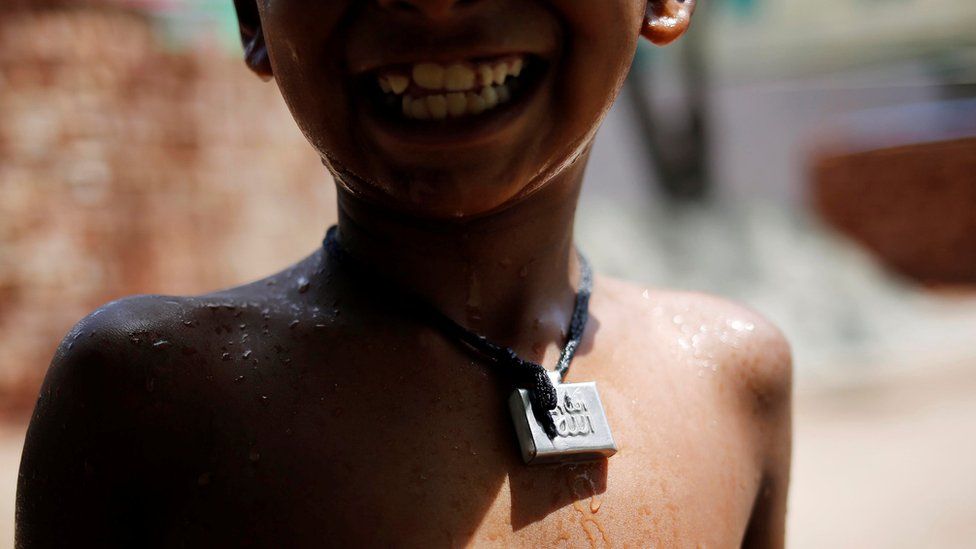


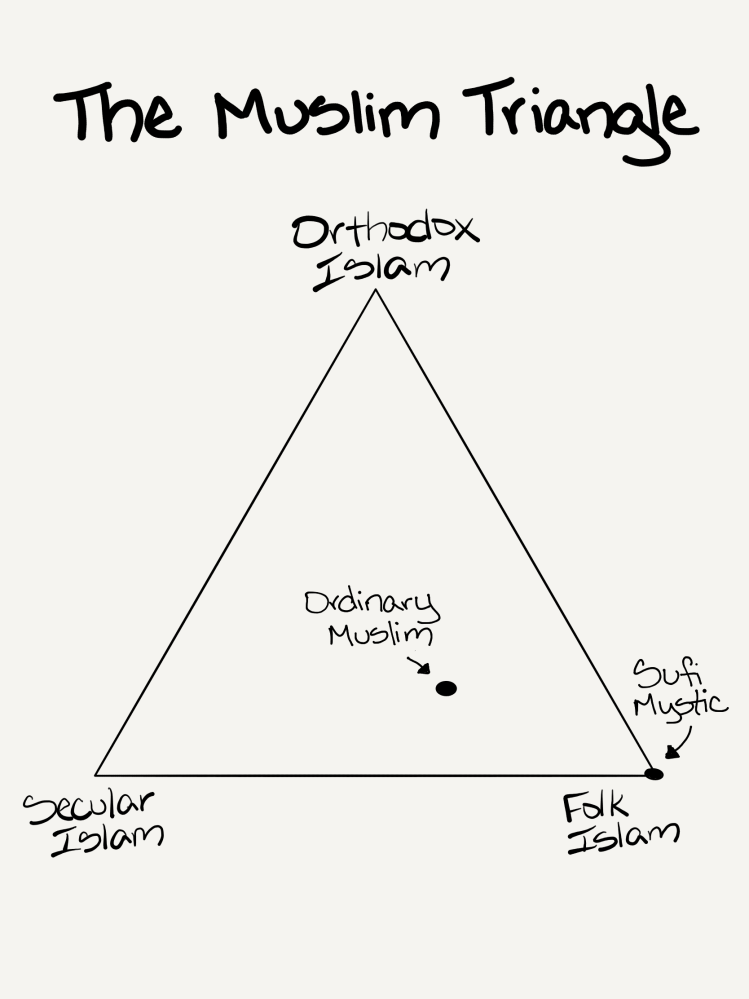
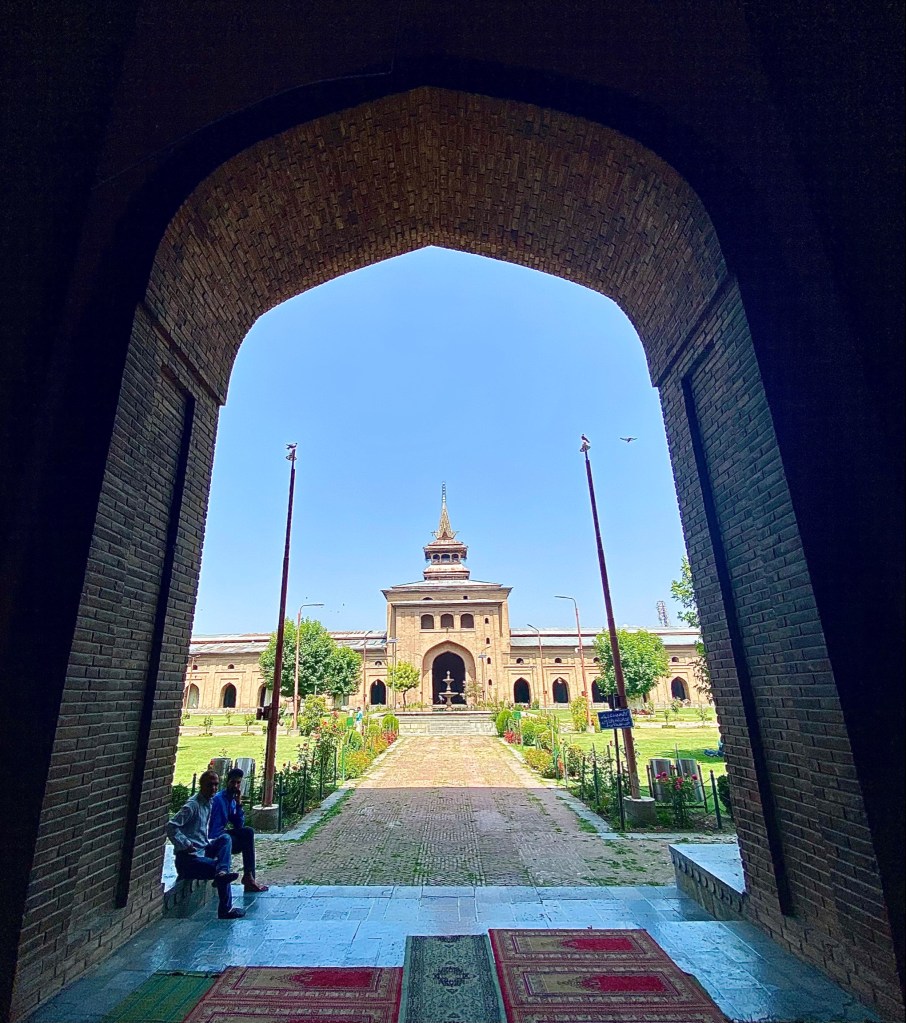
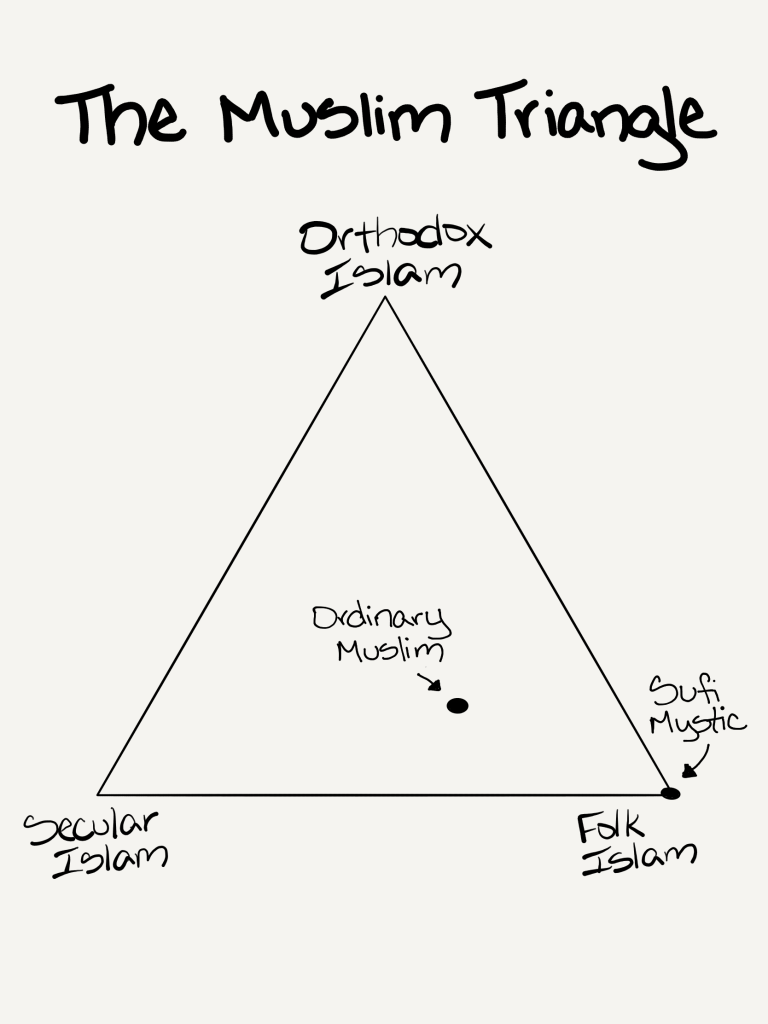





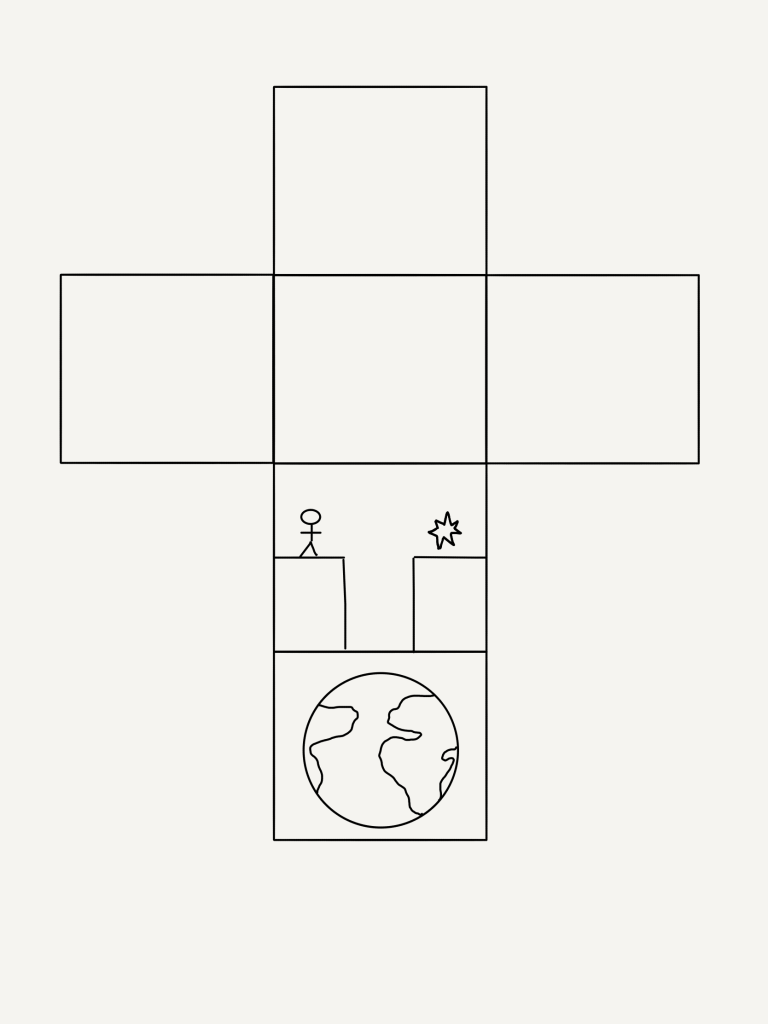
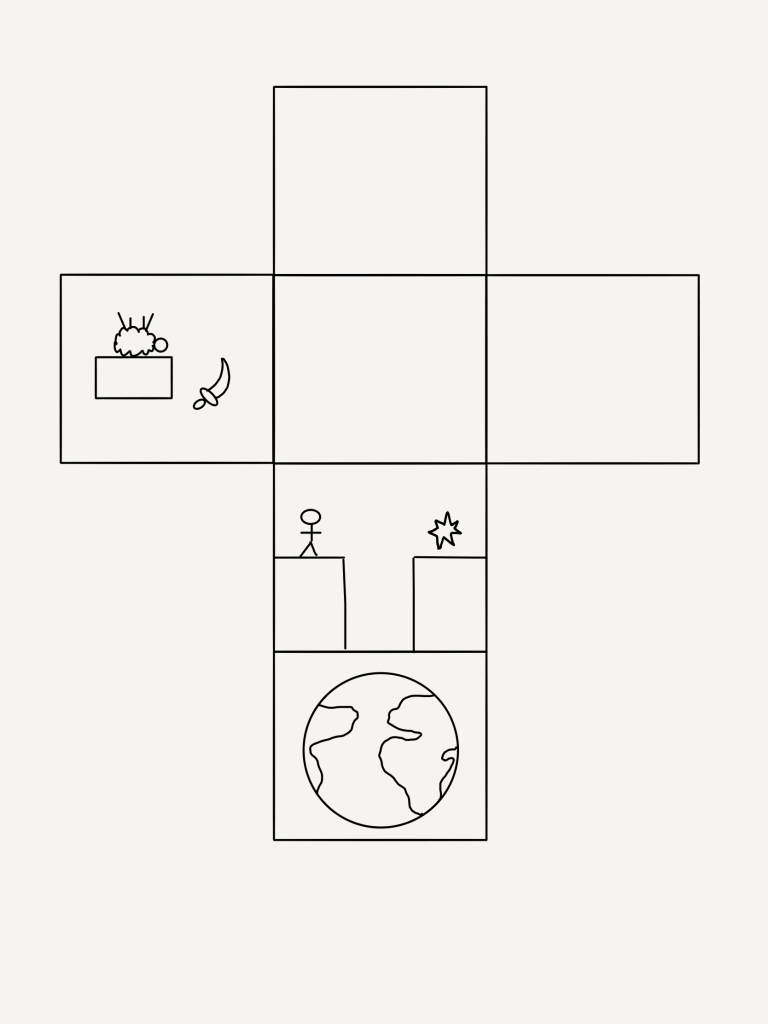

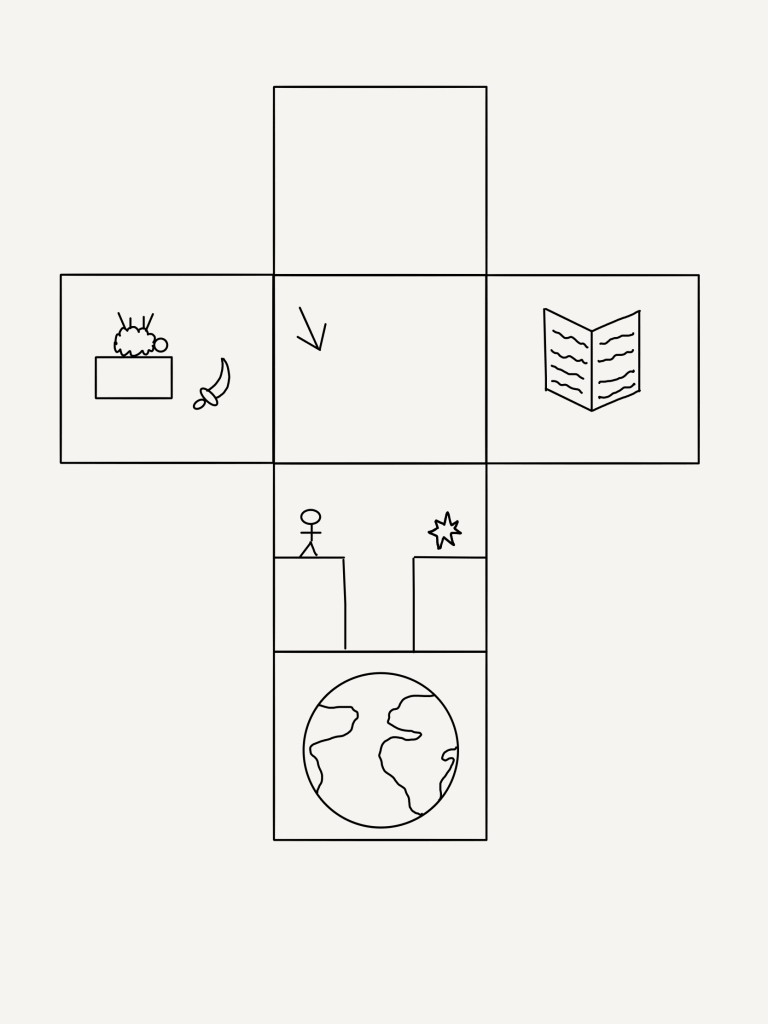
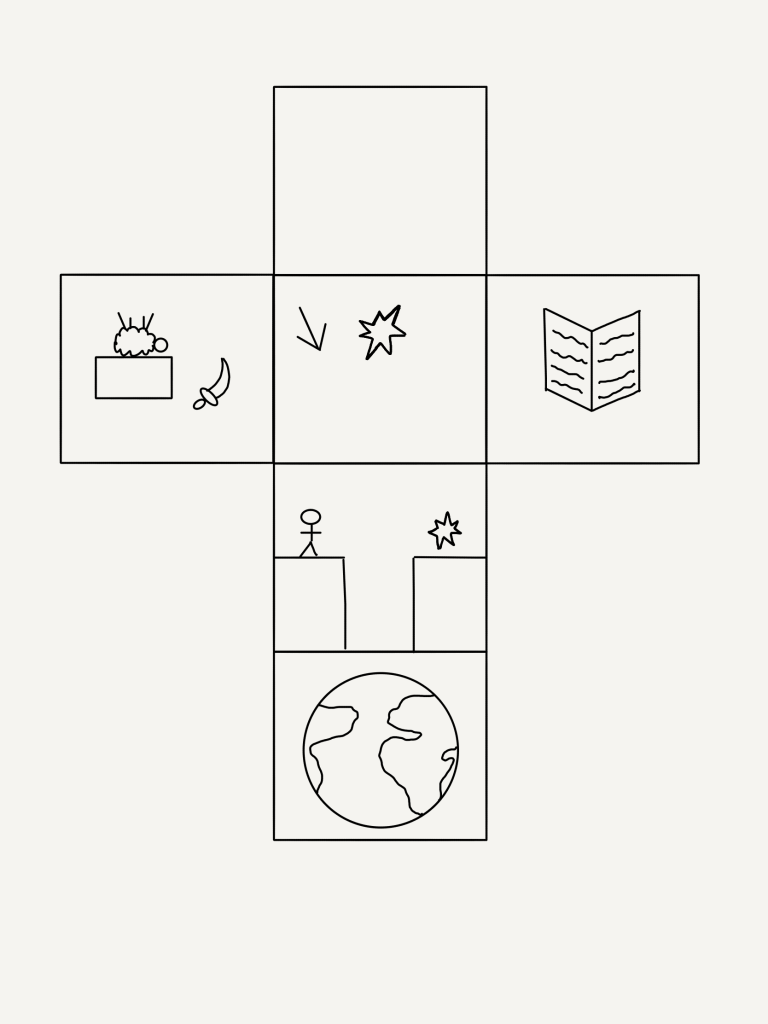


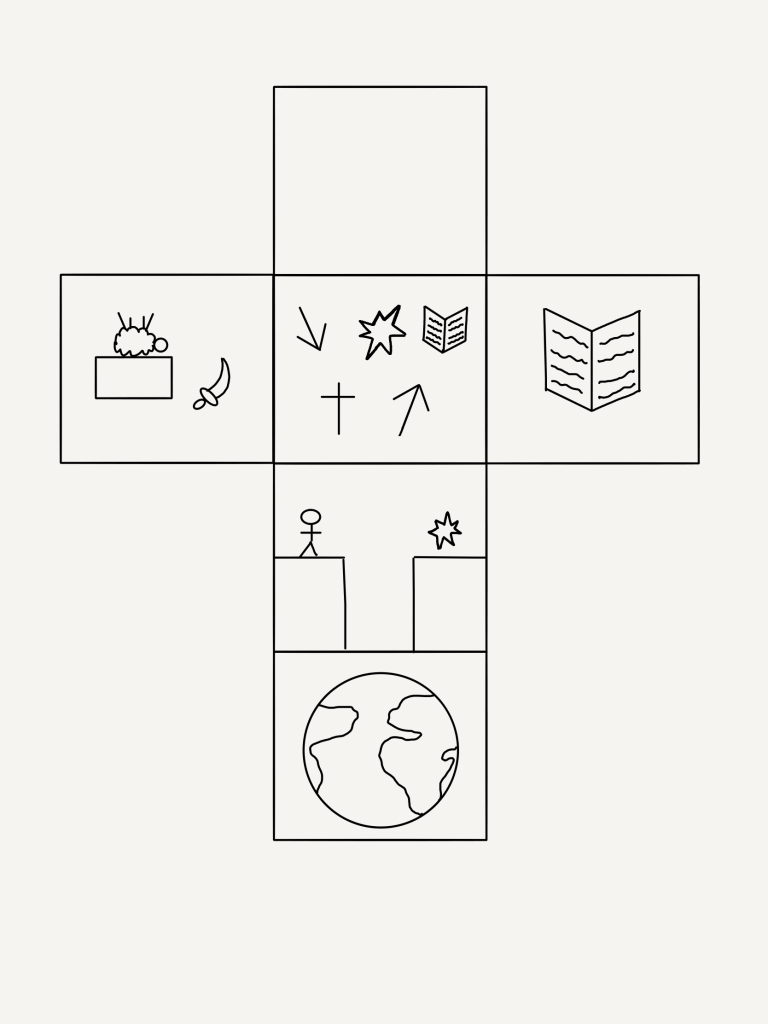
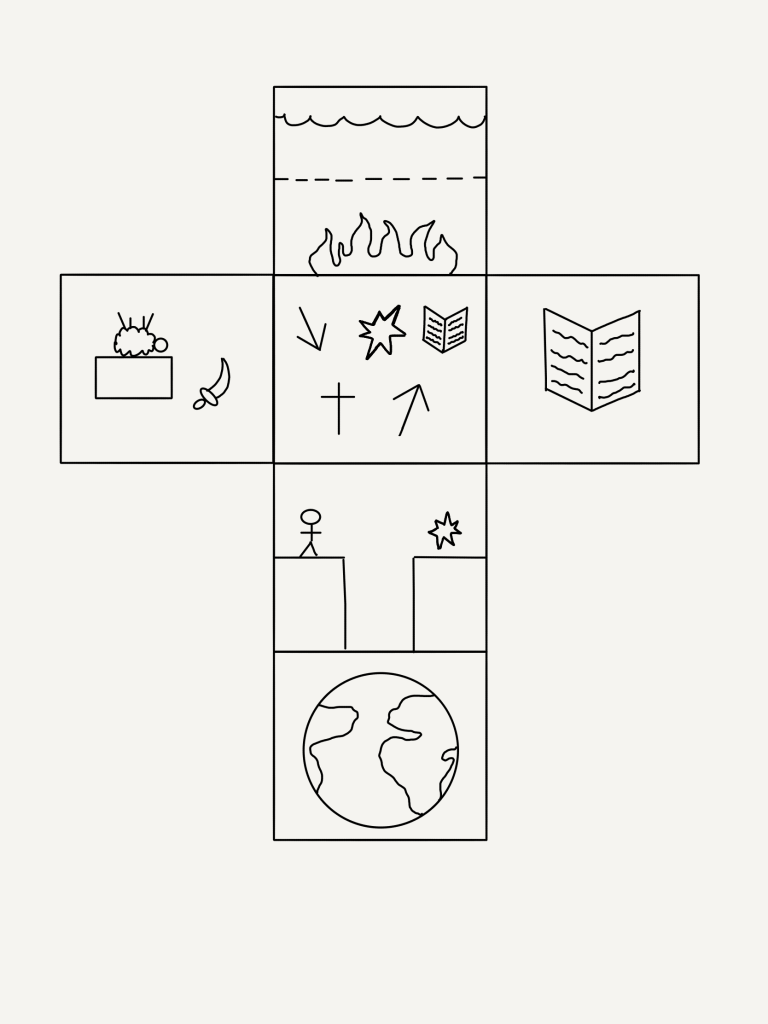
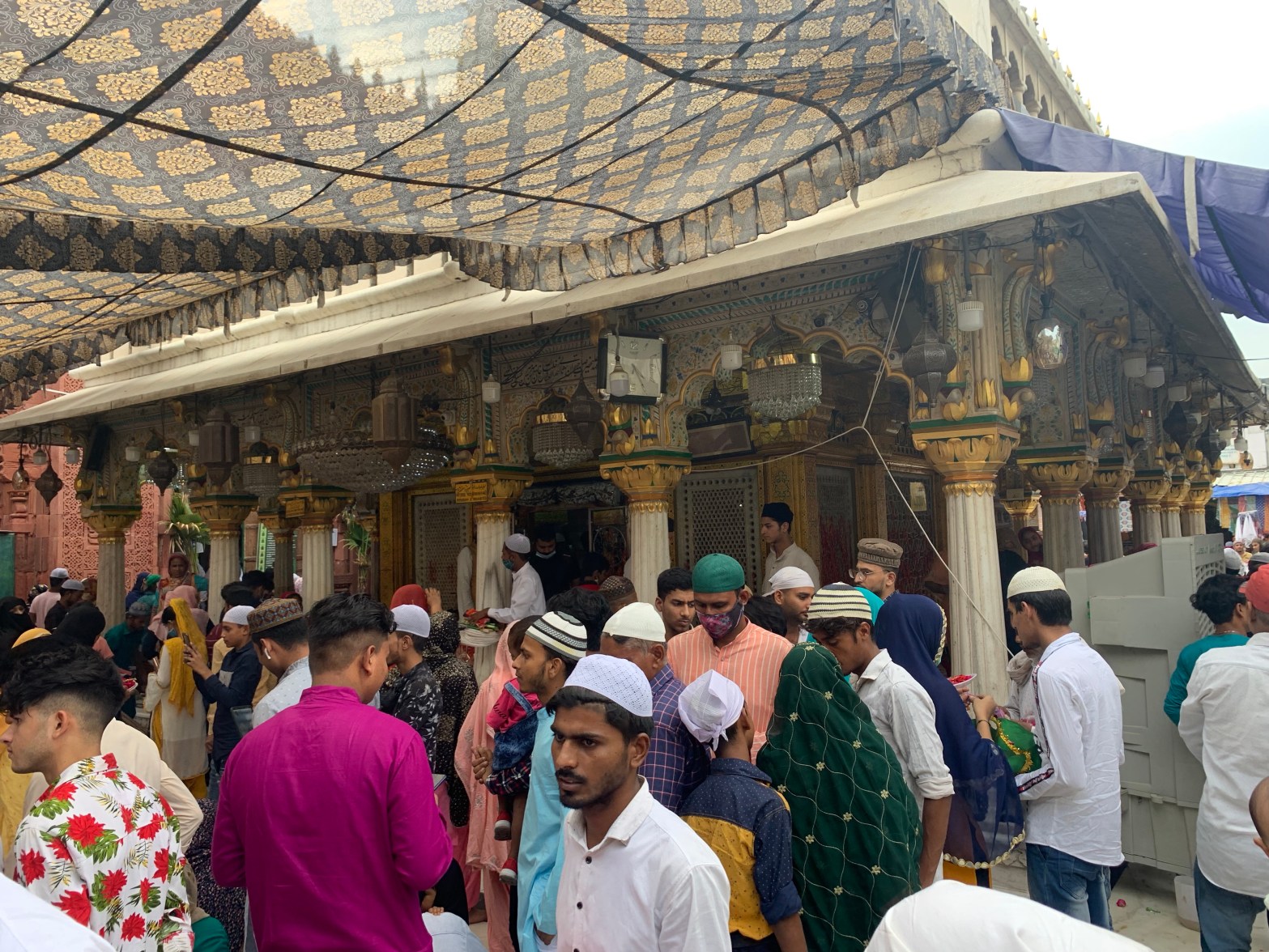

 No Cousins Left
