This post continues the Seed to Orchard Manual. Click here to go to the beginning of that guide. Or download the whole PDF guide below. Subscribe to keep getting updates. I plan to publish one section of this manual every Friday.
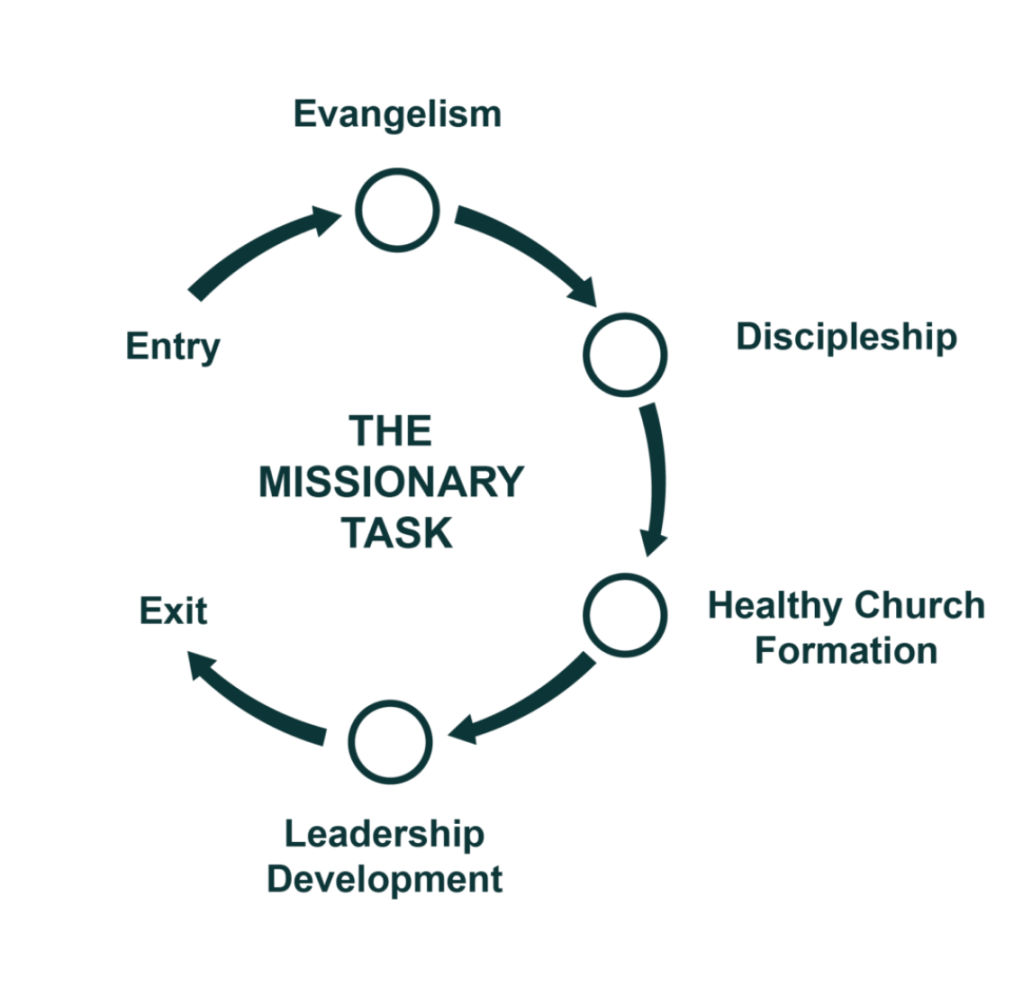
Our God is a missionary God who delights in taking the gospel to all peoples through us. God’s heart to redeem the nations runs through the entire Bible. Here are a few key verses:
- God’s promise to Abraham: “and all the peoples on earth will be blessed through you” (Gen 12:3). Galatians 3:8 teaches that this verse was fulfilled through Jesus.
- “May God be gracious to us and bless us; may he make his face shine upon us so that your way may be known on earth, your salvation among all nations.” Psalm 67:1-2
- “Arise, shine, for your light has come, and the glory of the Lord shines over you. For look, darkness will cover the earth, and total darkness the peoples but the Lord will shine over you, and his glory will appear over you. Nations will come to your light, and kings to your shining brightness.” Isaiah 60:1-3
- “This good news of the kingdom will be proclaimed in all the world as a testimony to all nations, and then the end will come.” Matthew 24:14
- “This is what is written: The Messiah would suffer and rise from the dead the third day, and repentance for forgiveness of sins would be proclaimed in his name to all the nations, beginning at Jerusalem.” Luke 24:46-47
- “But you will receive power when the Holy Spirit has come on you, and you will be my witnesses in Jerusalem, and all Judea and Samaria, and to the ends of the earth.” Acts 1:8
- “After this I looked, and there was a vast multitude from every nation, tribe, people, and language, which no one could number, standing before the throne and before the Lamb. They were clothed in white robes with palm branches in their hands. And they cried out in a loud voice: Salvation belongs to our God who is seated on the throne, and to the Lamb!” Revelation 7:9-10
Throughout Scripture, God declares His desire to bring the nations to Himself.
The Book of Acts shows how Jesus intends for us to participate with God in this mission. The work of the apostle Paul provides the most complete picture of missions in the New Testament.
In the life of Paul, Acts 13-14 provide the clearest picture of the core missionary task from beginning to end. In Acts 13:2, the Holy Spirit tells the church at Antioch, “Set apart for me Barnabas and Saul for the work to which I have called them.” Then Acts 14:26 declares that “work” is complete. In between those two verses, Paul and Barnabas pioneered the gospel in Cyprus and Galatia (Pisidian Antioch, Iconium, Lystra, and Derbe). By the end of the journey, they left churches with elders behind in at least four cities (Acts 14:21-23). Therefore, we know that the core missionary task results in the establishment of churches with elders. Paul and Barnabas were then able to leave and continue pioneering the gospel in new locations, though they also regularly ministered to these new churches they had planted.
The Core Missionary Task, as seen in Acts 13-14, consists of six parts:
- Entry – Entering unreached places or peoples to pioneer ministry there.
- Evangelism – Sharing the gospel.
- Disciple-making – Developing new believers to follow Jesus.
- Church Planting – Gathering new Disciples into groups and entrusting a pattern of fellowship and ministry to them.
- Leadership Development – Developing elders to lead new churches and missionaries to take the gospel to new places.
- Exit to Partnership – The missionary moves to a new place to continue the work, while maintaining a partnership with the churches they planted.
Before continuing, please put this booklet down and read Acts 13-14.
- Entry. Paul and Barnabas entered at least six cities where they preached the gospel: Salamas (13:5), Paphos (13:6), Pisidian Antioch (13:14), Iconium (13:51), Lystra (14:6), and Derbe (14:20). Since they were Jews, they usually began their ministry by going to the Jewish synagogue, which also meant that they would meet some God-fearers, who were non-Jews that were reading the Jewish Scriptures (13:5, 14, 42-44; 14:1). Acts 14:1 says, “In Iconium they entered the Jewish synagogue, as usual.” In other words, they developed a plan to enter new cities and share the gospel. Their plan was modeled on the passages in which Jesus sent His disciples two by two to preach the gospel (Matthew 10; Mark 6:7-13; Luke 9:1-6; 10:1-12). Paul and Barnabas went together to proclaim, as Jesus commanded His disciples. Then in Acts 13:51, when Paul and Barnabas shook the dust of their feet at Iconium as Jesus commanded (Matthew 10:14; Mark 6:11; Luke 9:6; 10:10-11). As Jesus sent His disciples two by two, and as Paul and Barnabas modeled, we can go two by two to proclaim the gospel among South Asian Muslims.
- Evangelism. In each of these cities, they proclaimed the gospel of the Lord Jesus, usually with great boldness. As they proclaimed Christ, they faced problems with a sorcerer (13:6), angry crowds (13:44-45), persecution (14:5), and even a stoning (14:19). They later warned their disciples, “It is necessary to go through many hardships to enter the kingdom of God” (Acts 14:22). Disciples and churches were formed through the direct result of their preaching and hardship endured for Jesus. In Antioch, we read, “The word of the Lord spread through the whole region” (13:49). What did they proclaim? The only sermon in this section highlights their proclamation of the good news of Jesus’ death, burial, and resurrection (13:16-41). In the same way, God desires to send His people to proclaim the death, burial, and resurrection of Jesus to the Muslims of South Asia.
- Disciple-Making. In each place, gospel proclamation led to disciples. In Acts 13:52, we read about the disciples at Pisidian Antioch being filled with joy and the Holy Spirit. In Lystra, the disciples gathered around Paul after he had been stoned (14:19-20). It appears that they raised him from the dead! In Derbe, Paul and Barnabas “made many disciples” (14:21). Then they returned through each place and strengthened and encouraged the disciples (14:22). In Muslim ministry, it is vital that we strengthen Muslim-background believers and help them be strong in the Lord. Muslims often face personal hardship after believing in Jesus, as is written in Matthew 10:21-25.
- Church Planting. Discipleship led to the formation of new churches of new believers. In each of the cities of Antioch, Iconium, Lystra, and Derbe, a new church was planted and left behind by Paul and Barnabas. Paul and Barnabas appointed elders in each church and prayed for them with fasting, committing them to the Lord (14:23). Paul and Barnabas did not stay to pastor these new churches. Instead, they developed churches from these new believers and entrusted them to the Lord. In the same way, it is a biblical pattern to plant new churches composed of Muslim-background believers.
- Leadership Development. But Paul and Barnabas did not leave these churches without leaders. Instead, they “appointed elders for them in every church” (14:23). Most scholars estimate that the whole journey (Acts 13-14) lasted about 18 months. Therefore, the development of these new elders was not a lengthy process, especially since they repeated it at least four times. Paul later gave qualifications for local church elders (Titus 1:5-9; 1 Timothy 3:1-7). The focus of those qualifications was that elders were to be of high character, capable of leading their own families, and able to teach. When Paul returned through these churches, he also selected Timothy from among them to develop as a fellow missionary (Acts 16:1-5). The missionary task is incomplete until there are churches with elders. In the same way, we must patiently develop Muslim-background elders to lead these majority Muslim-background churches.
- Exit to Partnership. Lastly, we see that Paul and Barnabas left Cyprus and Galatia. They entrusted the work there to these local churches, but they visited often. Paul visited Galatia two more times in Acts (16:6; 18:23). He also wrote a letter to those churches and developed Timothy and Gaius from Galatia (Acts 20:4). No doubt, Timothy and Gaius continued to care for the believers in their home area as well. Even once a missionary departs from a field, faithfulness to Scripture demands continued care and concern for the believers and churches they left behind. Our commitment to South Asian Muslims and MBBs must be long-term.
This booklet is formed around the Core Missionary Task. In fact, it is based on five steps that we have seen that South Asian Christians need to take to be fruitful in their ministry among South Asian Muslims. It is important to note that this booklet does not cover every part of the Core Missionary Task. See Tool 11 on the Seven Phases of Progress for more information. However, this booklet covers the most relevant of Muslim ministry across most contexts. The next five chapters will detail these five steps.
- Muslim Evangelism. The first step is to begin entering Muslim families and communities to boldly proclaim Jesus.
- Develop Seekers. When you share the gospel with Muslims, seekers will emerge. Commit to these seekers and help them work through their barriers to faith in Jesus.
- MBB Discipleship. Pray that some will repent and take baptism. Pour yourself into developing these new MBBs as followers of Jesus. Help them to grow in the Word and prayer. Guide them to love their families and communities and to share the love of Jesus with their families, friends, and neighbors.
- Church Formation and Emerging Muslim-Background Leaders. As groups of Muslims come to Christ, guide them to form into churches. Develop emerging Muslim-background leaders.
- Leadership Reproduction. As some Muslim-background leaders grow in the Lord, help them multiply so they can develop more churches and leaders.
The steps above may sound audacious, but others have gone ahead of you. The power of the Holy Spirit in you can do this great work through you as you work according to His energy within you (Col 1:29).
Before continuing, it is necessary to emphasize prayer and our dependence upon God. Without God, all these steps are impossible. It is tempting to include our need to pray on every page. Instead, we are emphasizing it again here. If you want to make an impact among Muslims, devote yourself to prayer and call others to pray for this great work as well.
Reflection Questions
- Which of the six parts of the Core Missionary Task is your church or ministry strongest in?
- Which of the six parts of the Core Missionary Task is your church or ministry weakest in?

