This post continues the Seed to Orchard Manual. Click here to go to the beginning of that guide. Or download the whole PDF guide below. Subscribe to keep getting updates. I plan to publish one section of this manual every Friday.
“For God so loved Muslims that he gave his only Son, that whoever believes in him should not perish but have eternal life.” John 3:16
I modified the verse above by replacing “the world” with “Muslims.” The reality is that God loves each and every group in the world so much that Jesus died on a cross for their sins. God loves Muslims just like He loves Hindus, Buddhists, and Christians. He desires that all will repent and come to Him through the sacrificial death of our Lord Jesus Christ.
But many Christians struggle to love their Muslim neighbors. In Luke 10:29, an expert in the law wanted to justify himself. In response to the command to love your neighbor as yourself, he asked, “And who is my neighbor?” Jesus responded with the Parable of the Good Samaritan. Our Lord’s point was that his Jewish listeners were obligated to love even the Samaritans. Now, you must understand that Jews and Samaritans were enemies at this point in history. These two communities hated one another. Their language, culture, food, and religion were different. They would not eat together. Jews were convinced Samaritans were bad people deserving God’s wrath. Samaritans felt similarly about Jews. The idea of Jews being obligated to love their Samaritan neighbors would have been radical to those listening to Jesus.
Today, many South Asian Christians feel the same about their Muslim neighbors. They see their Muslim neighbors through a lens of fear and bitterness. They fear that if they seek to love their Muslim neighbors, they will face persecution, insult, or even death. Like the expert in the law in Luke 10:29, many Christians have an internal conflict: “God doesn’t really want us to love Muslims, does He?”
Let me retell the Parable of the Good Samaritan in a more relevant way. A Christian was going from Lahore to Rawalpindi and fell into the hands of robbers. They stripped him, beat him up, and fled, leaving him half dead. A pastor happened to be going down that road. When he saw him, he passed by on the other side. In the same way, when a Catholic priest arrived at the place and saw him, he passed by on the other side. But a Muslim on his journey came up to him, and when he saw the man, he had compassion. He went over to him and bandaged his wounds with whatever medical supplies he had. Then he put him on the back of his motorbike, brought him to a government medical hospital, and took care of him. The next day, he left money with a trusted person at the hospital and said, “Take care of him. When I come back, I will reimburse you for whatever extra you spend. To ask Jesus’ question, which of these three do you think proved to be a neighbor to the man who fell into the hands of robbers? Jesus commands us to go and do the same.
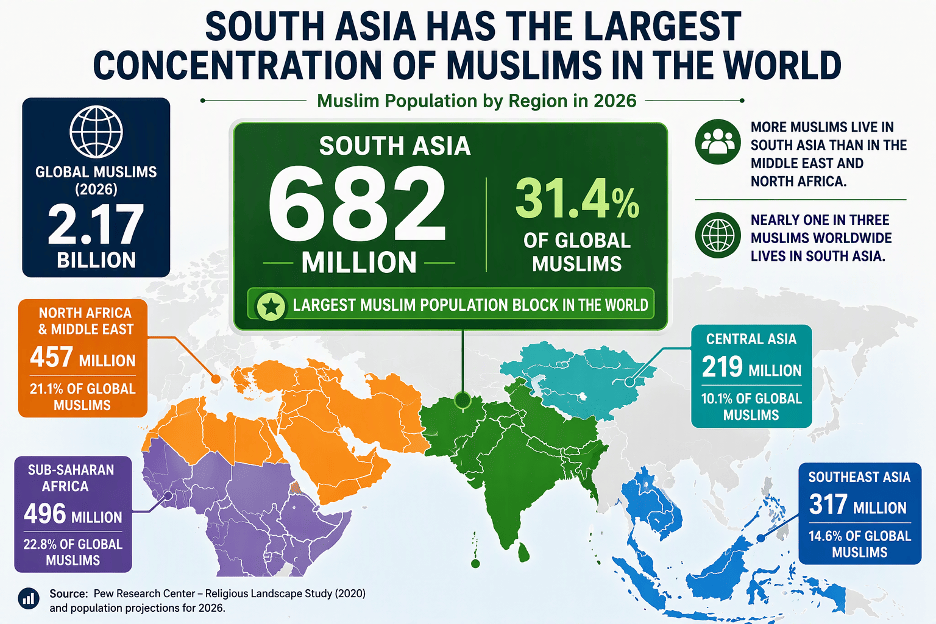
At the same time, the South Asian church continues to grow. God’s kingdom is increasing in numbers and vibrancy. The result is that there are growing Muslim and Christian populations next to one another throughout the subcontinent. Despite this fact, very few South Asian Christians are willing to share Jesus with their Muslim neighbors.
In your hands is a very simple guide for South Asian Christians to learn how to be used by God to take the gospel to their Muslim neighbors. This guide is designed in two parts. Part One walks through five steps of growing in ministry to guide South Asian Christians in ministry among South Asian Muslims. Part Two is a catalog of basic ministry tools that you can use to make disciples among your Muslim neighbors.
Before we go further, let me share five clarifying points from Scripture.
First, our God is on His throne. He rules over South Asia. In Revelation 4, the apostle John told his experience of the throne room of God. “Flashes of lightning and rumbles and peals of thunder came from the throne” (Rev 4:5). The One on the throne was so majestic that John could not adequately describe Him. Around him were four creatures of great power who worshipped him day and night, and twenty-four elders doing the same. The God described in this passage can do whatever He pleases, which leads us to the next point.
Second, God desires all peoples, including every South Asian Muslim tongue and tribe and people and nation to experience salvation through Jesus and worship Him. In Revelation 5, John saw the One on the throne with a scroll in His right hand. No one was worthy to open the scroll until Jesus appeared. Then all of heaven bowed down and worshipped Jesus, saying,
“You are worthy to take the scroll and to open its seals, because you were slaughtered, and you purchased people for God by your blood from every tribe and language and people and nation. You made them to a kingdom and priests to our God, and they will reign on the earth.” Revelation 5:9-10
“Every tribe and language and people and nation” includes every South Asian Muslim tribe, language, people, and nation. It means that God intends to bring some from each Muslim people group to Himself. And if our God desires to do this, then He will accomplish it. But what is His plan for accomplishing His purpose? This leads us to the third point.
Third, God’s plan is to use His people to bring His gospel to all peoples. In Matthew 28:18-20, Jesus declared:
“All authority has been given to me in heaven and on earth. Go, therefore, and make disciples of all nations, baptizing them in the name of the Father and of the Son and of the Holy Spirit, teaching them to observe everything I have commanded you. And remember, I am with you always, to the end of the age.”
Jesus commands us to “Go and make disciples of all nations.” All nations includes every Muslim tribe and language and people and nation. It means that God has sent Christians in South Asia to make disciples among their Muslim neighbors. The question is, will God’s people obey? My prayer is that God is striking your heart as you read this booklet. If so, your question might be, “What does God want me to do?” Your question leads us to the next point.
Fourth, God’s Word is a sufficient guide for developing a missionary strategy to go and make disciples. The rest of this booklet will be based on the Core Missionary Task that Paul and the apostles followed in the book of Acts. We will define the Core Missionary Task in the next section. When God sent us to do His work, he did not leave us without a pattern. Second Timothy 3:16-17 declares,
“All Scripture is inspired by God and is profitable for teaching, for rebuking, for correcting, for training in righteousness, so that the man of God may be complete, equipped for every good work.”
As God’s Word promises, the Bible equips us for every good work, including the work of going and making disciples of Muslims. But as we go, we need to keep a final point in mind.
The fifth point is that we will only experience a breakthrough among Muslims by the power of the Holy Spirit. Therefore, prayer and fasting are our greatest tools. We must depend on Jesus and abide in Him. Otherwise, we can do nothing.
Action Step – Pray for your Muslim Neighbors
Knowing that prayer and fasting are our greatest tools for Muslim ministry, I want to give you a simple challenge. Dedicate yourself to praying for the Muslims of your community every day for thirty days. Ask the Lord to bless Muslims that you know by name. Ask Him to raise up witnesses to share the gospel with them. Ask the Lord to give you His heart for this community.
Reflection Questions
- Why do many South Asian Christians struggle to love their Muslim neighbors?
- What is the responsibility of South Asian Christians towards Muslims, since South Asia has the largest number of Muslims in the world?

