Over the years, I have had many people come to me and ask how to learn biblical Greek. Their purpose is to understand the New Testament better and thus honor God in their spiritual lives.
However, learning a new language takes a lot of work. People usually go to seminary to learn Greek. In full disclosure, I learned most of my Greek at a seminary. However, I also learned that most seminary students fail to gain significant proficiency in biblical languages. Instead, seminary students learn enough to pass their Greek and Hebrew classes. They often desire to return later and brush up on Greek and Hebrew, but the pressures of ministry rarely leave them with the time to do so.
When I went to seminary, I determined to learn Greek well enough to read the Greek New Testament devotionally. Since I did not have a suitable pathway for this, I decided to give an hour a day studying Greek or the New Testament in Greek for five years. While my seminary studies were a significant part of the first few years of this process, I continued my studies diligently during summer breaks and for years after my Greek classes finished. While I learned much of my Greek at seminary, I grew even more as a student of Greek outside of my classes.
It took me about 4-5 years before I hit my goal of being able to read the Greek New Testament devotionally. My five years were roughly from 2006-2011. Twelve years later, my Greek skills are stronger than in 2011 because once you learn a language to that degree and can use it in your everyday life, your skill in the language continues to grow.
So, the first thing you need to do to learn Greek is to decide to put in the hours. I probably logged over 2,000 hours in the Greek text over those five years, from 2006-2011. Since then, I have been in the Greek text for thousands more hours, as I have used it in regular Bible study. If you want to learn Greek, you need to put in the necessary time to do so.
The second thing you need is a pathway to learn Greek. It would be best if you had a way to use your hour a day well. Here is what I recommend.
First, subscribe to Daily Dose of Greek. Daily Dose of Greek is a FREE daily video that walks through a verse of Scripture in Greek. It reads the text, translates it, and gives a few grammatical tips. Build a habit of watching these videos daily. Daily Dose of Greek will help you by sending a video to your e-mail inbox daily. https://dailydoseofgreek.com
Second, get a handful of essential resources. You need a few things to help you learn Greek, which will cost some money. Invest the money in these resources. They are far cheaper than a seminary class.
A Reader’s Greek New Testament. Reader’s Greek NTs are Greek New Testaments for beginners. They do a few things to make reading Greek text easier. First and foremost, they footnote any Greek word with a simple gloss (i.e., definition) used less than 30 times in the New Testament. These glosses make it so that someone with a basic understanding of Greek can begin reading without looking up every Greek word. Once you learn about 300 Greek words, you can start reading the New Testament.
Here are the competencies you need to develop in order:
First, learn the Greek alphabet. Usually, the first chapter of your Greek Grammar will usually teach you the alphabet. If you cannot recognize the characters, you cannot move forward. I recommend using flash cards. It should take you only a short time to learn the alphabet. If you want to start this while getting other resources together, use this Wikipedia page: https://en.wikipedia.org/wiki/Greek_alphabet
Second, you need to undertake two simultaneous tasks:
Learn Basic Grammar. You have two choices for learning Grammar: (1) learn from a textbook or (2) learn from videos. Some people may combine the two. See above for recommendations in the section on gathering resources. No matter what, you will need to work hard to learn.
Memorize Greek vocabulary. Your goal should be to learn the 319 Greek words used at least 50 times in the NT. If you remember those 319 words, you will understand about 80% of the total words in the Greek NT (these 319 words account for 110,425 of the total 138,162 words in the NT!). A good Greek grammar book will help you to learn these words (For these stats, see William D. Mounce, Basics of Biblical Greek Grammar. Third Edition (Grand Rapids: Zondervan, 2010), 16).
Third, immerse yourself in the Greek New Testament. If you want to read the New Testament, try to read it from the beginning.
Watching the Daily Dose of Greek videos is the easiest way to start reading the Greek NT. Make this part of your daily habit. Incorporate it into your quiet time. If you subscribe to that channel and watch their videos daily, you will move forward significantly in your ability to read biblical Greek.
Begin reading through an easy book of the Greek NT. Read through it multiple times with a grammar in one hand and your NT in the other. I recommend using a Reader’s Greek NT so you can look up less vocab. Reading the Greek NT will initially seem frustrating and slow, but practice makes perfect.
Others have made good lists of which books you should read in what order. Here is my recommendation for the order of books you should try to read in the NT:
1 John – The most accessible book because of its relatively short length, easy vocabulary and grammar, and concrete statements.
The Gospel of John – It is almost always easier to read narrative than epistles. John is much easier to read than the other gospels.
Philemon – Many of Paul’s books are also fairly easy to understand. Begin with Philemon since it is so short.
Philippians or 1 Thessalonians – for Paul’s other short books, Philippians and 1 Thessalonians have relatively simple grammar and vocabulary.
Mark – Mark is easier to read than Matthew or Luke, reading Mark will help you grow in your skills substantially.
At this point, you can begin reading most books of the NT. You will still struggle with Luke, Acts, 1 Peter, 2 Peter, Jude, 2 Corinthians, and Hebrews until your Greek strengthens. Therefore, avoid reading those books in Greek until you become confident in other texts.
The tasks I have outlined above will take six months to a year, depending on your work. So, what next? Here are my recommended next steps:
Be diligent to continue reading the Greek New Testament. Read the NT cover-to-cover over and over again. Go deep into a few books. Sometimes, do quick reads that gets through all of it. Other times, slow down and look up everything you do not understand.
How do you look up what you do not understand? At this point, you may consider purchasing Bible software like Accordance. These programs are expensive, however. The cheaper way to do this is to use online tools like www.blueletterbible.org. Using the translation MGNT (Morphological Greek New Testament) on that site will break down every word and show you the lexical form, how it is parsed, etc.
Continue learning Greek vocabulary. At this point, continue learning Greek vocabulary primarily by reading the text, looking up words, and studying. If it is helpful, continue using flashcards and memorize more and more terms.
Learn Intermediate Greek Grammar. Once you have learned basic grammar, you need to know syntax. In basic Greek grammar, you will have learned how to understand what cases nouns are using or what tense verbs are using. Syntax is the study of the different ways that these cases and tenses. For studying syntax, use Daniel Wallace’s Greek Grammar Beyond the Basics. https://www.amazon.com/Greek-Grammar-Beyond-Basics-Exegetical/dp/0310218950
When you get this Wallace book, you will likely be intimidated. Again, flashcards are your friends. Just get out the flashcards and begin memorizing. Go ahead and memorize them. Slowly work through Wallace, memorizing everything. For example, Wallace gives 13 uses of the nominative case.
Begin translating and working slowly through a book of the New Testament. I recommend one of Paul’s shorter letters, like Galatians, Ephesians, Philippians, or Colossians. Again, you can use www.blueletterbible.com to make a printout. When you print it out, use lots of spacing between words. Above every word, you will want to put:
The translation of that word,
The words parsing/declension,
The syntax of that word, and
Other notes about the word/grammar.
Also, leave tons of space in the margins, as you will have lots of other info you want to write down. You will do the deepest dive of an NT book in this process that you have ever done.
Once you finish translating and working through one book, start another. Continue this process until you master the Greek New Testament.
Sentence diagramming will help you take your translation work even one level deeper. At this point, it will also be helpful for you to learn skills in sentence diagramming Greek sentences. My favorite book on this subject is out of print. At this point, you will need to begin googling some of these next steps.
After you master Wallace, read the Greek NT a few times, and translate/work deeply through several NT books, you have mastered the basics. At this point, continue your reading and studies. You can also begin studying other areas of Greek NT study. For example,
Advanced Greek Grammar
Discourse analysis
Textual criticism
If you have questions, feel free to write to be at nocousinsleft@protonmail.com. However, teaching Greek is not my focus. I have honestly written these things down since many people ask me how to learn Greek. So now, when anyone asks, I can point them to this blog with all the info and invite them to take this journey.
This morning, I am sifting through 40 evaluations of leaders we are developing for ministry among South Asian Muslims. More than 30 of these are for Muslim-background leaders at various stages of development. Some are very strong in their faith, while these evaluations have shown significant weaknesses in the faith of others.
As the gospel has grown among South Asian Muslims, we have struggled with the term “leader.” We have regularly heard from local leaders, “I have 17 Muslim-background leaders” or “I have 22 Muslim-background leaders.” We have tried to coach local leaders on evaluating and developing these leaders, but we needed to standardize the process a bit more.
Attached above is the new leadership development tracking sheet we developed for this purpose. I translated it into English to share here. Press “Download” to get it. As you look at this sheet, you will realize that it has a lot of specific details we use in our work. Let me provide some information here.
Nathan Shank’s diagram for his Five Levels of Movement Leaders.
E1 is a demarkation we use for Muslim-background leaders who minister among their own people group. We take this from Ralph Winter’s writings on E0-E3 evangelism. You can see the relevant article here. In brief, for our context:
E1 leaders are Muslim-background leaders working among their own people group. This leadership development process is for E1 workers.
Level 1-3 Leaders is a leadership development paradigm developed by Nathan Shank for developing movement leaders. You can see his article here. Shank uses five levels of leadership. For the time being, we want to focus primarily on the first three levels. Those familiar with Shank’s paradigm will understand. In brief:
Level 1 Leaders are Seed Sowers. These individuals have become disciples of Jesus and are sharing the gospel with others, following up with them, and making disciples. We wanted to evaluate Level 1 Leaders based on their growth as disciples, evangelistic/ministry abilities, and their relationship with Islam.
Level 2 Leaders are Church Planters. These individuals have led groups of Muslims to Christ, baptized them, and begun at least one church. We wanted to evaluate their character based on 1 Timothy 3:1-7, their teaching ability, and their church leadership ability. The most concrete way we could assess their church leadership ability was to evaluate the health of the church(es) they lead.
Level 3 Leaders are Multipliers. These individuals are leading their own church and developing other Level 1, Level 2, and Level 3 leaders. This assessment process is a tool to help Level 3 leaders develop Level 1, Level 2, and Level 3 leaders in their ministries.
“Yellow Lights” is an evaluative term for evangelistic contacts. Green lights are individuals who repent and believe. Red lights are those who reject the message. Yellow lights are those who are ready to listen and learn more. We have a high degree of yellow lights among South Asian Muslims when we share the gospel. After learning to share the gospel, our next step is to train people to follow up with those who want to learn more. Click here to learn more about our processes.
Five Unique Things about Jesus. These are five Bible studies we use from the Gospel of Matthew to show the uniqueness of Jesus to Muslims who want to learn more. Click here to learn more.
8 Commands of Jesus. We use eight Bible studies after the Five Unique Things study to teach yellow/green lights what it means to follow Jesus. As I write this blog post, I am realizing that I have not blogged about our discipleship process!
The Three Transitions. We expect that a healthy Muslim-background believer will:
Leave Muhammad and cleave to Jesus.
Leave the Qur’an and cleave to the Bible.
Leave namaaz/salaat prayer and cleave to the church.
We have typically seen that Muslim-background believers only make these transitions when they believe that Jesus is fully God.
I hope that the rest of the sheet is self-explanatory.
This evaluation aims to create a customized plan of three growth areas for that leader. Then after six months, re-evaluate the leader, see what progress has occurred, and create a new growth plan. I hope this leadership development process will lead to significant growth in many of these Muslim-background leaders!
This blog post is the ninth in a series on South Asian folk Islam and its rituals. Click here to go to the first of these articles. Understanding the rituals of Folk Islam provides insight into the beliefs and practices of folk Muslims. This understanding helps us to make disciples of folk Muslims.
In the previous lesson, we began to look at folk Islamic beliefs and practices among Shia Muslims in South Asia. Because there are so many Shia in South Asia, we must explore the worldview of this segment of Muslims to engage them with the gospel. Here, we will look at Shia’s perspectives on taziah and Muhurram. Before beginning, we need to recognize that there is significant diversity in Shia Islam worldwide. While these rituals and beliefs are common, not every Shia Muslim you meet follows the practices precisely described here.
Taziah are replicas of the tomb of Hussein that are housed in imambaras. Imambaras are houses of worship for Shia Muslims, which are unique to South Asia. The purpose of an imambara is to serve as a house of mourning for Hussein and the seventy martyrs of Karbala (the site of Hussein’s tomb). Plaques or writings on the wall often give the names of each of the seventy martyrs who died in 680 AD at Karbala, which is in modern Iraq. The martyrdom of Hussein was the definitive split between Sunnis and Shias. Some Shias say that one pilgrimage to Karbala is worth 1,000 Hajj to Mecca.
Some Shia hold to folk beliefs about taziah. They say that the taziah is a conduit of the blessing and power of Hussein’s tomb from Karbala. While Hussein’s power is more concentrated in Karbala, Shias can also bring their prayers and needs to these replicas. The panjtan pak (“five holy people”) of Shia Islam form one family. Muhammad’s daughter, Fatima, married Ali, who was a relative of Muhammad. Ali served as the fourth Caliph after the death of Muhammad from 656-661 AD. The two sons of Fatima and Ali were Hasan and Hussein.
One common phrase among South Asian Shias is, “Live like Ali; die like Hussein.” South Asian Shias often use the Nahjul Balaghah, a collection of sermons, letters, and sayings from Ali. For the Shia, it is vital to study Ali’s life so they can follow his example. They see the lives of Muhammad and Ali as being in perfect synchrony, so following Ali’s example also means following Muhammad’s life. To die like Hussein goes to the heart of the most important Shia festival, Muhurram.
Muhurram is the first month of the lunar calendar in Islam and is the month for remembering the death of Hussein. During this month, Shias will undertake various rituals to remember the sacrifice of Hussein. Especially important is the tenth day of Muhurram, which is called Ashura. Ashura marks the day of Hussein’s death, which is understood sacrificially as if he gave his life for the Shia community. Shias reenact plays to remember Hussein’s life and death, wear black clothes to signify mourning, and even scourge themselves to remember Hussein and the other martyrs. One ritual in South Asia is that some Shias, especially in Lucknow, make taziah and submerse them in lakes and rivers. Historically, this ritual has led to significant conflict between the Sunni and Shia communities in Lucknow since the Sunnis believe that Shias borrow this ritual from the Hindu Durga Puja festival.
One gospel bridge with Shias is to find an opportunity to share the sacrifice of Christ when they share about the martyrdom of Hussein. Shias believe that the death of Hussein as a martyr was for their whole community. When hearing Shia stories about the death of Hussein, a Christian can take the opportunity to share the story of how Jesus also died as a sacrifice for His community. This can open up a dialogue where Shias can understand the gospel. In the same way that Hussein died for his community, Christ died for the world.
This blog post is the eleventh in a series on South Asian folk Islam and its rituals. Click here to go to the first of these articles. Understanding the rituals of Folk Islam provides insight into the beliefs and practices of folk Muslims. This understanding helps us to make disciples of folk Muslims.
The names of Muhammad, Fatima, Ali, Hasan, and Hussein with the Arabic “Allah” at the center.
In each lesson, we have learned about a different ritual or practice of folk Muslims and discussed how that ritual or tradition reveals their worldview. This exercise aims to gain insight into how to make disciples better among folk Muslims in South Asia. The first ten lessons have focused on folk Islam in Sunni Islam. These last two lessons shift to Shias. India and Pakistan are home to massive Shia populations, with more than twenty million in each country. These are the second and third largest Shia populations globally after Iran (Iraq has a similar population). Pray for the Shias of South Asia, as few have focused on them for gospel ministry.
I want to begin with a story from a visit to the dargah of Abdullah Shah Ghazi in Karachi, Pakistan, a Shia Sufi. This dargah is one of the most beautiful I have ever visited. My first impression was that the complex was massive and elaborate. Thousands and thousands of visitors poured in and out. There were restaurants, games, rides, and even a Ferris Wheel! At the center was the grave of the Sufi. My friends and I went up the staircase to the area that held this tomb and found that hundreds of people were also crowded in that area. A group of men sat down to the side, so I greeted them with asalaamu alykum and asked if I could sit with them. As we talked, it became clear that these men were Sunni. I was surprised that Sunnis would go to the tomb of a Shia, so I asked them about it. One of the men replied, “It does not matter if he was Sunni or Shia; he was Sayyid!”
The Sayyid are those Muslims who descend from Muhammad through Ali and Fatima’s sons, Hussein and Hasan. There are around 7-8 million Sayyid in each India and Pakistan today. They are considered to be of the highest Muslim caste in both countries. Because Shias place great importance on Muhammad’s descendants, many Sayyid are Shia.
Throughout the world, Shias give great honor to five individuals – Muhammad, Fatima, Ali, Hussein, and Hasan. These five names are on the wall of Shia imambaras, places of worship that house taziah. Imambaras are unique places of worship to South Asia. The word taziah also has different meanings in South Asia than in Iran. In South Asia, taziah are replicas of the tomb of Hussein in Karbala. In Iran, taziah is a reference to plays that depict the martyrdom of Hussein.
The names of Muhammad, Fatima, Ali, Hasan, and Hussein occur on a symbol throughout the Muslim world called hamsa (or “the hand of Fatima”). Muslims use this symbol as a ward against the evil eye.
In South Asia, the hamsa represents these five exceptional individuals as the hand of Allah. I was once at Shia dargah Hazrat Abbas in Lucknow with a friend who followed Jesus from a Sunni background. My Sunni friend sought to initiate a spiritual conversation with a young man in the dargah by asking, “Who created the world?” My friend was shocked at this young man’s reply, “Muhammad, Fatima, Ali, Hasan, and Hussein.” The young man replied that Allah is spirit, and thus he created the world through his hand, meaning these five individuals.
This young Shia man believed that these five were sinless and were with Allah before the world’s creation. His opinion about them was similar to a Christian view about the pre-existence of Christ and His incarnation into the world. South Asian Shias often refer to these five individuals as the panjtan pak (“the five holy people”). In South Asia, the hamsa is often seen as a symbol of the panjtan pak, even though that is not true throughout the Muslim world. Shias see the panjtan pak as holy, sinless, and those closest to Allah. Therefore, they become the ideal mediators for many South Asian folk Muslims.
Thankfully, many Shia Muslims have been open to the gospel. It is less common for Shias to argue that the Injeel (“New Testament”) has been corrupted, making many more Shias open to reading the Bible. For example, once, when I was sharing with the leaders of a Shia madrassah (school for Islamic instruction), they requested copies of the Injeel for each student. I happily complied. As we share the gospel with Shias, we need to know that they are comparing Jesus with Muhammad and Fatima, Ali, Hasan, and Hussein.
This blog post is the tenth in a series on South Asian folk Islam and its rituals. Click here to go to the first of these articles. Understanding the rituals of Folk Islam provides insight into the beliefs and practices of folk Muslims. This understanding helps us to make disciples of folk Muslims.
Abjad is a system, often used by Muslim mystics, to assign numerical values to various Arabic or Persian letters. South Asian Sufis are known to use this system. Here is the assignment of numbers to different Urdu characters.
The Abjad system. From Mehr Afshan Farooqi, “The Secret of Letters: Chronograms in Urdu Literary Culture.” Edebiyat: Journal of Middle Eastern Literatures 13.2 (2002): 158.
Therefore, 786 represents bismillahir rahmanir rahim (“in the name of Allah, most gracious, most merciful). See the assignment of the abjad numbers below. The sum of these numbers is 786.
The abjad system applied to the Arabic text of the bismallah.
In South Asia, 786 is one of the most common formulas among Muslims to attain good fortune or avoid difficulties. Some Muslim students will write 786 on their exams, hoping for a good grade. Muslim truck or rickshaw drivers paint 786 on their vehicles, hoping for safety from accidents. Some Muslim truck drivers place a variety of images, Qur’anic verses, and other religious iconography on their trucks for protection and barkat. Some Muslims feel that they will be blessed if they have 786 in their phone number or on the number plate of their car. In Muslim areas in North India, the number 786 is ubiquitous. I have asked numerous Muslims what the meaning of 786 is, and many do not know its meaning. They have simply understood that 786 means good luck and protection.
There has been some debate among South Asian Muslims if it is appropriate to use 786, the Deobandis support the use of this number for bismillah, while Salafis, like Zakir Naik, tend to discourage its usage. The use of 786 in South Asia is a testimony to the Islamic folk use of the phrase bismillah. Many Muslims believe that every act should be accompanied by bismillah. If they take a bite of food, it should be eaten with bismillah. If they drive their car or motorbike, they should begin with bismillah. As they walk down the road, they should say bismillah. The meaning behind saying this phrase depends on the theological belief of the speaker. Some use this phrase from an orthodox perspective to simply remember Allah and to give him honor in whatever they do. Others use this phrase as a means of protection and blessing.
Every Surah of the Qur’an (except Surah 9), begins with bismillah. Bismillah is a customary phrase to begin dua prayers in Islam. When praying for Muslims in South Asia, we need to be aware of the bismillah’s ubiquity. Muslims often expect that we will pray with our hands open, palms upward, and open eyes. For them, prayers begin with bismillah. Instead of praying in the name of Allah, we pray in the name of Hazrat Isa al-Masih. Before praying for Muslims, I always explain to them that I am a follower of Jesus and that I will pray for them in the manner that Jesus taught His disciples. I usually pray with my eyes open and palms upward, but then I simply pray in the way that Jesus taught. There is power in our prayers for Muslims. Muslims are often surprised by our relationship with God as we pray for them. When ministering to folk Muslims, we should take every possible opportunity to pray for them in Jesus’ name.
Note from David Paul. Peter Schumacher (pseudonym) is a friend and colleague who serves among the Muslims of South Asia. He and I have been discussing the importance of the doctrine of the Person of Christ for discipling Muslim-background believers (MBBs). So, Peter took some time and wrote this out to help himself and others teach this doctrine to MBBs. This doctrine is perhaps the most important of all for bringing MBBs into a strong faith in Jesus. Since Peter wanted to make this article accessible for Muslim-background believers, He uses the contextualized Isa al-Masih for Jesus. This is the first of hopefully many quest writings on No Cousins Left!
Hazrat Isa al-Masih stands as the center of the faith for His followers. Therefore, understanding who He is and being able to explain who He is are vital. In South Asia, we have seen that followers of Isa al-Masih from Muslim backgrounds often have difficulty understanding the nature of Isa al-Masih.
In Islam, Isa al-Masih is given the title Kalimatullah which means the Word of God. This title is an excellent place to start describing the person of Jesus because the Injeel Sharif (Urdu for New Testament) also calls Isa al-Masih the Word of God. But what does it mean that Isa al-Masih is the Word of God? John 1:1-3 teaches the meaning of this title. “In the beginning was the Word, and the Word was with God, and the Word was God. He was in the beginning with God. All things were made through him, and without him was not anything made that was made.”
In this passage, we see “the Word was God.” The Kalimatullah, Isa al-Masih, is God! Isa al-Masih existed in the beginning. He was with God, and all things were made through Him.
John 1:14 says, “And the Word became flesh and dwelt among us, and we have seen his glory, glory as of the only Son from the Father, full of grace and truth.” So, this verse tells us that Isa al-Masih, as the Kalumatullah, “became flesh and dwelt among us.” Isa al-Masih became human! What an amazing truth that God came among us and lived as a human! How great that Isa al-Masih loved us enough to come and save us in this way.
When we consider the deity and humanity of Hazrat Isa al-Masih, three questions should come to our minds.
To what extent is Isa al-Masih human?
To what extent is Isa al-Masih God?
And why is this important?
Question #1: To What Extent is Isa al-Masih Human?
John 1:14 says that Isa al-Masih “became flesh,” meaning he took the form of a human. He had a body just like we do.
Read Luke 2:1-7:
“In those days a decree went out from Caesar Augustus that all the world should be registered. This was the first registration when Quirinius was governor of Syria. And all went to be registered, each to his own town. And Joseph also went up from Galilee, from the town of Nazareth, to Judea, to the city of David, which is called Bethlehem, because he was of the house and lineage of David, to be registered with Mary, his betrothed, who was with child. And while they were there, the time came for her to give birth. And she gave birth to her firstborn son and wrapped him in swaddling cloths and laid him in a manger, because there was no place for them in the inn.”
This passage is about the birth of Isa al-Masih. Isa al-Masih was carried in the womb by his mother. He entered the world as a human by being born of a human mother. After his birth, He was wrapped in clothes and laid in the only shelter they could find. This implies that, just like us,
Hazrat Isa al-Masih was vulnerable to the elements and required protection.
To emphasize this point, Isa al-Masih became hungry, thirsty, tired, and needed to sleep. We see His humanity in these verses:
Matthew 4:2: “And after fasting forty days and forty nights, he was hungry.”
John 19:28: “After this, Isa, knowing that all was now finished, said (to fulfill the Scripture), ‘I thirst.'”
John 4:6: “Jacob’s well was there; so Isa, wearied as he was from his journey, was sitting beside the well. It was about the sixth hour.”
Matthew 8:24: “And behold, there arose a great storm on the sea, so that the boat was being swamped by the waves; but he was asleep.”
As Isa al-Masih lived, He experienced everything it meant to have the physical body of a man. All the frailty of humanity was a part of his life. He lived as we live, requiring food, water, rest, and shelter. But the greatest example of His human weakness was His death. God doesn’t die, but Isa al-Masih died on the cross. Read in Luke 23:46, “Then Isa, calling out with a loud voice, said, ‘Father, into your hands I commit my spirit!”‘And having said this he breathed his last.” Death, the greatest of human weaknesses, was experienced by Isa al-Masih.
We see through Scripture that Isa’s body was human, but what about his mind? Luke 2:52 says, “And Isa increased in wisdom and in stature and in favor with God and man.” Isa al-Masih “increased in wisdom” meaning as he grew older in body, he also learned new things. God knows all things and from him is all wisdom. If Isa al-Masih’s mind was the mind of God, he would not learn and grow as we do.
Likewise, Isa al-Masih was like us regarding temptation. Hebrews 4:15 says, “For we do not have a high priest who is unable to sympathize with our weaknesses, but one who in every respect has been tempted as we are, yet without sin.” According to this passage, Isa a-Masih understands us because He also experienced temptation. Matthew 4:1-11 shares how Satan came to Isa al-Masih to tempt him. Isa al-Masih resisted Satan by quoting Scripture. This story is an excellent example of how to resist Satan’s temptations. We were given a great example because He faced the same spiritual warfare that we experience. Temptation is a uniquely human experience. As we read in James 1:13, God cannot be tempted. As a man, Hazrat Isa al-Masih was tempted.
Hazrat Isa al-MAsih also experienced emotions. We see His emotions in the following verses.
John 11:5-6: “Now Jesus loved Martha and her sister and Lazarus. So, when he heard that Lazarus was ill, he stayed two days longer in the place where he was.”
John 11:17-35: “Now when Jesus came, he found that Lazarus had already been in the tomb four days. Bethany was near Jerusalem, about two miles off, and many of the Jews had come to Martha and Mary to console them concerning their brother. So when Martha heard that Jesus was coming, she went and met him, but Mary remained seated in the house. Martha said to Jesus, ‘Lord, if you had been here, my brother would not have died. But even now I know that whatever you ask from God, God will give you.” Jesus said to her, “Your brother will rise again.’ Martha said to him, ‘I know that he will rise again in the resurrection on the last day.’ Jesus said to her, ‘I am the resurrection and the life. Whoever believes in me, though he die, yet shall he live, and everyone who lives and believes in me shall never die. Do you believe this?’ She said to him, ‘Yes, Lord; I believe that you are the Christ, the Son of God, who is coming into the world.’ When she had said this, she went and called her sister Mary, saying in private, ‘The Teacher is here and is calling for you.’ And when she heard it, she rose quickly and went to him. Now Jesus had not yet come into the village, but was still in the place where Martha had met him. When the Jews who were with her in the house, consoling her, saw Mary rise quickly and go out, they followed her, supposing that she was going to the tomb to weep there. Now when Mary came to where Jesus was and saw him, she fell at his feet, saying to him, ‘Lord, if you had been here, my brother would not have died.’ When Jesus saw her weeping, and the Jews who had come with her also weeping, he was deeply moved in his spirit and greatly troubled. And he said, ‘Where have you laid him?’ They said to him, ‘Lord, come and see.’ Jesus wept.”
Isa al-Masih had a unique bond with Lazarus. He had a close friendship with Lazarus that we can all relate to. Even Isa al-Masih, having the power to bring Lazarus back to life, wept when he saw his dead friend.
Regarding the emotions of Isa al-Masih, let’s look at how He reacted to the reality of dying on the cross. “And he withdrew from them about a stone’s throw, and knelt down and prayed, saying, ‘Father, if you are willing, remove this cup from me. Nevertheless, not my will, but yours, be done.’ And there appeared to him an angel from heaven, strengthening him. And being in agony he prayed more earnestly; and his sweat became like great drops of blood falling down to the ground” (Luke 22:41-44).
Isa al-Masih, like us, was driven to prayer when faced with a massive trial. Even the least spiritual of us can be driven to prayer when facing a trial such as this. Isa al-Masih’s spirit drove him to speak to the Father in prayer. Also, in the passage above, we see that Isa al-Masih had such anxiety that he began to sweat drops of blood! If Isa al-Masih was God alone (and not human also), He would never experience such anxiety. But since He became flesh, He felt the same emotions we would feel in that situation.
Isa al-Masih is human in body, mind, and spirit. This means that He is fully human. Everything common amongst man was common with Jesus, except sin. He remains human even now after his death and resurrection. Before ascending to heaven, his disciples felt Him and knew He was not a spirit but man (Luke 24:39). Let’s move on to consider the deity of Hazrat Isa al-Masih.
Question #2: To What Extent Is Hazrat Isa al-Masih God?
Scripture makes clear that Hazrat Isa al-Masih is fully God. As we read in John 1:1-3 Isa al-Masih is called God. However, Muslims often argue that Isa al-Masih never claimed to be God. However, many passages of Scripture demonstrate that Isa al-Masih is God.
Let’s start by considering John 5:16-23, “And this was why the Jews were persecuting Isa, because he was doing these things on the Sabbath. But Isa answered them, ‘My Father is working until now, and I am working.’ This was why the Jews were seeking all the more to kill him, because not only was he breaking the Sabbath, but he was even calling God his own Father, making himself equal with God. So Jesus said to them, ‘Truly, truly, I say to you, the Son can do nothing of his own accord, but only what he sees the Father doing. For whatever the Father does, that the Son does likewise. For the Father loves the Son and shows him all that he himself is doing. And greater works than these will he show him, so that you may marvel. For as the Father raises the dead and gives them life, so also the Son gives life to whom he will. For the Father judges no one, but has given all judgment to the Son, that all may honor the Son, just as they honor the Father. Whoever does not honor the Son does not honor the Father who sent him.'”
In this passage, the Jewish people were angry with Isa al-Masih for healing on the Sabbath. In response, Isa al-Masih said, “My Father is working,” and so He was also working. In this phrasing, Isa al-Masih claimed to be the Son of God in a way that others were not. The Jewish people recognized that Isa al-Masih was claiming equality with God. They were so surprised that they wanted to kill Isa al-Masih for what He had done.
The disciples of Isa al-Masih also recognized Him as God. Look at these passages.
John 20:28: “Thomas answered him, ‘My Lord and my God!'”
Matthew 28:9: “And behold, Jesus met them and said, ‘Greetings!’ And they came up and took hold of his feet and worshiped him.” It is evident that only God should receive worship! Yet, in this passage, the disciples of Isa al-Masih are worshipping Him. Therefore, by their worship, they acknowledged the deity of Isa al-Masih. Isa al-Masih acknowledged His own deity by receiving their worship!
Matthew 16:16: “Simon Peter replied, ‘You are the Christ, the Son of the living God.'”
2 Peter 1:1: “Simeon Peter, a servant and apostle of Jesus Christ, To those who have obtained a faith of equal standing with ours by the righteousness of our God and Savior Jesus Christ.”
Scripture makes clear that Isa al-Masih is God. But if Isa al-Masih was fully man, to what extent is He God? For that, lets look at Colossians 2:8-10: “See to it that no one takes you captive by philosophy and empty deceit, according to human tradition, according to the elemental spirits of the world, and not according to Christ. For in him the whole fullness of deity dwells bodily, and you have been filled in him, who is the head of all rule and authority.”
The Bible clearly states that the fullnesss of deity dwells in Isa al-Masih. Isa al-Masih is fully God! This is who Hazrat Isa al-Masih is. He is fully God and fully man. So, let’s finally put it together and see why this is important.
Three False Teachings about the Deity and Humanity of Isa al-Masih
Let’s talk about three false teachings from history to avoid making the same mistakes that have often been made in the past.
First, one false teaching explained the person of Isa al-Masih by saying He consisted of two parts. One part was his humanity, and the other part was his deity. This false teaching argued that Isa al-Masih was physically human but mentally and spiritually divine.
However, in the first part of this study above, we saw that Isa al-Masih did not only have a human body but also a human mind (see Luke 2:52, Hebrews 4:15, Matthew 4:1-11, John 11:5-35, and Luke 22:41-44). Isa al-Masih is fully God and fully man.
Second, Another false teaching was that Isa al-Masih existed in two persons: human and deity. One person said that the humanity of Isa al-Masih was like a drop in the ocean of His humanity.
However, we see no evidence of this. In fact, this teaching denies that Isa al-Masih is fully man. It reduces His humanity to a great degree. Isa al-Masih always refers to himself in the singular. He was not two people in one body. In John 14:23, Isa al-Masih referred to two persons of the Trinity, the Father and the Son, as “we.” Still, He always referred to himself as “I.” Isa al-Masih is consistently presented as a single person throughout Scripture.
Third, another false teaching was that the divine and human natures of Christ mixed to become a new nature. This false teaching, however, would make Isa al-Masih neither fully man nor fully God. If He were not fully God, then we could not worship Him (Matthew 28:9). If He were not fully man, He could not relate to our weaknesses (Hebrews 4:15).
Instead, the Scriptures teach that Isa al-Masih is God and has always existed. He came to earth born of avirgin. He lived and experienced all that it means to be human. He is fully God and fully man.
Question #3: Why Is it Important that Isa al-Masih is Fully God and Fully Man? First, we will look at seven reasons that the full humanity of Isa al-Masih is essential.
1. Isa al-Masih’s obedience makes us righteous. Romans 5:18-19 says,
“Therefore, as one trespass led to condemnation for all men, so one act of righteousness leads to justification and life for all men. For as by the one man’s disobedience the many were made sinners, so by the one man’s obedience the many will be made righteous.” If Isa al-Masih wasn’t fully man, then his obedience would not be able to make man righteous.
2. Isa al-Masih’s sacrifice on the cross only applies since He is fully man. Hebrews 2:17 says, “Therefore he had to be made like his brothers in every respect, so that he might become a merciful and faithful high priest in the service of God, to make propitiation for the sins of the people.” This passage shows that Isa al-Masih needed to be made like us so that He could become a sacrifice (propitiation) for our sins.
3. Isa al-Masih needed to be human to become a perfect mediator between God and humanity. 1 Timothy 2:5 says, “For there is one God, and there is one mediator between God and men, the man Christ Jesus.” In this passage, Paul emphasized Isa al-Masih’s humanity by saying, “the man Christ Jesus.” This emphasis on “the man” affirms that being fully human was necessary for Isa al-Masih to be our mediator.
4. The humanity of Isa al-Masih fulfilled God’s design for man to rule over creation. Genesis 1:28 says, “And God blessed them. And God said to them, ‘Be fruitful and multiply and fill the earth and subdue it, and have dominion over the fish of the sea and over the birds of the heavens and over every living thing that moves on the earth.'” In this passage, God commanded man to subdue the earth and have dominion over everything on the earth. Matthew 28:18 says that Jesus had this authority. “And Jesus came and said to them, ‘All authority in heaven and on earth has been given to me.'” Isa al-Masih declared that He had been given authority over everything.
5. Isa al-Masih is our example of how to live a holy life. 1 John 2:6 says, “whoever says he abides in him ought to walk in the same way in which he walked.” This passage affirms Christ as our example of holy living. We would only have a clear model for our lives since Christ was fully man.
6. Isa al-Masih’s resurrection is a picture of our future resurrection. In Luke 24:39 Isa al-Masih said, “See my hands and my feet, that it is I myself. Touch me, and see. For a spirit does not have flesh and bones as you see that I have.” Isa al-Masih still had a human body after his resurrection. In the same way, we will also experience a physical resurrection.
7. Isa al-Masih can completely relate to us as our High Priest. Hebrew 2:18 says, “For because he himself has suffered when tempted, he is able to help those who are being tempted.” Then Hebrews 4:15-16 says, “For we do not have a high priest who is unable to sympathize with our weaknesses, but one who in every respect has been tempted as we are, yet without sin. Let us then with confidence draw near to the throne of grace, that we may receive mercy and find grace to help in time of need.” By being fully man, Isa al-Masih experienced all it means to be human and can perfectly relate and sympathize with us as our High Priest.
Now let’s consider three reasons that the full deity of Isa al-Masih is essential.
1. To be our Savior, Isa al-Masih had to be God. Psalm 3:8 says, “Salvation belongs to the Lord; your blessing be on your people!” Scripture says that God is the one who saves us. For Isa al-Masih to be our Savior, He must be fully God.
2. Since He is fully God, Isa al-Masih is the perfect mediator between man and God. No one can advocate for us to God the Father other than God the son.
3. Since Isa is fully God, He is worthy of worship. Matthew 28:9 says, “And behold, Jesus met them and said, ‘Greetings!’ And they came up and took hold of his feet and worshiped him.” The Bible is clear that only God should be worshipped. Humankind should not worship men nor creatures nor idols. Since Isa al-Masih received worship, He is fully God.
Understanding the nature of Hazrat Isa al-Masih is essential for our faith. He is fully God and fully man. While our finite minds cannot fully understand all the intricacies of these mysteries, the Bible has clarified many things about the humanity and deity of Isa al-Masih. Let us not attempt to explain this union of man and God in any way the Bible doesn’t clarify. Most false teachings are brought about by trying to explain things that the Scriptures do not make clear. Let us reject those false teachings and stand firmly in the truth that Hazrat Isa al-Masih is fully God and fully man.
Subscribe to No Cousins Left to get an update every time we post content!
Qur’an 33:57 is an interesting verse about how Muhammad used his prophetic authority.
In our ministry, we rarely open the Qur’an. In our context, most Muslims do not know the Qur’an. Therefore, there is little reason to open the Qur’an and discuss their book with them. As a result, I have not often taught nor written about the Qur’an.
However, in recent months, we have realized a need to help new followers of Jesus from Muslim-background by comparing their new faith with their previous religion. The reason is that some Muslim-background believers (MBBs) get stuck between following Jesus and Islam. A division of loyalty exists in their hearts and minds between Muhammad and Jesus. Therefore, it has been helpful to help some of these MBBs to compare the character of Muhammad and Jesus. Usually, such a comparison helps break their allegiance to Muhammad and strengthens their commitment to Jesus.
I have been thinking about better ways to help MBBs make these comparisons in recent months. As I studied, I came across Surah 33 of the Qur’an and was surprised at what I found. I had read Surah 33 many times before but had never really stopped to think through the historical context and implications of this Surah.
So, here are six reflections on Surah 33 from the perspective of a follower of Jesus.
Reflection #1. The historical context of Surah 33 is shocking. The historical purpose of this Surah was to encourage Muhammad’s adopted son, Zayd ibn Haritha, to divorce his wife, Zaynab bint Jahsh, so that Muhammad could marry her.
Let me back up and give a bit more of the story. Zaynab bint Jahsh (590-641 AD) was Muhammad’s first cousin. She was a widow in her early 30’s, so Muhammad encouraged her to marry his adopted son, Zayd ibn Haritha (581-629 AD). Zayd had been a slave of Muhammad’s first wife but was later freed and adopted by Muhammad. Since Zaynab came from a highly respected family, she was initially reluctant to marry Zayd. Zayd and Zaynab married in 625 AD and did not have a pleasant marriage by most accounts.
Muhammad related in Surah 33 of the Qur’an that he encouraged Zayd, “Retain you (in wedlock) your wife, and fear Allah” (Qur’an 33:37a). Muhammad encouraged Zayd to be faithful in his marriage to Zaynab.
However, the same verse goes on to say, “But you [Muhammad] did hide in your heart that which Allah was about to make manifest: you did fear the people, but it is more fitting that you should fear Allah. Then when Zayd had dissolved (his marriage) with her, (with the necessary formality), We joined her [Zaynab] in marriage to you [Muhammad]: In order that (in future) there may be no difficulty to the Believers in (the matter of) marriage with the wives of their adopted sons, when the latter have dissolved with the necessary (formality) (their marriage) with them. And Allah’s command must be fulfilled” (Qur’an 33:27b).
The Qur’an reports that it was Muhammad’s duty to marry his cousin, Zaynab, in light of this divorce. They divorced in December 626 AD, according to Islamic tradition. Muhammad married Zaynab in 627 AD and she was with him until he died in 632 AD. In other words, the primary historical context of Surah 33 was to give Muhammad permission to marry a woman when most of society disagreed about the legality of such a marriage. Qur’an 33:37 reports that Allah gave this command through Muhammad “In order that (in future) there may be no difficulty to the Believers.” Muhammad knew that Muslims would have questions in their hearts about whether it was lawful for their religious leader to encourage a divorce and then immediately marry the divorced woman.
Two facts made this remarriage more difficult for the average Muslim in Muhammad’s time. First, it was considered against Arab culture for a man to marry the divorced wife of his adopted son. Only because of this command in the Qur’an did such remarriages become legal. Second, when Muhammad married Zaynab, she became his fifth wife. However, the Qur’an had elsewhere stated that a man could have a maximum of four wives. Here is a listing of Muhammad’s wives up to this point:
Khadijah, married 595-619 AD
Sawdah, married 619-632 AD
Aisha, married 623-632 AD
Hafsah, married 625-632 AD
Umm al-Masakin, married 625-626 AD
Umm Salamah, married 625-632 AD
Zaynab, married 627-632 AD
Muhammad briefly had five wives after he married Hafsah, Umm al-Masakin, and Umm Salamah in 625 AD, but the death of Umm al-Masakin in 626 AD brought his total number of wives back down to four. So with his marriage to Zaynab, Muhammad again surpassed the number of legal wives in Islam.
The fact that the Qur’an contains a Surah whose primary purpose is to encourage the Prophet of Islam to pursue another wife in this way is shocking. When I read this Surah, it appears that Muhammad used his leadership influence to pursue his desires. Unfortunately, many men throughout history have used positions of power to abuse those under their leadership. To an outsider, it appears as if that is what Muhammad was doing in this Surah.
Consider this from another perspective. Muhammad had a monopoly on hearing the voice of God in early Islam. Muhammad’s followers believed that whatever Muhammad said was the Word of God. In that context, it would be easy for a man to abuse such authority.
A biblical equivalent would be King David’s abuse of power in his adultery with Bathsheba and murder of her husband Uriah (2 Samuel 11). In response to David’s abuse of power, God sent the prophet Nathan to confront David and proclaim a curse upon him because of his sin (2 Samuel 12). King David repented from his sins and even wrote Psalm 51 as a permanent record of his repentance. However, in Islam, no one could come and rebuke Muhammad for his sins. My point is that God did not permit King David to remain in his sins. God’s concern for the leadership of his people was too great.
Reflection #2. It is shocking that the Qur’an gave Muhammad explicit permission for more than four wives. This Surah goes on to say, “O Prophet [Muhammad]! We have made lawful to you your wives to whom you have paid their dowers; and those whom your right hand possesses out of the captives of war who Allah has assigned to you; and daughters of your paternal uncles and aunts, and daughters of your maternal uncles and aunts, who migrated (from Mecca) with you; and any believing woman who dedicates herself to the Prophet [Muhammad] if the Prophet [Muhammad] wishes to wed her – this only for you [Muhammad], and not for the Believers (at large); We [Allah] know that We have appointed for them as to their wives and those whom their right hands possess – in order that there should be no difficulty for you. And Allah is Oft-Forgiving, Most Merciful” (Qur’an 33:50).
The verse from the Qur’an above is quite a long sentence. However, the main point is that the Qur’an permitted Muhammad to take as many wives as he wanted. However, the Qur’an is clear that this privilege was only for Muhammad “and not for the Believers (at large).”
There is no biblical equivalent to this command in the Qur’an. We never see God give a single order in the Bible that loosens moral requirements for prophets or spiritual leaders. Instead, God’s demands for spiritual leaders are much higher in the Bible.
For example, 1 Timothy 3:1-7 provides the qualifications for church leaders. One of those requirements is that church leaders must be “the husband of one wife” (1 Timothy 3:2). It is surprising for those who know and love the Bible to see the Qur’an’s advocacy of polygamy. It is even more surprising when we see the Qur’an granting unlimited wives to the founder of Islam.
In stark contrast to Muhammad is Jesus. Jesus never married. He lived a chaste and pure life. He became a model for us to give up our rights and desires. Philippians 2:5-8 puts this beautifully,
“Adopt the same attitude as that of Christ Jesus,
who, existing in the form of God,
did not consider equality with God
as something to be exploited.
Instead he emptied himself
by assuming the form of a servant,
taking on the likeness of humanity.
And when he had come as a man,
he humbled himself by becoming obedient
to the point of death —
even to death on a cross.”
Reflection #3. It is shocking that the Qur’an permitted Muhammad to maintain sexual slaves (concubines). The Qur’an contains the phrase “those whom your right hand possesses” many times. In Qur’an 33:50, This phrase is explicitly about slaves. We read, “those whom your right hand possesses out of the captives of war whom Allah has assigned to you” (Qur’an 33:50). It is unclear how many sexual slaves (concubines) Muhammad had, but it is clear here that the Qur’an permitted him to have those slaves. In the context of Qur’an 33:50, it is clear that the Qur’an permitted Muhammad to have sexual relations with his sex slaves (concubines).
Again, the New Testament picture of sex being only between a man and his one wife is in sharp contrast here. The idea of Jesus enslaving people is ridiculous. As a celibate man, Jesus never took a wife, much less a sexual slave!
Here Muslims are quick to point out concubines in the Old Testament, which we must speak about to be intellectually honest. Concubines (Heb. phileges) are mentioned thirty-seven times in the Old Testament. The Old Testament says that Abraham (Genesis 25:6), David (2 Samuel 5:13; 15:16, etc.), and Solomon (1 Kings 11:3) had concubines. How should we feel about these men having concubines?
First, the Old Testament never explicitly permits the practice of having concubines. While men had concubines in the Old Testament, the Scriptures did not sanction them in the Law of Moses or anywhere else. In contrast, Qur’an 33:50 sanctioned the practice in early Islam.
Second, we must realize that New Testament forbids sex outside of marriage. The New Testament defines marriage as being between one man and one wife. Therefore, while men had concubines in the Old Testament, the New Testament eliminated this practice explicitly.
Third, even the Old Testament shows the foolishness of rampant polygamy and having concubines. Solomon was known as the wisest man who ever lived. However, his many wives corrupted his spiritual life and caused the curse of God to come on him. “When Solomon was old, his wives turned his heart away to follow other gods” (1 Kings 11:4a). Solomon’s unfaithfulness caused God to split the kingdom of Israel after his death leading to many long-term consequences for the people of God (1 Kings 11:11-12:33). My point is that the Bible paints Solomon’s many wives and concubines in a negative light because of the corrupting influence on Solomon’s life.
My stomach turns at the thought of sexual slavery. The fact that Abraham, David, and Solomon had sex slaves is disorienting to me. Since the New Testament makes no room for this practice, we usually do not think deeply about it in Christian ethics. Concubines are forbidden for followers of Jesus. The idea that not only Muhammad participated in this practice but that he prophesied that God gave him explicit permission to do so is heart-wrenching.
Reflection #4. It is shocking that the Qur’an permitted Muhammad to show favoritism among his wives.
In Islam, the rules on polygamy are complex. In brief, Islam allows a man to have up to four wives if:
the man has enough financial resources to provide for each of his families,
the man has the physical capability to satisfy the sexual needs of each of his wives, and
the man shows complete justice and equality among each family in every way and without favoritism.
As the founder of Islam, Muhammad was a rich man and able to fulfill the financial responsibility of many families (in this perspective, a family was a wife with her children). Muhammad is well known in the Hadith for his sexual stamina and thus was able to satisfy the sexual needs of many wives, according to the Islamic perspective. However, Muhammad struggled not to show favoritism among his wives, especially sexually. Surah 33 permitted Muhammad to have sex with whichever of his wives or concubines whenever he desired. In other words, the Qur’an permitted Muhammad to show favoritism among his wives based on his desires.
“You [Muhammad] may defer (the turn of) any of them [your wives) that you please, and you may receive any you please: and there is no blame on you if you invite one whose (turn) you have set aside” (Qur’an 33:51).
According to the Hadith, Aisha, one of Muhammad’s wives, responded negatively when she heard this prophetic statement from Muhammad. The Hadith says,
“Narrated Aisha: I used to look down upon those ladies who had given themselves to Allah’s Messenger and I used to say, ‘Can a lady give herself (to a man)?’ But when Allah revealed: ‘You (O Muhammad) can postpone (the turn of) who you will of them (your wives), and you may receive any of them you will; and there is no blame on you if you invite one whose turn you have set aside temporarily.’ (33.51) I said (to the Prophet), ‘I feel that your Lord hastens in fulfilling your wishes and desires.'” (Sahih al-Bukhari 4788)
One of Muhammad’s wives responded to Muhammad’s prophecy by saying, “I feel that your Lord hastens in fulfilling your wishes and desires.” Aisha was not naive (although she was only about 14 when Muhammad made this prophecy). She saw that Muhammad conveniently made prophecies that lined up with his wishes and desires. As the number of Muhammad’s wives and concubines grew, his sexual desires toward certain wives were stronger than others. Another Hadith says that one of Muhammad’s wives had already given up her sexual turn with Muhammad to Aisha. Some have surmised that Sawdah had given up her turn to avoid divorce since Muhammad no longer sexually desired her.
“Narrated by Aisha: Whenever Allah’s Apostle wanted to go on a journey, he would draw lots as to which of his wives would accompany him. He would take her whose name came out. He used to fix for each of them a day and a night. But Sawdah bint Zam’a give up her (turn) day and night to Aisha, the wife of the Prophet, in order to see the pleasure of Allah’s Apostle (by that action)” (Sahih al-Bukhari 2594).
No doubt Aisha felt threatened by Muhammad taking on another beautiful wife. Muhammad cleared the way for him to pursue whichever wife pleased when he wanted sexually. Aisha was worried that Muhammad would prefer his new wife, Zaynab, over her. Therefore, she said, “I feel that your Lord hastens in fulfilling your wishes and desires.”
As a follower of Jesus, Muhammad’s marital relations and sexual practices are strange. A few more Hadith make this even stranger,
“Narrated Anas bin Malik: The Prophet used to visit all his wives in one night and he had nine wives at that time” (Sahih al-Bukhari 284).
“Narrated Qatada: Anas bin Malik said, ‘The Prophet used to visit all his wives in a round, during the day and night and they were eleven in number.’ I asked Anas, ‘Had the Prophet the strength for it?’ Anas replied, ‘We used to say that the Prophet was given the strength of thirty (men)'” (Sahih al-Bukhari 268).
Some Muslim men feel it is suitable for their Prophet to have had such a strong sex drive. They believe that it is an indication of his strength. However, I hope that most find these descriptions of a highly sexual Prophet strange.
Last, any prophet who prophecies to their advantage is prophesying falsely. Referring to false prophets, Peter wrote, “They will exploit you with their greed with made-up stories. Their condemnation, pronounced long, ago, is not idle, and their destruction does not sleep” (2 Peter 2:3). Peter warned his disciples that false prophets would attempt to exploit them with made-up stories. One mark of a false prophet is a person who seeks to use their prophetic gifting to exploit others. Peter referred to financial exploitation. Surah 33 is an example of sexual exploitation. A plain reading of this Surah should make thinking people reconsider whether Muhammad was a prophet.
Reflection #5. Although Surah 33 commanded Muhammad not to take any more wives, he married several more wives after this Surah. Therefore, Muhammad broke the command he gave himself in the Qur’an.
“It is not lawful for you [Muhammad] (to marry more) women after this, nor to change them for (other) wives, even through their beauty attract you, except any your right hand should possess (as handmaidens): and Allah does watch over all things” (Qur’an 33:52).
Surah 33 is clear, Muhammad was permitted to take a fifth wife, but he was not supposed to take any more after Zaynab. However, Muhammad’s list of wives continued to grow after this Surah. While there is some debate about his wives, here is one list.
Khadijah, married 595-619 AD
Sawdah, married 619-632 AD
Aisha, married 623-632 AD
Hafsah, married 625-632 AD
Umm al-Masakin, married 625-626 AD
Umm Salamah, married 625-632 AD
Zaynab, married 627-632 AD
Juwayriyah, married 628-632 AD
Umm Habibah, married 628-632 AD
Safiyyah, married 629-632 AD
Maymunah, married 629-632 AD
There is debate about whether some other women were wives or concubines. According to this list, Muhammad took at least four more wives after Zaynab. We know that he also took other concubines, but Surah 33:52 permitted Muhammad to continue taking more sex slaves even when he could not take more wives. Again, I am shocked to read statements like this in the Qur’an.
Muslim apologists try to reconcile this by saying that Allah revealed Surah 33:51, which permitted Muhammad to take all the wives he wanted, AFTER revealing Surah 33:52, which said that Muhammad could not take more wives. Therefore, Surah 33:52 was abrogated by Surah 33:51. The meaning is that Surah 33:52 was no longer binding since Surah 33:51 overwrote it. I find such arguments perplexing. Imagine two consecutive verses in the Bible that we tried to put into conflict with one another in this way. It is madness! However, Muslims must find a way to vindicate their Prophet who disobeyed his own prophecy.
Reflection #6. Muhammad used Allah’s voice to declare that anyone who annoys him would go to hell!
After discussing marriage and sexuality, I want to end with a lighter topic. It appears that Muhammad liked his privacy and did not like guests who stayed too long at his house. But instead of speaking to his guests directly, Muhammad had Allah make a prophetic revelation about it. The abuse of power demonstrated in these verses is appalling but also a bit amusing.
“O you who believe! Enter not the Prophet’s houses – until leave is given you – for a meal, (and then) nor (so early as) to wait for its preparation: but when you are invited, enter; and when you have taken your meal, disperse, without seeking familiar talk. Such (behavior) annoys the Prophet: he is shy to ask you to go, but Allah is not shy (to tell you) the truth” (Qur’an 33:53a).
Then a few verses later,
“Those why annoy Allah and His Messenger – Allah has cursed them in this world and in the Hereafter, and has prepared for them a humiliating Punishment” (Qur’an 33:57).
When Muhammad became popular and people wanted to be with him, he was annoyed and declared that they would go to hell if they didn’t stop bothering him. In contrast, Jesus loved and had compassion on the crowds.
“When [Jesus] saw the crowds, he felt compassion for them, because they were distressed and dejected, like sheep without a shepherd” (Matthew 9:36).
Then a bit later, Jesus said,
“Come to me, all of you who are weary and burdened, and I will give you rest. Take up my yoke and learn from me, because I am lowly and humble in heart, and you will find rest for your souls. For my yoke is easy and my burden is light” (Matthew 11:28-30).
It is unimaginable to think of Jesus rebuking the crowds and saying, “You are annoying me! Don’t you know that you will go to hell if you annoy me?”
Conclusion
In conclusion, when Muslims follow Jesus, they often feel discord between serving Muhammad or Jesus. They have one foot in each world. They have been taught to see Muhammad as the perfect man by whose example they should live. They are attracted to the person and greatness of Jesus, but the old remains inside of them.
Sometimes, we have to help some Muslims at this stage to look at the life of Muhammad and compare it with Jesus. Surah 33 of the Qur’an is simply one of many places where we see a significant difference between the life of Jesus and Muhammad. May the Lord bless you as you continue to make disciples of many Muslims! If you want to read more about making disciples of Muslims, start with this article next. https://nocousinsleft.com/2022/10/08/how-should-mbbs-relate-to-islam-and-culture/
To subscribe to No Cousins Left, enter your e-mail here!
These posts seek to describe the worldview of folk Muslims by describing their worldview and rituals. These folk rituals describe South Asian folk Islam. Each of these readings gives hints in how to best engage South Asian folk Muslims with the gospel of Jesus.
Ritual #11 – The Hand of Fatimah. In Shia belief, Muhammad, Ali, Fatima, Hasan, and Hussein were perfect individuals created by Allah before creation from his perfect light. Today, they use the Hand of Fatima as a symbol to remember these five figures. The Hand of Fatima is a powerful protective symbol among Shia Folk Muslims. https://nocousinsleft.com/2022/12/09/folk-islamic-ritual-11-the-hand-of-fatima/
The purpose of this timeline is to provide information to students of the Bible about when certain events in the Bible occurred. Please note that I have designated this as “a chronology” rather than “the chronology.” Some uncertainty exists in extrapolating these dates. Moreover, this timeline is a work in progress and will be updated. When I update this timeline, I will update the date on the top of the blogpost.
One of the reasons that I made a new chronology is that I found most chronologies of the New Testament period lacking in providing evidence and reasoning for their dates. Therefore, I have included substantive footnotes on this post. These footnotes include my reasoning and evidence for the dates I have given.
I personally find it easier to look at this information in a PDF. So, here is a PDF you can download of this timeline.
67 Timothy succeeded Paul as the leader of the Gentile mission[62]
70 The destruction of Jerusalem
Bibliography
Bruce, F.F., “Chronological Questions in Acts of the Apostles,” The John Rylands University Library (1985): 273-295. This article is an investigation into eight historical markers in the book of Acts that significantly aid our understanding of the chronology of Acts.
Garland, David E., Luke. Zondervan Exegetical Commentary on the New Testament. Grand Rapids: Zondervan, 2011.
Humphreys, Colin J., “The Star of Bethlehem a Comet in 5-BC and the Date of the Birth of Christ,” Quarterly Journal of the Royal Astronomical Society 32.4 (1991), 389-407.
Humphreys, Colin J. and W. Graeme Waddington, “The Date of the Crucifixion,” JASA 37 (March 1985): 2-10.
Köstenberger, Andreas J., Commentary on 1-2 Timothy and Titus. Biblical Theology for Christian Proclamation. Nashville: B&H Publishing, 2017.
Köstenberger, Andreas J. “April 3, AD 33: Why We Believe We Can Know the Exact Date Jesus Died,” First Things (2014).
Schnabel, Eckhard J., Acts. Zondervan Exegetical Commentary on the New Testament. Grand Rapids: Zondervan, 2012. Pages 43-46 of this commentary provide a detailed chronology that was the starting point for the chronology in this document.
Schreiner, Thomas R., Galatians. Zondervan Exegetical Commentary on the New Testament. Grand Rapids: Zondervan, 2010.
Wallace, Daniel B., Greek Grammar Beyond the Basics: An Exegetical Syntax of the New Testament. Grand Rapids: Zondervan, 1996.
[1] “A ruler under king Aretas guarded the city of Damascus in order to arrest” Paul (2 Cor 11:32). Paul escaped by being lowered from a basket. This event is also mentioned in Acts 9:25. According to Galatians 1:18, Paul had been in Christ for three years before his first visit to Jerusalem, which immediately followed his flight from Damascus. Since Aretas died in 40 AD, this means that the latest date for Paul’s conversion was three years before his death in 37 AD. See Bruce, 275-276.
[2] The exact date of Jesus’ birth is not known; however, the year of his birth can be approximated through three methods. (1) Looking at historical references in Matthew and Luke, (2) dating the star of Matthew 2, and (3) using the beginning date of His ministry. Matthew 2:1 states that Jesus was born “in the days of King Herod, who was still alive two years after the birth of Jesus. The two years is indicated by Matthew 2:16, where Herod killed all the boys around Bethlehem according to the time he received from the magi from the east. Since Herod died in 4 BC, it is likely that Jesus was born in 6 BC at the latest. John the Baptist’s conception also occurred during the time of Herod (Luke 1:5). Luke 2:1 provides another historical marker for Jesus’ birth, “In those days a decree went out from Caesar Augustus (r. 27 BC to 14 AD) that the whole empire should be registered. This registration was before Quirinius governed Syria.” For a detailed defense of this translation of Luke 2:2, see Garland, 117-119. Briefly Garland argues that prote is translated comparatively as “before” rather than adjectivally as “first.” The genitive clause hegemoneuontos tes Syrias Kureniou is a temporal clause following this first census. Quirinius is reported by Josephus as undertaking a large-scale census in 6-7 AD, which would have been the most memorable census of that period. By this interpretation, Luke 2:1-2 is reporting a smaller census that preceded that census. In contrast, Wallace argued that he could not fully resolve the tensions of translating this verse (Wallace, 304-305). In conclusion, not much is able to be determined from either Matthew or Luke regarding the year of Jesus’ birth. The only indication is that Jesus was born during the reign of Caesar Augustus who reigned from 27 BC to 14 AD). Regarding astrological signs, Humphreys argued that a comet in 5 BC could have been the star that the magi saw from the east (Humphreys, 389-407). However, that evidence is far from conclusive. If Humphrey’s hypothesis were correct, it would correspond to the 6 BC date of Jesus’ birth and the 4 BC arrival of the magi assumed in this chronology. It is possible by these arguments that Jesus was born earlier than 6 BC since both King Herod I and Caesar Augustus reigned for significant time periods before the birth of Jesus. The date of His birth is limited by Luke 3:23 that indicates that Jesus was “about thirty” when He began His ministry. This phrase can be understood that Jesus was in His 30s, meaning between 30-39 years of age. Thus, if He began His ministry at the age of in 30 AD, He would have been within the permissible range.
[3] Matthew 2:16 indicates that the magi came about two years after the birth of Jesus.
[4] A tetrarch was a governor over one of four divisions of a Roman province.
[5] This event occurred when Jesus was twelve years old (Luke 2:42). There is no indication in the New Testament of Jesus’ life between the ages of 12 and 36. Later apocryphal literature developed fantasies about His early life but all of these writings were much later than the New Testament and should not be regarded.
[6] Most of the dating of Jewish leaders is derived from the writings of Joesphus in correspondence from other historical sources. For the purposes of this timeline, I have taken the dates of the high priests from Schnabel’s timeline.
[7] A type of civil official under the leadership of Rome.
[8] There are fifty-seven references to Pontius Pilate in the New Testament.
[9] Luke 3:1-2 is full of historical details about when the word of God came to John the Baptist. “In the fifteenth year of the reign of Tiberius Caesar (approx. 26/27 AD), while Pontius Pilate was governor of Judea (26-36 AD), Herod was tetrarch of Galilee (4 BC-39 AD), his brother Philip tetrarch of the region of Iturea and Trachonitis, and Lysanias tetrarch of Abilene, during the high priesthood of Annas and Caiaphus (18-36 AD). Of these dates, the fifteenth year of the reign of Tiberius Caesar is the firmest date, however some ambiguity exists in this date as well. Tiberius became Caeasar on August 19, 14 AD, however he became co-princeps with Caesar Augustus in 12 AD according to Suetonius. Suetonius wrote, “Since the consuls caused a law to be passed soon after this that [Tiberius] should govern the provinces jointly with Augustus and hold the census with him, he set out for Illyricum on the conclusion of the lustral ceremonies; but he was at once recalled, and finding Augustus in his last illness but still alive, he spent an entire day with him in private” (Suetonius, The Life of the Twelve Caesars: he Life of Tiberius, 21.1). Therefore, it is possible that the fifteenth year of Tiberius’ reign was measured from either 12 AD or 14 AD. It is mostly likely that it is measured from 12 AD to harmonize these dates with the ministry of Paul. It is difficult to harmonize a Pauline chronology based on dates and information in Acts and Galatians if Jesus died in 33 AD, which would be the case if John the Baptist’s ministry was fifteen years past 14 AD. However, a 30 AD date is possible for Jesus’ death if measured from 12 AD, which creates greater harmony with the rest of the biblical data. If the 12 AD date is assumed for the beginning of the reign of Tiberius Caesar, then fifteen years later was 26 AD if part of 12 AD and part of 26 AD were included. The latest date for the fifteenth year of Tiberius Caesar would have been in 27 AD. Therefore, John the Baptist’s ministry begin in that timeframe.
[10] Jesus was baptized to begin his ministry, which began after the ministry of John the Baptist. There are three primary historical markers for the date of Jesus’ baptism: (1) the date of the crucifixion, (2) the dating of John the Baptist’s ministry, and (3) the length of Jesus’ ministry. Comparing the data on those three points (see the relevant footnotes), the most likely year for Jesus’ baptism was 27 AD.
[11] The ministry of Jesus was at least three years because three Passovers are mentioned in the Gospel of John (2:13, 23; John 6:4; John 11:55; 12:1). It is possible that Jesus’ ministry could have been four years. If John the Baptist’s ministry began in 26 AD, Jesus could have been baptized in 26 AD and crucified in 30 AD. There is nothing in Scripture that limits this possibility to only three years. One more indication of dating Jesus’ ministry is Luke 3:23 that states that Jesus was “about thirty years old” when he began His ministry. The Greek of “about thirty” denotes an approximation. Some have argued that “about thirty” means that Jesus was in His thirties, meaning between 30-39 years old when He began His ministry. If Jesus began His ministry in 27 AD and was born in 6 BC, He would have been 33 years old at that time, which is well within His thirties. It may have been important for Jesus to be at least thirty years old, since as Levites could not begin their ministry until they were thirty (Num. 4:34-35). As the high priest coming to administer a new covenant, it was important that Jesus fulfill all the Old Testament regulations, which included a minimum prescribed age for priesthood.
[12] The gospels show that Jesus was arrested the day before His trial and crucifixion while He was praying in the garden of Gethsemane (Luke 22:39-65). “When daylight came” the following day, Jesus faced the Sanhedrin (Luke 22:66). They then brought Him to Pilate that morning (Luke 23:1), which led to the sequence of events of His crucifixion.
[13] Jesus was most likely crucified either on April 7, 30 AD or April 3, 33 AD. All four gospels agree that Jesus was crucified while Pontius Pilate was the prefect of Judea between 26-36 AD (Matt 27:2; Mark 15:1; Luke 23:1; John 18:28-29). All four gospels agree that Jesus was crucified just before the Sabbath at the time of the Passover. Since the Passover was to begin on Saturday, then the crucifixion must have been on a Friday before a Saturday Passover. From 26-36 AD (the time of Pilate), only two Fridays were the day before Passover: April 7, 30 and April 3, 33 (See Humphreys and Waddington). Therefore, it is assumed that one of those two dates was the date of the crucifixion of Jesus. Modern evangelical biblical scholars are divided between these two dates. For example, Köstenberger holds to 33 AD (Köstenberger, “April 3, AD 33”), while Schnabel holds to 30 AD (Schnabel, Acts, 43). The difference between these two options is primarily based on whether John the Baptist began his ministry in 26 or 28 AD, which is based on the date of the beginning of the reign of Tiberius Caesar. The primary issue with the 33 AD crucifixion date is that it makes it difficult to harmonize a Pauline chronology, especially the clause “Then after 14 years I went up again to Jerusalem” in Galatians 2:1. Since 30 AD harmonizes with the available data and harmonizes with a Pauline chronology, it is the preferred date here.
[14] Acts 1:4 says that Jesus appeared the disciples over a period of forty days, speaking to them about the kingdom of God. It is possible that forty here is symbolic rather than exact. However, forty days as an exact date corresponds well to the timeframe between Passover and Pentecost.
[15] Pentecost, or the Festival of Weeks, was a prescribed Jewish feast that fell on May 28 in 30 AD (see Exodus 34:22). If Jesus died in 30 AD, then this is the date of the original Pentecost.
[16] In Acts 2-5, the only historical figure mentioned is Gamaliel, who died approximately 52 AD. Paul was a disciple of Gamaliel (Acts 22:3). Therefore, it is difficult to date these chapters. There is no clear indication within the text about how long these events took.
[17] The two primary markers for dating Saul’s conversion are the death of Herod Agrippa I in 44 AD (see Acts 12:20-23) and Paul’s description of his second visit to Jerusalem being fourteen years after his conversion (see Gal 2:1). In Galatians 2:1, Paul wrote, “Then after fourteen years I went up again to Jerusalem with Barnabas.” In his testimony in Galatians 1:11-2:10, Paul was demonstrating that he could not have learned his gospel from the other apostles but that he only received it by revelation directly from Jesus (see 2 Cor 12:1-1-5, which occurred in about 42 AD). Paul swore an oath that he was being truthful about his interactions with the other apostles (Gal 1:19-20). Since the famine relief visit of Acts 11:27-12:25 is Paul’s second Jerusalem visit in Acts, it best corresponds to the Galatians 2:1-10 visit. Paul’s famine relief visit happened around the time of the death of Herod Agrippa I in 44 AD. Therefore, fourteen years before his death would have been quite close to the crucifixion in either 30 or 31 AD, depending on how years are counted. Regarding the phrase “After fourteen years” in Galatians 2:1, it is possible to count this as fourteen years from Paul’s conversion or fourteen years from Paul’s first Jerusalem visit (See Schreiner, 119).
[18] In Galatians 1:17-18, Paul reported that he spent three years in Arabia and Damascus before going to Jerusalem. It is likely that he was involved with missionary activity during that period. He was so forceful in his proclamation that Paul (1) made disciples during this period (Acts 9:25) and the authorities in Damascus sought to kill him for it (Acts 9:23-25). In 2 Corinthians 11:32, Paul reported that it was a ruler under King Aretas (d. 40 AD) that sought to capture and kill Paul. Therefore, Paul’s flight from Damascus after three years of ministry must have occurred before 40 AD.
[19] After fleeing from Damascus, Paul reported he went to Jerusalem and spent fifteen days with Peter (Gal 1:18). This time period was insufficient for Paul to learn all his gospel and teaching from the former apostles as he argues in Galatians (Gal 1:11-2:10). He proclaimed the gospel so boldly in Jerusalem that the Jews there also tried to kill him, so he was sent to his home city of Tarsus (Acts 9:30).
[20] Acts 9:32-11:18 lacks temporal references, so it is possible that these events were occurring during some of the other chapters in Acts 8-11. Peter was in Jerusalem while Paul was there (Gal 1:18) and was arrested in Jerusalem in Acts 12:3. It is likely that Acts 8-11 were all occurring in overlapping time periods.
[21] Paul claimed to spend several years in ministry in Syria and Cilicia (Gal 1:21). Tarsus was a city in Cilicia and Antioch was a city in Syria. Paul was sent to Tarsus in Acts 9:30. Then in Acts 11:25, Barnabas went to Tarsus, found Paul, and brought him to Antioch to minister with him there. Acts 11:26 reports that Paul and Barnabas ministered in Antioch “for a whole year” before going on the famine visit to Jerusalem (Acts 11:27-30; 12:25).
[22] The territory of Herod Agrippa I grew over his reign. Bruce, 276.
[23] The events of Acts 12:1-23, therefore, occurred sometime between 41-44 AD since that was the only time King Herod Agrippa I was over Jerusalem. According to various dating issues, the persecution was mostly likely 42 or 43 AD. Two issues lead to this conclusion. First, Herod Agrippa was already dead before Passover in 44 AD. Second, Herod Agrippa was otherwise occupied in Rome in 12 AD. Bruce, 276-278.
[24] Paul reported that he was caught up to the third heavens fourteen years before writing Second Corinthians (56 AD). This places the vision in about 42 AD. It is likely that this was the vision that Paul reported as a purpose for his trip to Jerusalem in 44 AD (Gal 2:2). Paul wrote that he went up “according to a revelation” to set before the pillars of the church his gospel and calling. It seems that Paul wanted to ensure from other godly leaders that his vision and what he learned from Jesus during that vision were legitimate. Thus Paul was able to say that he did not receive his gospel from a human source nor was he taught it, but he obtained his gospel by a revelation of Jesus Christ (Gal 1:12).
[25] Paul and Barnabas ministered in Antioch together for a whole year (Acts 11:26). They then went to Jerusalem on the famine relief visit. During their famine relief visit, Herod died in 44 AD.
[26] A significant drought and famine occurred in 44 AD in Judea under Claudius. The effects of that famine lasted from 45-48 AD. Bruce, 278-279.
[27] It is most likely that Galatians 2:1-10 and the famine relief visit of Acts 11:27-30; 12:25 are the same event. See the footnote on dating Paul’s letter to the Galatians for details.
[28] The biblical narrative places the death of Herod Agrippa I (44 AD) near this persecution. Therefore, they are both dated in 44 AD here.
[29] It is not certain that Peter left Jerusalem at this time. See the footnote for the change of leadership in the Jerusalem church.
[30] It is possible that Peter simply stayed in Jerusalem in a different place for a period. However, there are three things that indicate that he left Jerusalem at this time. First, in Acts 15:13-21, it is James who made the final verdict at the Jerusalem council. In Acts 21:18, James was clearly leading the church at Jerusalem. Therefore, Acts 12:17 could be the time when leadership of the Jerusalem church passed from Peter to James. Second, Peter is reported as having an itinerant ministry that reaches to Corinth (1 Cor 1:12; 3:22; 9:5) as well as Pontus, Galatia, Cappadocia, Asia, and Bithynia (1 Peter 1:1). Finally, church tradition, such as Eusebius, Church History, 3.1.1-2 says that Peter was involved in itinerant ministry and eventually died at Rome.
[31] Eusebius wrote, “Such was the condition of the Jews. Meanwhile the holy apostles and disciples of our Saviour were dispersed throughout the world. Parthia, according to tradition, was allotted to Thomas as his field of labor, Scythia to Andrew, and Asia to John, who after he had lived some time there, died at Ephesus. Peter appears to have preached in Pontus, Galatia, Bithynia, Cappadocia, and Asia to the Jews of the dispersion” (Eusebius, Church History, 3.1.1-2). Since Eusebius was written in the fourth century, not all details in that book should be accepted. Therefore, while Eusebius indicated a dispersion of the Twelve throughout the world, there are few early sources that provide any details.
[32] The Acts of Thomas are a dubious historical source that were probably written in the third century AD. However, there is a persistent witness from early in Indian Christian history (clearly established by the fourth century) that Thomas did begin the church in what is now Kerala and was martyred in India. Some have suggested that the Acts of Thomas are mostly fiction but built around some truth. This suggestion seems likely.
[33] There is little internal evidence in the book of James to indicate the exact circumstances and date of this book. However, it is commonly argued that this epistle was either the first or one of the earliest epistles based on theological and thematic elements in the book. Since James was killed in 62 AD, this book was written before that date.
[34] There is little inside of Acts 13-14 that provides dating for this missionary journey. In Acts 13:7, Sergius Paulus is mentioned as the proconsul. Sergius Paulus is mentioned on a few inscriptions from that time period, but the data is inconclusive from those inscriptions for dating his life with any certainty. However, the death of Herod in 44 AD and the Gallio as proconsul of Achaia in 51-52 AD provide some indication of how long Paul’s journey to Cyprus and Galatia was. Between 44 AD to 51 AD, the following events occurred. (1) Paul and Barnabas returned from Jerusalem to Antioch – Acts 12:25. (2) Paul and Barnabas were sent by the church at Syrian Antioch – Acts 13:1-4. (3) Paul and Barnabas evangelized Cyprus – Acts 13:4-12. (4) Paul and Barnabas evangelized Pisidian Antioch, Iconium, Lystra, and Derbe – Acts 13:13-14:21a. (5) Paul and Barnabas returned to Pisidian Antioch, Iconium, and Lystra to establish churches – Acts 14:21-23. (6) Paul and Barnabas evangelized Perga – Acts 14:25. (7) Paul and Barnabas returned to Syrian Antioch and spent “considerable time with the disciples” – Acts 14:26-28. (8) A dispute arose about whether uncircumcised Gentles could follow Jesus without circumcision – Acts 15:1-3. (9) The concerned parties travelled to Jerusalem and held a council to judge on the requirements for Gentiles to come to Christ – Acts 15:4-29. (10) Paul and Barnabas travelled with the Jerusalem letter to Antioch with Silas and Judas and spent some time there – Acts 15:30-35. (11) After some time, Paul and Barnabas determined to resume their missionary activity, but split and formed two different teams – Acts 15:36-40. (12) Paul travelled with Silas overland through Syria and Cilicia to strengthen the churches (Acts 15:41). (13) Paul spent time with the Galatian churches – Acts 16:1-5. (14) Paul travelled overland from Galatia to Troas and determined to travel to Macedonia – Acts 16:6-10. (15) Paul and Silas evangelized Philippi and established the church there – Acts 16:11-40. (16) Paul and Silas evangelized Thessalonica – Acts 17:1-9. (17) Paul and Barnabas evangelized Berea – Acts 17:10-15. (17) Paul and his team evangelized Athens – Acts 17:16-34. (18) Paul established himself as a tent-maker in Corinth – Acts 18:1-3. (19) Paul and his team wrote 1 and 2 Thessalonians. (20) Paul and his team began the evangelization of Corinth where they stayed for one and a half years – Acts 18:1-17. Between these events there was significant travel. Trying to place all of these events together, most have concluded that Paul and Barnabas were only able to spent 1-3 years on their journey to Cyrpus and Galatia, yet were able to establish churches throughout those areas.
[35] There is some debate about whether Paul’s letter to the Galatians occurred before or after the Jerusalem Council (Acts 15). The debate between these views is significant enough that some scholars prefer an early date in 48 AD where Paul wrote this letter before going to Jerusalem. A minority of scholars favor a view that Paul wrote Galatians after the Jerusalem council in about 50 AD. The primary reason is that Paul provided his testimony in Galatians 1:11-2:10 to demonstrate that he did not receive his gospel from man nor was he taught it, but rather Paul received his gospel by revelation (Gal 1:12). In his testimony, Paul only had two visits to Jerusalem. First, for fifteen days after he went fled from Damascus (Gal 1:18; Acts 9:26-30). In Acts, Paul visited Jerusalem a second time to deliver a gift from the church at Antioch to the churches of Judea (Acts 11:27-30). Paul swore on oath that he retailed to the Galatians all his interactions with the other apostles (Gal 1:19-20). The view that holds to the early writing of Galatians sees Galatians 2:1-10 as a private meeting with Peter, James, and John during the famine visit of Acts 11:27-30. The view that holds to the later writing of Galatians sees Galatians 2:1-10 as corresponding to the Jerusalem council. The primary issue with that view is that Paul either lied in his testimony in Galatians 1:11-2:10 or he simply forgot about one of his visits to Jerusalem. For a more detailed discussion of the recipients and dating of Galatians, see Schreiner, 22-31.
[36] It is unknown how long Barnabas travelled in Cyprus. He was later known to the churches of Corinth (1 Cor 9:6), which indicates that he continued his itinerant ministry.
[37] The primary historical marker for this date is Gallio’s time as proconsul from July 1, 51 to June 30, 52. Therefore, it is likely that Paul’s ministry in Corinth spanned that time.
[38] See the footnote on Claudius’ expulsion of the Jews from Rome for indications about this missionary activity. The gospel spread to Rome far before Paul wrote his letter to the church at Rome around 57 AD.
[39] The dating of Paul’s mission to Corinth is indicated by Gallio’s time as proconsul of Achaia (Acts 18:12). Gallio served as the proconsul of Achaia from July 1, 51 to June 30, 52. Acts 18 indicates that Paul’s 18-months in Corinth corresponded to the time Gallio was in office. The Gallio inscription at Delphi provides evidence for these dates. See Schnabel, Acts, 761.
[40] Internal evidence is that Paul wrote these letters shortly after leaving from Thessalonica.
[41] Claudius “banned from Rome all the Jews, who were continually making disturbances at the instigation of one Chrestus” (Suetonius, Divus Claudius 25.4). Historians commonly assume that “Chrestus” was a miswriting of Christ by a pagan author. Therefore, these Jewish disturbances are presumed to be against Christian missionary activity in Rome. The most likely dating is 49-50 AD for this event. In Acts 18:2, Paul met Aquilla and Priscilla in Corinth who had “recently” (Greek prasphatos) come to Corinth from Rome due to this expulsion. The term “recently” is unclear and uncommon, therefore it is only possible to say that Paul arrived in Corinth either a few months or a few years after the expulsion of the Jews from Rome.
[42] Luke reported that Paul spent three years in Ephesus (Acts 20:31, cf Acts 19:8-10). During this time all of Asia Minor was evangelized (Acts 19:10).
[43] Paul’s letter to the Colossians indicates that Epaphras planted that church (Col 1:7-8). Internal evidence in Colossians and Philemon indicates that Epaphras established the gospel in three cities during that time (esp. Col 4:13-17).
[44] Paul wrote, “I will stay in Ephesus until Pentecost,” (1 Cor 16:8), indicating that this letter was written during his Ephesian ministry. Additionally, Paul wrote instructions in 1 Corinthians about the collection for the churches of Judea (1 Cor 16:1-4). Paul then travelled to Judea in 57 AD to deliver that offering, which provides additional evidence that this letter as written shortly before 57 AD.
[45] In Acts 24:27, Paul was in prison when Porcius Festus succeeded Felix. Historical data indicates that this succession occurred in 59 AD. Therefore, Paul’s two years in prison (“after two years had passed” – Acts 24:27) were from 57-59 AD. Paul then appealed to Caeasar. He began his ship journey to Rome in 59 AD but was shipwrecked (Acts 27:1-28:14). They did not arrive until 60 AD. Since Paul was under house arrest in Rome for a further two years (Acts 28:30), the date of his Roman imprisonment was 60-62 AD. Additionally, in Acts 24:24, Felix was married to Drusilla the sister of King Herod Agrippa II. Their marriage did not occur until at least 54 AD (See Bruce 283-284).
[46] Second Corinthians was written shortly after First Corinthians. This fact is established because Paul was still writing to them about the offering to be taken to the churches of Judea in 57 AD (2 Cor 8-9, cf., 1 Cor 16:1-4). In addition, Second Corinthians describes Paul and Titus’ travel in such a way that it indicates that this letter was written shortly before Paul’s arrival at Corinth (2 Cor 1:15-2:4; 2:12-13; 7:5-16; 8:16-19). In brief, Paul had planned to visit Corinth on his way to Macedonia, but instead chose to send Titus to prepare the Corinthians for his arrival not wanting another painful visit (1:15-2:4). As Paul travelled from Ephesus towards Corinth, he passed through Troas, expecting to find Titus there. However, Titus was not there, which troubled Paul (2:12-13). However, Paul and Titus reunited in Macedonia, where Paul received his report (7:5-16). After receiving he report, Paul remained in Macedonia and sent Titus and another brother to Corinth ahead of him with Second Corinthians (8:16-19). Paul was planning to come to Corinth soon for his third visit (12:14; 13:1). From the timeline, it is not entirely clear when Paul’s second visit to Corinth was. Most likely, Paul took a trip to Corinth during his three years at Ephesus (see Acts 19:21).
[47] The only evidence in the New Testament of Paul’s work in Illyricum is Romans 15:19. If Paul personally preached the gospel in Illyricum, it could have been during the period between being in Ephesus and returning to Jerusalem (55-56 AD). It would have been before Paul finished writing the book of Romans in 56/57 AD.
[48] This was Paul’s third visit to Corinth (see 2 Cor 12:14; 13:1). It is unclear when Paul’s second visit to Corinth occurred. Acts 19:21 describes Paul’s desire to travel to Achaia, which would have included Corinth, but does not say whether that visit occurred at that time.
[49] The Feast of Unleavened Bread and Passover fell on April 7, 57 AD. The Jewish calendar is lunar. This date was approximated based upon modern Jewish date calculators. Therefore, Paul left Philippi after April 7, 57 AD.
[50] Acts 24:27 provides a historical marker showing that Paul was arrested in 57 AD and in prison in Caesarea for two years. In 59 AD, Porcius Festus succeeded Felix as the Roman leader of Judea. Since Paul had been in jail for two years by 59 AD, we know that Pau was arrested in 57 AD.
[51] From Acts 24:27-27:1, it seems that Paul was sent from Caesarea to Rome during the first year of Porcius Festus. Since Paul’s journey started so late in 59 AD, the storms had begun (Acts 27:9). This resulted in a shipwreck on Malta, where they were stuck for three months (Acts 28:1-11). Acts 28:11 says that they left on a ship that had wintered on Malta, meaning that they did not leave Malta until 60 AD.
[52] The Prison Epistles were all likely written during Paul’s imprisonment at Rome. This assumption is made based on internal evidence in these letters.
[53] Josephus wrote, “When therefore Ananus was of this disposition, he thought he now had a proper opportunity [to exercise his authority]. Festus was now dead; and Albinus was but upon the road. So he assembled the Sanhedrin of judges, and brought before them the brother of Jesus who was called Christ, whose name was James, and some of his companions. And when he had formed an accusation against them as breakers of the law, he delivered them to be stoned” (Josephus, Antiquities of the Jews, 20.9).
[54] Most modern New Testament scholars believe that Paul was released after his imprisonment in Rome from 60-62 AD (e.g., Köstenberger 28-32). He then travelled to visit churches he had previously planted and engaged in further pioneer ministry.
[55] One purpose of the book of Romans was for Paul to recruit the church at Rome to support him in a new mission to Spain (Rom 15:23-28). Clement, the leader of the church at Rome at the end of the first century, wrote that Paul “taught righteousness to the whole world, and came to the limits of the West, bearing his witness before the rulers” (1 Clement 5:7). It is doubtful that Clement considered Rome to be “the limits of the West.” It is more likely that Paul had pioneered the gospel ministry in Spain, although this cannot be established with certainty.
[56] Tacitus described Nero placing the blame of the fire in Rome on local Christians. “Consequently, to get rid of the report, Nero fastened the guilt and inflicted the most exquisite tortures on a class hated for their abominations, called Christians by the populace. Christus, from whom the name had its origin, suffered the extreme penalty during the reign of Tiberius at the hands of one of our procurators, Pontius Pilate, and a most mischievous superstition, thus checked for the moment, again broke out not only in Judea, the first source of the evil, but even in Rome” (Cornelius Tacitus, Annals 15.44). This event was the first major persecution against Christians by the Roman government.
[57] Paul left Timothy in Ephesus to deal with false teachers in Asia Minor (1 Tim 1:3-4). He also said that he was went on to Macedonia from Ephesus (1 Tim 1:3). Therefore, it is most likely that Paul wrote First Timothy from Macedonia. In addition, Paul indicates that he visited Troas, Corinth, and Miletus after his first Roman imprisonment, indicating that he broadly travelled to churches he previously planted after his release. He left his cloak in Troas, indicating a visit (2 Tim 4:13). Paul wrote, “Erastus has remained at Corinth” (2 Tim 4:20), which could imply that Paul left Erastus there just as he left Timothy in Ephesus and Titus in Crete. If so, then this clause indicates that Paul visited Corinth. Again, Paul wrote, “I left Trophimus sick at Miletus” (2 Tim 4:20), which clearly indicates that Paul visited Miletus. The cumulation of this evidence is that Paul visited the churches he pioneered in Acts 13-19 after his release in 62 AD.
[58] Paul’s intention was for Timothy to have a temporary task of correcting false teachers in Asia Minor. The temporary nature of this charge is indicated by two temporal clauses in 1 Timothy. “I write these things, hoping to come to you soon” (1 Tim 3:14), and “Until I come” (1 Tim 4:13).
[59] In Titus 3:12, Paul called Titus to join him for the winter in Nicopolis. It is most likely that Nicopolis was the capital of Epirus, which was a Roman province adjacent to Achaia. Up until Paul’s mission to Epirus, there is no mention of evangelizing that province in the New Testament. See Köstenberger, 1-2 Timothy and Titus, 353-354.
[60] In Second Timothy, Paul referred to himself as a prisoner (1:8), being in chains (1:18), being bound like a criminal (2:9), and often referred to his suffering (1:12, 2:10; 3:11). Paul indicated that he was near death in prison when he wrote Second Timothy (4:6-8).
[61] Eusebius recounted that Peter and Paul were martyred by Nero at Rome. “Peter appears to have preached in Pontus, Galatia, Bithynia, Cappadocia, and Asia to the Jews of the dispersion. And at last, having come to Rome, he was crucified head-downwards; for he had requested that he might suffer this way. What do we need to say concerning Paul, who preached the gospel of Christ from Jerusalem to Illyricum, and afterwards suffered martyrdom in Rome under Nero? These facts are related by Origen in the third volume of his Commentary on Genesis. After the martyrdom of Paul and Peter, Linus was the first to obtain the episcopate of the church at Rome. Paul mentions him, when writing to Timothy from Rome, in the salutation at the end of the epistle” (Eusebius, History of the Church, 3.1-2). Linus sent greeting to Timothy in 2 Timothy 4:21, giving evidence that he was in Rome near the time of Paul’s death. There are other witnesses the testify about the martyrdom of Peter and Paul, but Eusebius’ testimony is most complete. See 1 Clement 5-6; Ignatius, Romans 5-6; Ascension of Isaiah 4:1-3; Tertullian, Prescription against Heretics, 36. Since Peter and Paul are recorded to have been killed by Nero, their deaths must have preceded Nero’s death in 68 AD. Thus, many assume a date of approximately 66-67 AD for their deaths. This time frame allows for sufficient time for Paul’s missionary journeys as recorded in 1-2 Timothy and Titus, while being before Nero’s death.
[62] A major theme of Second Timothy is that it is a letter of succession to Timothy to continue the Pauline mission after Paul’s death. For example, Köstenberger wrote, “In 2 Timothy Paul seeks to prepare Timothy for assuming the mantle of Paul’s mission (Köstenberger, 1-2 Timothy and Titus, 364).
[ED1]Recalculate… the reign of Tiberius could also be calculated from 12 AD when he began his co-rule with Augustus.
[ED2]Investigate how John 2:20 might help date Jesus’ ministry and this Passover.
[ED3]Probably his third visit. When was his second visit? See 2 Cor 12:14; 13:1
A mosque in the Hinmalayan mountains of South Asia. In South Asia, mosques often look different in different cultures.
When Muslims come to Christ, their relationship to their former religion and culture is a crucial question. In many areas, there are no mature Muslim-Background Believers (MBBs) for new MBBs to learn from regarding what it means to follow Jesus. Therefore, they are left to their own devices to determine their relationship with Islam and their culture. In short, I desire MBBs to continue loving their culture while decisively leaving Islam.
MBBs usually find themselves on one of three paths.
Path #1 – Cultural and Theological Insider. MBB Insiders remain in the mosque and generally follow Islamic religious rituals. They continue regularly at the mosque, including ritual prayers (salaat/namaaz). These believers are often secret in their faith, although some are evangelistic. For example, they might respect both Muhammad and Jesus, the Qur’an, and the Bible. Since there is no separation from Islam, it is difficult to determine where the allegiance of an MBB lies.
The problem is that darkness and light cannot exist together. This approach invariably leads to confusion and syncretism. I have often met supposed MBBs who explained that they have not left the mosque. They tell me they love Jesus and the Injeel Shareef (an Urdu/Arabic word for New Testament). However, on further questioning, they also claim loyalty to Muhammad. I remember being told by one “secret believer,” “We love Jesus, but our faith is in Muhammad.”
Unfortunately, this approach is being touted by many Westerners. It is often called the Insider Movement (IM) in those circles. Among IM practitioners, there are wide varieties. For example, some call themselves IM practitioners when they believe that new MBBs naturally pass through a period of having one foot in Islam and one foot in Christ. I also think that it is expected that many Muslims, as they come to Jesus, will struggle with their identity and community. For a period, they will read both the Qur’an and the Bible. Even after they follow Jesus, they often will not immediately leave the mosque out of fear of their community. This perspective believes that it is normal and good that MBBs will decisively leave the mosque, Muhammad, and the Qur’an as they begin to follow Jesus. Their faith will go from being secret to being public. I have written on the process of the faith of MBBs going public.
However, others within the IM community follow more radical perspectives. They believe that the ideal is that MBBs remain in the mosque even after they follow Jesus. Some Western leaders have even sought to redefine Muhammad as something like an Old Testament prophet who can be used to point Muslims to Jesus. In their ministries, they train MBBs to retain Islam while also following Jesus. The result is generally vast confusion in their disciples. In my experience, most of the disciples in these networks are not sure who they follow. Because of the dynamics in their communities, they are inundated with Islam and do not receive much biblical teaching. The result is that their faith is compromised. These radical IM practices should be rejected. Many churches in the West support ministry to Muslims without realizing that those they support follow these methods. I encourage every church that works with Muslim-focused missionaries to ask them about their perspectives on MBBs and their relationship to Islam and their culture.
Path #2 – Cultural and Theological Outsider. The second path is the polar opposite of the first path. When there is no plan for MBBs to retain their culture as they follow Jesus, many leave their culture by default. They come to faith and are excited to learn about Jesus and the Bible. In their pursuit of Jesus, they join churches far removed from their culture. Sometimes they move from their homes, villages, and families since those things are seen as a hindrance to their new faith. Indeed, persecution is often the spark that causes them to transition. Many change their names to Christian names. In essence, they reject their culture and become cultural Christians. The issue is that once they leave their culture and family, they usually have difficulty ministering to other Muslims. Their family often rejects them. This stops the flow of the gospel into their own community. Over time, the gap between themselves and their community grows. While these believers have a chance to grow strong in their faith, evangelism stops.
In many missiological circles, it is assumed that Paths #1 and #2 are the only possibilities. Therefore, in Muslim ministry, the assumption is that we have to choose between biblical fidelity (Path #2) and evangelistic effectiveness (Path #1). IM practitioners have advanced a dialogue that argues that these are the only two options. Indeed, IM practitioners attack approaches that require Muslims to leave Islam by saying that those approaches do not care about the lost. Their reasoning is that if we care about the lost, we will be ready to compromise on the relationship of MBBs to Islam to win more Muslims to Christ. Many field workers become IM practitioners simply because they think it is the only real option. Honestly, this reasoning sounds a bit crazy to me, but many are persuaded by it.
However, there is a better way. Path #3 provides an opportunity for biblical fidelity and evangelistic effectiveness. We should pray for those IM practitioners who radically argue that an MBB can retain Islam while following Jesus. It is evident that they are deceived. However, we should be gentle and friendly with those of this persuasion. Their love of Muslims and desire to see the kingdom of God advance led them down a path to this deception. Most of them believed that there was no other way.
Path #3 – Cultural Insider Theological Outsider.[1] As cultural insiders, MBBs retain as much of their culture as possible while definitively rejecting Islam as theological outsiders. For example, MBBs are taught that their language, dress, food, and culture are good and should be retained. Indeed, I believe we give great honor to Jesus as each different culture learns to worship Him in its own cultural style. After all, around the throne of God, we will worship Him together in every language (Rev 5:9; 7:9)!
As cultural insiders, MBBs remain in their families while taking a stand for Christ. They keep their jobs, their families, and their homes. They retain their cultural preferences. However, as theological outsiders, they definitely leave Islam. Muslims must make three transitions as they follow Jesus:
1. They must leave the Qur’an and cleave to the Bible.
2. They must leave Muhammad and cleave to Jesus.
3. They must leave the mosque (especially the ritual prayer) and join a local church. It is preferable if this local church is composed of Muslim background believers who worship in a manner that corresponds to the local culture.
Practical Steps
In my experience, there are usually three things that we must do for MBBs and Muslim seekers who are struggling with these issues. First, we need to help them see the majesty of Jesus. We should help MBBs realize that Jesus is God. When MBBs recognize that Jesus is God, then it is easy for them to see that there is no value in following Muhammad. And if there is no value in following Muhammad, then studying the Qur’an and going to the mosque also have no benefit. I hope to publish another blog post soon about how I help MBBs discover the deity of Jesus.
Second, many seekers and MBBs go through a process of comparing Muhammad and Jesus. They often need coaching and teaching as they go through this process. Comparing the lives of Muhammad and Jesus is especially stark when we compare them regarding violence, sex, and marriage. We must have these conversations with seekers and MBBs very sensitively. The reason that these conversations are vital is that most Muslims learn their whole lives that Muhammad is the perfect man (Arabic Al-Insan al-Kamil). They have learned their entire lives to look to his example. As they transition their allegiance to Jesus, seekers and MBBs require coaching to help them let go of the old. I hope to publish another blog post soon about how I help seekers and MBBs compare Jesus and Muhammad.
Third, MBBs require coaching about how to live their lives as followers of Jesus while retaining their culture. Often, there are no reliable guides for MBBs at this point. The ideal situation is that mature MBBs who follow Jesus with their whole hearts but love their culture guide them. If there are no such MBBs, then training and coaching is required. I have written a few blog posts on this subject:
Click on the links above to go to those blog posts. I also intend to write another blog post shortly about what we call the Three Transitions in our work. The Three Transitions again are:
MBBs must leave the Qur’an and cleave to the Bible.
MBBs must leave Muhammad and cleave to Jesus.
MBBs must leave the mosque (especially the ritual prayer) and cleave to a local church.
The most relevant passages of Scripture on this subject are in 1 Corinthians 7-10. Here, let me share in brief three key passages. In a future blog post on the three transitions, I will go into more detail.
Biblical Passages on the Three Transitions:
First, 1 Corinthians 10:14-22 is clear that believers must separate from their former religious practices. In that passage, Paul told the Corinthians that they could eat meat sacrificed to idols as long as it did not impede the faith of others (1 Cor 8:1-13). He taught that believers should give up their freedoms to advance the gospel (1 Cor 9:1-27). In that context, Paul wanted to ensure that the Corinthians did not misunderstand and continue their former religious practices. Read 1 Corinthians 10:14-22 and note the following key verses.
• “So then, my dear friends, flee from idolatry.” 1 Cor 10:14
• “You cannot drink the cup of the Lord and the cup of demons. You cannot share in the Lord’s table and the table of demons.” 1 Cor 10:21
It is sometimes a slow process for MBBs to transition out of the mosque. An excellent biblical picture of that process is Nicodemus, who first came to Jesus by night, in secret (John 3:2). He later took Jesus’ body and buried him (John 19:39), which was a very public step. Rushing this process often causes significant long-term issues, such as new MBBs being expelled from their community. The best method for helping MBBs to make this transition is to slowly and carefully teach them from Scripture that Jesus is entirely God. When new MBBs believe that Jesus is God, then allegiance to Muhammad, the Qur’an, and the mosque lose their meaning. Additionally, many new MBBs or Muslim seekers must go through a process of comparing Jesus and Muhammad as their allegiance shifts from Muhammad to Jesus.
Second, 1 Corinthians 7:17-24 emphasizes that MBBs should remain in their community and culture. While new MBBs need to separate from Islam, coaching new MBBs to stay in their community by keeping the same jobs and living in their own homes is essential. While we want MBBs to leave Islam, we do not want them to abandon their culture and family. For example, read 1 Corinthians 7:17-24. Here are a few relevant teachings from this passage:
• “Let each one live his life in the situation the Lord assigned when God called him” (1 Cor 7:17).MBBs should maintain their family relationships, jobs, and communities as cultural insiders.
• “Was anyone already circumcised when he was called? He should not undo his circumcision” (1 Cor 7:18). This command was to Jews who followed Jesus. They were called to retain their Jewish identity even as they followed Jesus. The same can be said of Muslims who follow Jesus. However, there is a significant difference between Muslims who follow Jesus and Jews who follow Jesus. Judaism is built on the Old Testament, a true revelation from God. Islam is built on the Qur’an and Muhammad, a false book and a false prophet. Therefore, while Muslims who follow Jesus should retain much of their culture, whatever pertains to Islam theologically should be discarded as they follow Jesus.
• “Brothers and sisters, each person is to remain with God in the situation in which he was called” (1 Cor 7:24). 1 Corinthians 7:17-24 ends by reinforcing the teaching that each person should remain in their own situation. This teaching should safeguard against extracting new believers from their context.
Note that Paul commanded the Corinthians to remain in their situation (1 Cor 7:17-24) and separate from their former religious practices (1 Cor 10:14-22).
Third, 1 Corinthians 9:19-23 emphasizes taking on the culture of others to more effectively proclaim the gospel to them. Paul said, “To the Jews I became like a Jew” (9:20). In other words, Paul emphasized taking on his own culture to win his own people. Paul was clear through this passage about the purpose of taking on the culture of others. Multiple times, Paul said he took on the culture of others to win them to Christ. In summary, Paul said, “I have become all things to all people, so that I may by every possible means save some” (9:22). In the same way, MBBs should be careful to follow the culture of their people. As they reject Islam, their community will begin asking questions about them. However, as they live godly lives before then and continue to adhere to their culture, many of those questions will be reduced or removed.
Let me tell the story of Muhammad. Muhammad was an MBB who was beaten by his fellow villagers because of his faith in Jesus. They broke his arm and refused to help him get medical attention in the nearby city. He had his arm in a sling for seven days without proper medical care. Muhammad’s friends, family, and neighbors told him to ask Jesus to help him because they would not. Every day, he prayed for grace to love his friends, family, and neighbors. Through pain and difficulty, he showed Jesus to his village through his character. Seven days later, the village elders essentially decided that Muhammad was a better Muslim than all of them. They made the men who beat him publicly apologize and pay for his medical care. Muhammad was a beautiful picture of someone who embraced his culture while leaving Islam.
While this path is not easy, it is a good path. It permits both biblical fidelity and evangelistic effectiveness. However, it is a path that will often lead to persecution and difficulty. Pray for your MBB friends. It seems that persecution is a normal part of the experience of Muslims who choose to follow Jesus.
To receive updates every time No Cousins Left is updated, sign up below!
[1] I did not coin this term. Like many things I have learned on the field, I was taught this paradigm by an MBB. I read about this paradigm in Abu Jaz, “Our Believing Community is a Cultural Insider but Theological Outsider,” in Muslim Conversions to Christ: A Critique of Insider Movements in Islamic Contexts, ed. by Ayman S. Ibrahim and Ant Greenham (New York: Peter Lang, 2018), 423-430.

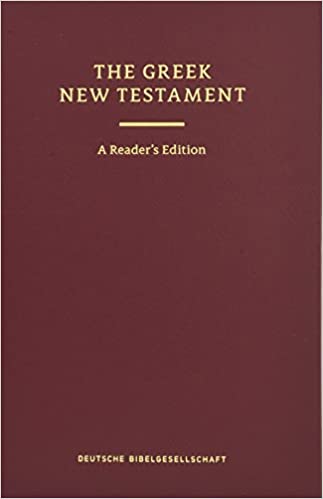
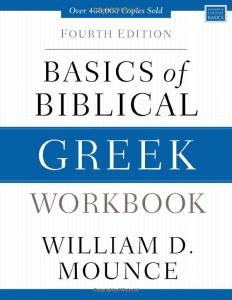



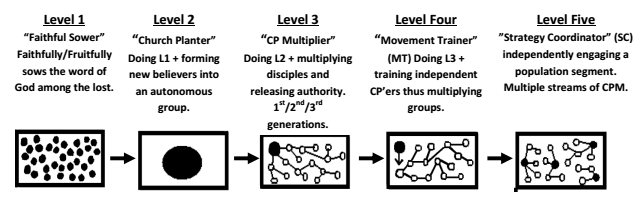


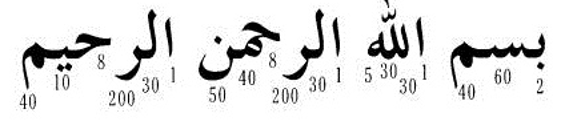
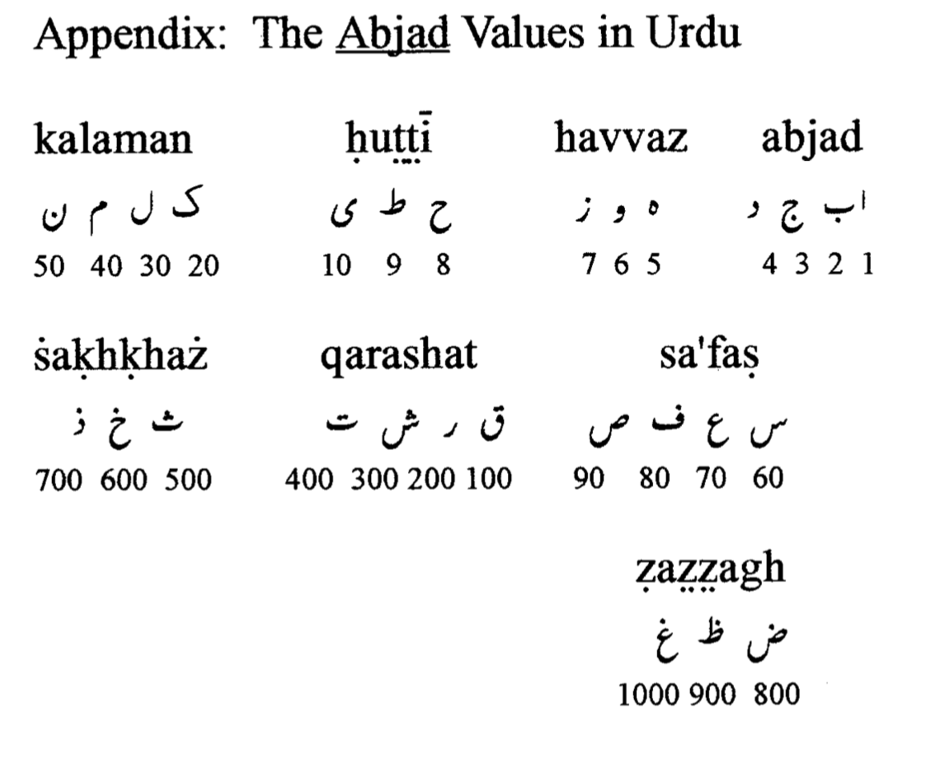


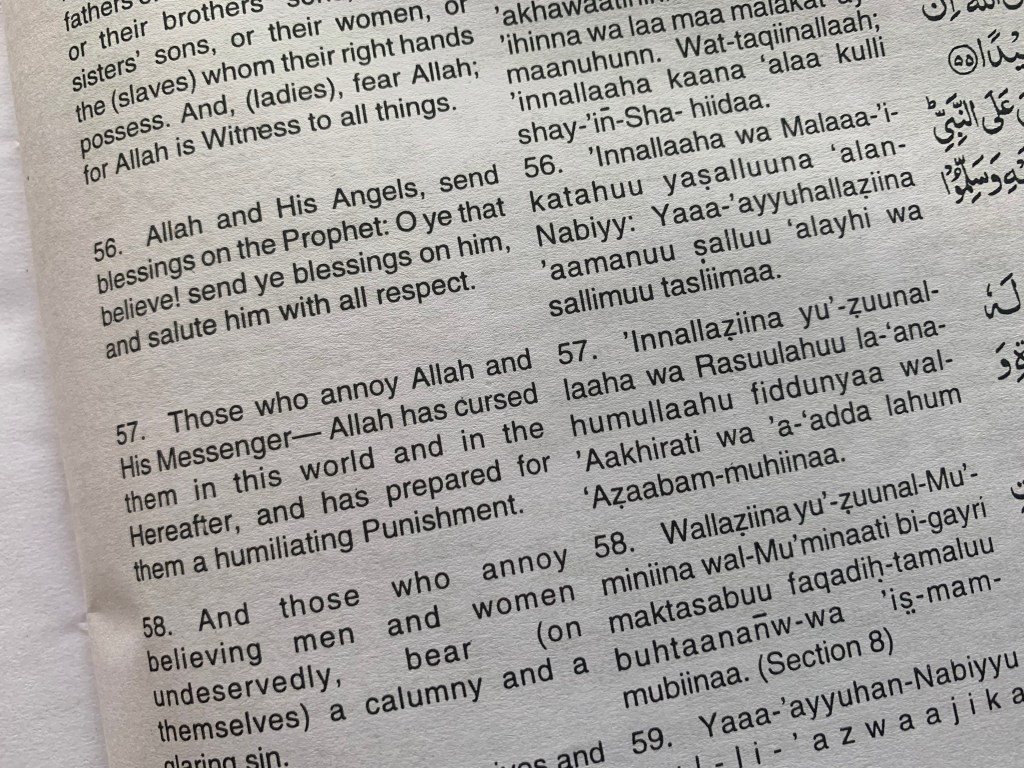


 No Cousins Left