Seven aspects of receptivity of Muslim people groups

We should prioritize serving among the lowest-hanging fruit in bring the gospel to Muslims.
Photo by MESSALA CIULLA on Pexels.com

This blog post aims to teach the Seven Aspects of Receptivity among Muslims in South Asia. While some of these same principles may apply in other areas of the world, a few aspects are particular to South Asia.

The heart behind this article is that there are more than 600 million Muslims in South Asia and relatively few working among them. We should ask, “How can we maximize our gospel impact among the Muslims of South Asia?”

Another way of approaching this question is to say that we should seek to identify the lowest-hanging fruit among South Asian Muslims. If a group of ten laborers went to harvest an apple orchard with many thousands of trees, they could not possibly pick all the apples before they went bad. The smart move would be for them to maximize their impact by going after the most accessible fruit to pick. The apples at the top of the trees or in hard-to-reach areas might be neglected to get more of the lowest-hanging fruit.

The same principle can be applied to our situation. The harvest is plentiful, but the workers are few among South Asian Muslims. Therefore, wisdom dictates that we should focus a significant amount of our energy on the lowest-hanging fruit of the Muslim community.

Therefore, here are seven aspects of receptivity that can guide us in identifying the lowest-hanging fruit among South Asian Muslims. Please note that these 

Aspect #1 – Rural versus Urban

History clearly shows that those in rural areas in South Asia are coming to Christ much more quickly than those in urban areas. One evidence of this phenomenon is that many are now asking how to begin seeing what God is doing in rural areas happen in urban areas. 

There are many reasons that rural areas have generally been more receptive than urban ones. First, rural areas are more communal in nature. Therefore, when one person comes to Christ in a rural area, the chances of the gospel spreading throughout their relational network are much higher. Second, there is a missiological axiom, “the slower the culture, the faster the gospel.” This axiom means that areas with a slower pace of life provide more availability for people to hear the gospel. In rural areas, people are ready and willing to give significant time to listen to the gospel and to respond to it. They then have more time to go and share the same with others. Third, rural areas tend to have higher concentrations of folk religion, higher poverty, and lower education/literacy, all of which appear to increase receptivity. Fourth, those in rural areas tend to be less educated about their own religion. More details about each of those aspects will be shared below.

In South Asia, we need people to pioneer ministry in each segment of society that is less receptive to the gospel. Urban areas are one of those. However, Muslim peoples are also less receptive to the gospel, so when we focus primarily on urban Muslims, we are trying to do two hard segments at the same time! So, by the lowest hanging fruit principle, we should prioritize our efforts among rural Muslims rather than urban ones. 

On a side note, there are many Muslims living in urban areas that are essentially rural Muslims who live in the city for work. While those rural Muslims living in the city have less time than in rural areas, it seems that one effective urban strategy might be to focus on rural Muslims living in urban areas. 

Aspect #2 – Ashraf, Ajlaf, and Arzal (click here for another post on casteism in South Asian Islam)

The caste system is alive and well in South Asian Islam, even if it is more subdued than in Hinduism. I began to encounter these casteist ideas by reading Muslim authors. It was common for Ashraf-background authors to speak derogatorily of lower-caste Muslims.

At the same time, I began to recognize a veneration among South Asian Muslims of certain castes, especially of the Sayyid, who claim descendency from the Qureshi tribe (some claim descendency from Muhammad). For example, I remember going to the shrine of a Sufi saint who had been a Shia Muslim. I was surprised to find many Sunni Muslims there. I asked a group of respectable men at the shrine why they, as Sunnis, came to a Shia man to help them with their prayers. They said, “It does not matter if he is Sunni or Shia. He is Sayyid.” 

In fact, many Muslims have been working to obscure their caste background in what is called ashrafization. Studies have shown that most Muslim community and religious leaders come from Ashraf backgrounds. 

Let me back up for a minute and discuss these terms.

  1. Ashraf are the descendants of foreign Muslims who emigrated to South Asia, such as Arabs, Persians, or Mongols. They are considered to be high-caste Muslims.
  2. Ajlafs are descendants of Hindu converts to Islam who are indigenous to South Asia. They are considered to be a much lower caste than the Ashraf, and some perceive the gap between the two as quite large.
  3. Arzal are descendents of Dalit converts to Islam who are indigenous to South Asia. They are considered the lowest on the ladder.

In general, the lower the caste, the more receptive Muslims are to the gospel. We should not be surprised since the same is true among Hindus. In fact, there are certain areas where Dalit-background Hindus are coming to Christ in large numbers. In those same areas, there are many Dalit-background Muslims (Arzal) who are from the same castes. In a few cases, significant numbers of Arzal Muslims have come to Christ as those movements have spilled over from reaching Hindus to reaching Muslims. 

One issue is that it can be difficult for outsiders to understand the complexities of casteism in South Asian Islam. In fact, I have asked many Muslims about these three terms, and they do not know them. But when I explained the meaning behind the terms, they said that these issues are alive and well in their community. Casteism, where higher caste individuals receive more benefit and lower caste individuals are suppressed, is common in South Asian Islam. 

I was recently part of a study of various Muslim castes in a South Asian region. I was surprised to learn that virtually all the Muslim background believers (MBBs) of that area identified as “mid-caste.” I began to specifically ask if anyone had come to Christ from various low-caste groups, and we could not find anyone. So, I challenged the MBBs in that area to try. They were surprised that the lower-caste Muslims were very receptive, resulting in many baptisms. 

Probably, the only way to identify and engage lower-caste Muslims is to disciple some MBBs long enough that they understand why we would want to try doing so. Then, have open dialogue with them about the caste realities in their areas to develop action plans. It seems virtually impossible for outsiders to identify these peoples by themselves.

One last note on low-caste groups. Arzal and Ajlaf Muslims tend to have lower education than Ashrafs. As a result, they tend to be poorer and more Folk Muslim in orientation. This combination leads to higher receptivity but can lead to significant issues in discipleship and leadership development. Sometimes, individuals from this background are slow to understand Scripture and can incorporate many folk practices into their new faith. Therefore, while these individuals might be the lower-hanging fruit to bring into the kingdom, there are questions about the difficulties of developing strong leaders from these communities. 

Aspect #3 – Orthodox, Folk, and Secular Islam (click here for another post on these three types of Islam)

I have written quite a bit on the topic of the three poles of South Asian Islam, so let me be brief here. Folk Muslims tend to be the most receptive and the most numerous of South Asian Muslims. Rural folk Muslims are really the broadest target among the low-hanging fruit that are most easily identified among South Asian Muslims.

In brief:

  • The orthodox pole of South Asian Islam emphasizes that Muslims should study the Qur’an and Hadith and obey them.
  • The secular pole of South Asian Islam emphasizes the solidarity of South Asian Muslims while focusing efforts on improving education among Muslims to improve their quality of life through better jobs. 
  • The folk pole of South Asian Islam emphasizes Muslims having their spiritual needs met through pirs and various rituals. Those living in this corner tend to be Sufi mystics (pirs) who at least claim they are seeking unity with Allah. Folk Islam has a wide variety of folk practices and superstitious beliefs. (for more on folk Islam, read here)

The ordinary Muslim is caught somewhere between these three poles. Historically, the folk Islamic pole has been dominant in South Asia. While that pole is still the strongest, the secular and orthodox poles are gaining significant strength. For example, large reform movements like Tablighi Jamaat and the Deobandi movement have contributed to South Asian Islam growing increasingly orthodox. At the same time, more and more Muslims (especially among the youth) are identifying more and more with the ideals of Western secularism. I have met many South Asian Muslim youth who have basically told me, “I am a Muslim since I come from a Muslim family, but I do not believe in Allah, the Prophet, or the Qur’an. I still do namaaz and fast to make my family happy, but I do not believe any of it.”

Historically, most of the ministry in South Asia to Muslims has focused on debate with Muslim religious leaders. That style of ministry is clearly focused on the orthodox pole. In recent years, a significant number of those working among Muslims have shifted their focus to folk Muslims. The effects of that shift have been significant. Every movement of Muslims coming to Christ in South Asia that I have encountered so far has focused primarily on rural folk Muslims.

Aspect #4 – Education and Literacy

Low education/literacy corresponds to the rural, poor folk Muslims that I have already maintained are the most receptive. In many places in South Asia, where many Muslims are coming to follow Jesus, they are largely illiterate. One MBB leader recently told me that more than 80% of the MBBs in his churches are functionally illiterate. In another area, where thousands of Muslims have come to Christ, one leader estimated that as many as 90% of their MBBs might be functionally illiterate. It should not come as a surprise that low literacy and education correspond to folk beliefs and practices and poverty.

Ministry to illiterate or low-literacy Muslims requires ministry methods that emphasize orality. In particular, those seeing significant fruit in these contexts emphasize using audio materials for ongoing evangelism, discipleship, and leadership development. If someone wants to go after the lowest hanging fruit among Muslims, they must prepare by creating a discipleship path using oral methodology.

Aspect #5 – Rich versus Poor

Jesus said, “Blessed are you who are poor, because the kingdom of heaven is yours” (Luke 6:20). God’s heart for the poor is evident throughout Scripture. History shows that the poor have often been the most receptive. They are the most oppressed and in the greatest need. The significant burdens of their lives lead to greater receptivity.

One of the terms that I often use for rural, illiterate, folk Muslims is “prosperity Muslims.” In other words, their worldview is usually such that they participate in Islamic rituals with the hope of getting blessings out of those rituals to meet their practical needs. As prosperity Muslims come to Christ, they usually make the decision that they think Jesus might be better at giving them stuff than Muhammad. We need to be careful to fight those presuppositions. 

When working with prosperity Muslims, we need to be clear that we are not paying them or inducing them to come to Christ through financial means. There is often a misperception in Muslim communities that Christians pay Muslims to convert to Christ. We need to use methods of evangelism that do not perpetuate those rumors and misconceptions. 

So, when a prosperity Muslim comes to Christ, they usually become a “prosperity Christian.” We should not be offended by this when it occurs. However, we must develop discipleship strategies to help new believers move past properity theology to understand the true gospel. It seems that themes along those lines need to be incorporated into audio discipleship materials that we develop for these illiterate audiences. 

Aspect #6 – Proximity to Movements to Christ 

Experience shows that when others come to Christ in an area, Muslims are more open to the gospel. For example, if a Muslim knows others whose lives have been changed by Jesus, they are more likely to hear the gospel when they have the opportunity. Persecution is also often reduced when others have come to Christ because it simply raises the societal acceptance of those following Jesus. 

In some areas of South Asia, Muslims are coming to Christ in significant numbers. In those areas, we often see multiple ministries seeing fruit among Muslims. It seems that as each group sees some Muslims come to Christ, it lowers the inhibitions for Muslims to come to Christ in general. Therefore, the barriers to following Jesus are significantly reduced, which increases fruitfulness.

In many rural areas, Muslims, Hindus, and others have come from the same low castes. When Hindus or others come to Christ, Muslims from the same caste can often be quickly impacted if basic training in cross-cultural evangelism is provided. This way, the gospel can spill over from one community to the next.

Aspect #7 – Social Makeup of Community 

Muslims are usually coming to Christ most quickly in areas that have mixed communities. Let me give two completely different examples.

Muslims have come to Christ in the thousands in one area of South Asia. That area has about a ten percent Muslim population. As a result, most Muslims in that area are not well-educated in Islam. As they come to Christ, the small Muslim population has difficulty putting social pressure on them to stop them from following Jesus. This rural area is the epitome of rural, illiterate folk Muslims from low castes. Hindus who live in that same area are coming to Christ even more quickly than Muslims. Areas like these should become a significant focus for Muslim ministry.

Muslims have also followed Jesus in the thousands in another area of South Asia. It has about a 95% Muslim community. The remaining five percent are Sikhs and Hindus. We have not heard about many of those Sikhs or Hindus following Jesus. However, the Muslim community itself has significantly different communities. There are a large number of both Shias and Sunnis. When a Shia follows Jesus, they are not persecuted by the Sunnis, Hindus, or Sikhs and can thus find some protection. When a Sunni follows Jesus, they are likewise not generally persecuted by the Shias, Hindus, or Sikhs. At the same time, the Sunni population, which is the majority, is fractured by multiple different Islamic sects. Those from one sect consider the other sects to be unbelievers. Islamic cults, like the Ahmadiyyas, are also strong in that area. The result is that many different groups are evangelizing this community, which results in some level of protection. There are now multiple ministries seeing significant fruit in this area.

Conclusion

In your field of service, where are the areas of lowest-hanging fruit among Muslims? How can you identify them? What might be the impact if you shifted your focus onto those communities and places that might be most receptive?

If you want to process these issues, please email me at nocousinsleft@protonmail.com.
Book Review: A Concise Guide to the Life of Muhammad

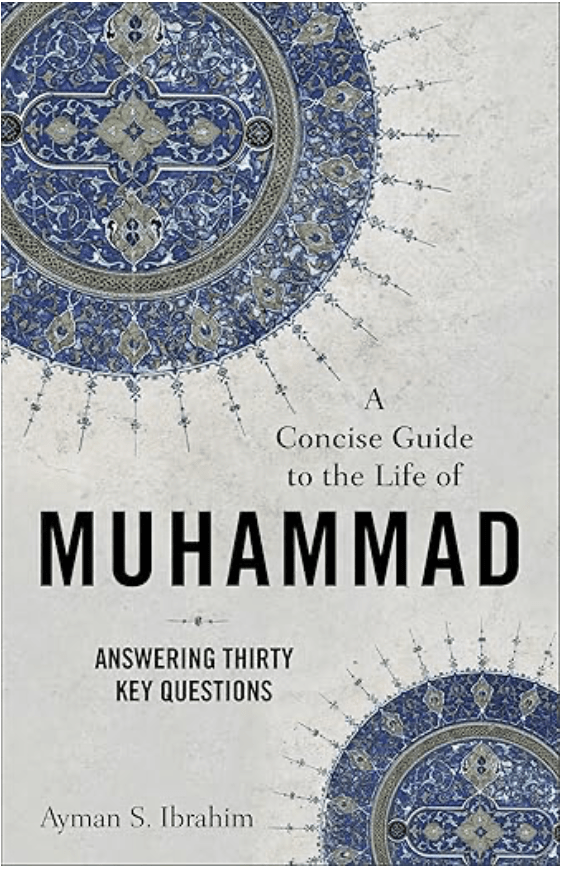
Review of Ayman S. Ibrahim, A Concise Guide to the Life of Muhammad. Answering Thirty Key Questions. Grand Rapids, Baker, 2022. Click here to buy it on Amazon.

I highly recommend Ayman Ibrahim's A Concise Guide to the Life of Muhammad.

I highly recommend Ayman Ibrahim’s book A Concise Guide to the Life of Muhammad. Few in Muslim ministry are writing excellent books that benefit the whole missions community. But with Ibrahim’s flurry of recent publications, I hope he will join the list.

Ibrahim’s expertise in Islamic studies is evident in his book, A Concise Guide to the Life of Muhammad. His unique background, growing up in Egypt as part of the Christian minority and surrounded by Muslims, has provided him with a deep understanding of the subject. As a native Arabic speaker, he has been able to study early Muslim sources such as the Hadith, Sirah, and maghazi in depth. His academic journey, including PhDs from both Fuller Theological Seminary and Haifa University, has led him to his current role as a professor of Islamic studies at the Southern Baptist Theological Seminary.

A Concise Guide to the Life of Muhammad consists of thirty simple questions broken into two primary parts. The First part is about Muhammad’s history, which begins by discussing the major sources of Muhammad’s life and then analyzing those sources. The remainder of this part asks questions about his life, like “What is Muhammad’s Night Journey to Jerusalem?” And “What Do We Know about Muhammad’s Wives and Their Roles in Islam?” Each question is answered in about 5-7 pages. What I enjoyed most about Ibrahim’s responses was that they were both thorough and straightforward at the same time. He provides the Islamic response and critical responses that disagree with the Islamic understanding. Ibrahim phrased his reactions generously and lovingly to challenge a Muslim reader without overly offending them. In this way, Ibrahim’s book provides excellent content and a template for evangelists to Muslims to think through how to present this challenging information to Muslims in a way that is most likely to receive a hearing.

The second part of the book focuses on Muhammad’s message, a topic that remains highly relevant for ministry today. Ibrahim’s previous concise guide about the Qur’an is frequently referenced in this part. He examines Muhammad’s message in the Hadith and other early Islamic sources, comparing them with his findings from his book on the Qur’an. The questions addressed in this part, such as ‘What is Muhammad’s Central message?’ and ‘What is Muhammad’s Message about Jesus?’, are particularly pertinent for ministry today. As in the previous part, Ibrahim handles these questions well, demonstrating his points from early Islamic sources and comparing them with both Muslim and non-Muslim scholars.

As I mentioned, I heartily recommend this brief book by Ibrahim. I was surprised at how valuable it was for me. It is the most concise and simplest guide I have found for bringing to the surface all the critical questions modern scholars want to ask about Islam. After reading this book, I plan to get the rest of Ibrahim’s books and read them. No doubt, missionaries to Muslims will significantly benefit from these writings.

Principles and Methods for Finding National Partners

Photo by Savvas Stavrinos on Pexels.com

This blog post consists of teaching notes for a seminar I recently taught on how to find and develop national partners. Therefore, it reads less like an article and more a collection of thoughts on that subject.

  1. Five methods to find national partners with strengths and weaknesses
    • Evangelism. In this method, we win cousins to Christ and develop them through the levels of leadership. A strength of this method is that we can sometimes create pure leaders who follow our ministry methods because they came to Christ through them. The weakness of this approach is that it takes a long time to develop leaders in this way. We also do not know if new believers will grow into leaders.
    • Filter through Training. In this method, we train as many believers as possible and create feedback loops to find those who are faithful. Then, we focus on the faithful and develop them through the levels of leadership. A strength of this method is that we can develop many partners quickly in this manner. We can also find young men and women and develop next-generation leaders. A weakness is that we often lack enough MBBs to filter through training. Therefore, this method seems to most often result in near-culture partners.
    • Networking. In this method, we meet with leaders, share our vision, and network to find national leaders who share our vision. A strength of this method is that we often discover leaders with extraordinary talents, gifts, and vision for our tasks. One weakness of this method is that those leaders usually start with strong financial expectations. Many leaders will also already have different theological and missiological beliefs. Some leaders will have learned how to play “the ministry game” and have become experts at showing us what we want to see. Great rewards are possible in working with network leaders like these, but there are also significant challenges.
    • Hand-offs. Hand-offs happen when one field worker seeks to transfer a partner to a new field worker. Hand-offs have great potential since we usually only hand off quality leaders to others. But there are several issues. For example, it is common for the first field worker to have been generous financially with the partner, but the receiver of the hand-off is skeptical about the amount of money involved. Also, the national partner has often become highly skilled under the first field worker and is running hard in work. However, the new field worker now controls the finances necessary to do that work and has new ideas. The new field worker and the national partner often struggle with these issues. 
    • Cascading movements. In this method, a field worker comes alongside a movement where significant numbers of people are coming to Christ. They cast a vision for helping the network cascade a movement of the main movement into a new area or people group. They then serve the new movement that is cascading off the first. A common tactic is that a significant leader or two within a network are designated for the new work. For example, a movement is occurring where substantial numbers of non-cousins are coming to Christ. A movement may then cascade off that first movement that focuses on cousins. A benefit of this approach is that national workers in a movement often know how to do the missionary task well and are adaptable to engaging new populations. This method shows significant potential in many areas. Some weaknesses are that sometimes there can be a conflict between the national movement and the field worker. This type of work also begins with significant financial expectations.
  2. Strengths and weakness of working with near culture versus MBB partners.
    • MBB partners. Whenever possible, we should begin with MBB partners. The primary reason is that MBBs are our focus. MBBs will always do better at engaging cousin populations since they share the same culture and background. Getting to depth in work with cousins requires MBBs. If we begin with near-culture partners, then a primary task is to develop those MBB partners together. If we work directly with MBBs, then we skip that interim step.
    • Near-culture partners. In many places, we lack MBBs that we can develop as leaders. An interim step in those situations is to develop near-culture partners. Then, alongside those partners, we can develop MBB partners. Often, MBBs and near-culture partners can develop solid long-term work together. 
  3. There is no such thing as a perfect partner. Some new field workers struggle because they want an ideal partner with great character, theology, and ministry practice. If you find a partner like that, they probably do not need you. If you find a perfect partner, they should develop you as a field worker rather than vice versa. When we commit to national partners, we commit to developing workers to do the work apart from us. There is a time to help be a support structure for network leaders and significant leaders who are already doing great ministry. However, we also need to develop new leaders. 
  4. Our partners should become like family to us. Our primary national partners should go beyond ministry projects. We should build relationships with their wives and children. We should be in their homes, and they should be in our homes. We should develop deep and abiding relationships. We should learn through our relationships with them what is happening in their lives. Developing these kinds of partnerships and relationships is a significant amount of work. However, these relationships will often be the most rewarding aspect of your work in the field.
  5. We should learn from our partners. If you only teach your partners and never learn from them, you are probably doing it wrong. They have amazing insights and knowledge. They almost always understand the culture and context better than we do (although we often teach them about these things as well!). As you build relationships with nationals, keep your hearts open to learning from them.
  6. The Role of Money. The role of money in developing national partners is one of the most complex issues in missions.
    • Buying time. One aspect of money is that nationals must be willing and able to commit time to us so that we can commit time to them. The ideal is for them to find ways to manage their personal needs and time with us. However, as we develop partnerships, we will see that some national partners need us to provide some money at times so that they can spend the 60-90 days per year with them that they desire. 
    • Two ditches: committing too quickly and never committing. When developing national partners, there are two ditches when making financial commitments. Some people commit too quickly. Once we commit finances to a relationship, especially anything like a stipend or paying for children’s education, the relationship is often ruined if we cease that support. It is good to move forward toward financial commitments with partners slowly. On the other hand, some never commit any finances to partners. The result is that some national partners cannot commit time to us because they cannot sustain their lives.
    • A few paid partners. The Nevius Principle is often quoted as a principle that we, outside workers, should not pay national pastors. Some have applied the same principle to national partners. However, even John Nevius, the founder of that principle, had paid national partners. In his book The Planting and Development of Missionary Churches, Nevius described his principles in not paying local pastors and described paying two national partners who worked with him. As Nevius paid just two, we usually do best when giving financial support to very few.
    • Be Accountable. Whenever we enter into financial commitments with national partners, we should be accountable to others in those decisions. It is very easy to make bad decisions regarding paying nationals. Allowing others, especially those in supervision over us or who have significant field experience, to speak into financial commitments before we make them will save us from many difficulties.
    • Long-term sustainability. Whenever we begin including finances with national partners, we must acknowledge that we will not pay that partner one day. Even from the beginning, we should be making plans for when we will no longer pay that partner.
  7. Key areas of development for national partners. We desire to leave the task in the hands of national partners for many years after we have left the field. Therefore, national partners need to be developed in every area in which we need development. For example: Character transformation, Walking with Jesus, Knowledge of the Word and theology, Practical ministry skills, How to manage their household, including marriage and parenting, Financial planning, Time management, Leadership skills
  8. How to get to 60-90 days. Getting to 60-90 days looks different if you follow a 6-10 or 1-3-9 model. 60-90 days per year means about 5-8 days per month with each partner.
    • 6-10 model. In this model, you are developing a new crop of 6-10 L1 or L2 leaders and seeking to help them progress. They might be near-culture or MBB partners. In a 6-10 model, the only way to get to 5-8 days/month with each partner is to have group events. For example, you might meet with your whole group for three days per month of accountability, Bible study, and strategic planning. Then, you might meet with 2-3 at a time doing fieldwork or leading training. In this way, you can develop these partners significantly.
    • 1-3-9 model. In this model, you are developing about three partners who are each developing other leaders under them. This model is more like developing three L3 leaders. Again, you will benefit from having group meetings with all three partners and potentially even some of their second-generation leaders. You will probably do less in your field work when working with these leaders because you will work with a leader and their second-generation leaders. Because of this dynamic, you cannot focus on as many leaders in the 1-3-9 model, but those leaders you work with are more developed. 
  9. The five levels of leadership and finding/developing MBB partners. In cousin ministry, the five levels of leadership are most appropriate for developing MBB partners, while the M-scale is most appropriate for developing near-culture partners. One key aspect of developing national partners is to help them take their next step up this scale. Click here for more on the five levels of leadership and the M-scale.
    • Level 1 Seed Sower. The first level of leadership is for MBB partners to obey the commands of Christ, including studying the Word, praying, and sharing the gospel. Ideally, they are members of a church. 
    • Level 2 Church Planter. L2 MBB leaders meet the qualifications of 1 Timothy 3:1-7 and have gone beyond sharing the gospel to making disciples and planting at least one church. L2 leaders should have growing character, a growing knowledge of Scripture, and a growing teaching ability.
    • Level 3 Multiplier. L3 MBB leaders lead churches and are developing a growing network of other L1, L2, and L3 MBB leaders. A primary goal should be the development of L3 MBB leaders.
    • As more and more L3 MBB leaders emerge, we need to begin discussing L4 and L5 MBB development.
  10. The M-Scale and developing near-culture partners. The M-scale is an adaptation of the five levels of leadership to help guide near-culture partners to develop L3 MBB leaders. We have seen that each step of progress on this scale requires the near-culture partner to adapt the culture of his or her people group more and more.
    • M1 Cross-cultural seed sowers. The first step to helping near-culture partners is to learn how to communicate the gospel among cousins competently.
    • M2 Follow-up machines. M2 leaders consistently follow up with seekers/yellow lights. They grow in aptitude for language, culture, and answering objections. 
    • M3 Cross-cultural disciple-makers. M3 leaders have worked with seekers until God has moved in their hearts, and some have been baptized. They then disciple the new believers, hopefully developing some L1 MBB leaders.
    • M4 Shadow pastors. As some MBBs come to Christ, the cross-cultural leader identifies potential leaders and works with them in gathering and leading new churches. As these churches form, ideally through natural and pre-existing relationships, the cross-cultural worker helps lead new churches but progressively develops MBB leaders. At this point, L2 MBB leaders begin to emerge.
    • M5 Shadow leaders. The cross-cultural worker develops their L1 and L2 MBB leaders as the churches grow. He or she gives them a vision for developing other L1 and L2 MBB leaders. In this way, a network of churches begins to form. At this point, L3 MBB leaders start to emerge.
  11. The benefit of non-English-speaking partners. Newer field workers often prefer to work with English-speaking national partners because of the ease of communication. However, two primary issues can occur. First, if we depend on English-speaking partners, we might need to learn the local language better to go deeper into discipleship with others. There are many adverse effects of this. For example, a field worker can only go into a developing network and see what is happening in new disciples with it going through the filter/translation of partners. As a result, they often lack understanding of what is happening in the work. A second issue is that English-speaking partners usually have access to a broader group of foreigners. The result is that they have worked with different foreign groups. In contrast, non-English speaking partners are often more focused. They also help drive field workers to learn the local language more deeply.
  12. The benefits of developing younger partners. In the same way, younger partners are usually more desirous of learning and have fewer opportunities. As a result, we can often make a more significant impact by focusing our efforts on developing national partners by focusing on those under 30.

Command #4 – Study the Word of God

This blog post is a transcript of a teaching that someone made about Step #10 in our discipleship process, Steps 7-14 are the Eight Commands of Masih, which is a simple way of understanding what Hazoor Isa al Masih desires for His disciples. Click here to go back to the previous lesson.

Allah tala revealed the Intel Sharif through Hazrat Isa al-Masih as a light and guidance for all humanity.

Aslammu Alakum, my friends.

In the last lesson, we learned about Khudawand Isa al-Masih’s model prayer. In this lesson, we will continue learning how to grow our spiritual lives by studying the Kitab-e-Muquddas. Prayer and studying the Word of God are two essential steps in growing strong in our spiritual lives. In today’s lesson, Khudawand Isa al-Masih says that the Word of God is more essential to man than food. If a man goes a day without food, he becomes hungry. If he goes several days without food, he becomes quite weak. If he continues without food, eventually he will die. In the same way, our spiritual lives will die if we do not take in the Word of God.

Before we study today’s lesson, I want to remind us about the three commands we have studied so far. In the first command, we learned about repenting and believing. We saw the example of a sinful woman who came to Khudawand Isa al-Masih and found forgiveness of sins. Khudawand Isa al-Masih shared a powerful parable, “A creditor had two debtors. One owed five hundred denarii, and the other fifty. Since they could not pay it back, he graciously forgave them both. So, which of them will love him more?” (Luke 7:41-42) In the parable, the sinful woman was the one who owed more and was forgiven more. In the same way, Khudawand Isa al-Masih welcomes repentant sinners into His kingdom. To enter His kingdom, we must repent and belief. Repenting means turning away from our sinful lives. Believing means trusting in Khudawand Isa al-Masih as our Lord. Have you repented and believed? 

The second command taught about baptism as an expression of our repentance and faith. Baptism is an act by which new followers of Khudawand Isa al-Masih are submerged in water as a sign that they are repenting and believing. When they are submerged in the water, it is as if they are dying to their old life. Going beneath the water is a symbol of us being buried with Khudawand Isa al-Masih. When the new believer rises from the water, they enter a new life, as if they are being raised from the dead with Khudawand Isa al-Masih. In our story, the Ethiopian eunuch immediately repented, believed, and took baptism when he understood the gospel. He said, “Look there’s water. What would keep me from being baptized?’ (Acts 8:36) Philip immediately baptized the eunuch by immersing him completely in the water. Have you followed Khudawand Isa al-Masih in baptism?

The third command gave Khudawand Isa al-Masih’s teaching on prayer. He taught us that prayer is simply talking to God as our heavenly Father. Just like fathers love hearing from their children, so God loves hearing from us. Therefore, we should not pray like hypocrites, who pray to show their prayers to others instead of to God. Also, we should not pray like the ignorant, who believe that God hears our prayers only if we pray using a particular language or specific words. Instead, we should simply talk to God as our heavenly Father. Khudawand Isa al-Masih gave a model prayer for us to follow. If you lack your own words for prayer, then use this model prayer.

Our Father in heaven, Your name be honored as holy.

Your kingdom come. 

Your will be done on earth as it is in heaven.

Give us today our daily bread. 

And forgive us our debts, as we also have forgiven our debtors.

And do not bring us into temptation, but deliver us from the evil one. 

Matthew 6:9-13

Since the lesson on prayer, how is your prayer life? Have you been praying daily? Prayer is essential for developing a deep relationship with God.

Today, we will continue our study of the teachings of Khudawand Isa al-Masih by looking at the temptation of Khudawand Isa al-Masih by Satan in Matthew 4:1-11. The main point that we will focus on is that Khudawand Isa al-Masih overcame temptation by using Scripture. If it was important for Khudawand Isa al-Masih to know the teachings of the Kitab-e-Muquddas, then it is also important for us.

“Then Khudawand Isa al-Masih was led up by the Spirit into the wilderness to be tempted by the devil. 2 After he had fasted forty days and forty nights, he was hungry. 3 Then the tempter approached him and said, “If you are the Son of God, tell these stones to become bread.” 

4 He answered, “It is written: Man must not live on bread alone but on every word that comes from the mouth of God.”

5 Then the devil took him to the holy city, had him stand on the pinnacle of the temple, 6 and said to him, “If you are the Son of God, throw yourself down. For it is written:

He will give his angels orders concerning you,

and they will support you with their hands

so that you will not strike

your foot against a stone.” 

7 Khudawand Isa al-Masih told him, “It is also written: Do not test the Lord your God.” 

8 Again, the devil took him to a very high mountain and showed him all the kingdoms of the world and their splendor. 9 And he said to him, “I will give you all these things if you will fall down and worship me.” 

10 Then Khudawand Isa al-Masih told him, “Go away, Satan! For it is written: Worship the Lord your God, and serve only him.” 11 Then the devil left him, and angels came and began to serve him.”

In this passage, what do we learn about Khudawand Isa al-Masih? First, we see that His fast was very powerful. He fasted for forty days and nights. He did not only fast during the daytime, but He also fasted during the night. 

Second, we see that Khudawand Isa al-Masih was “led by the Spirit.” This ‘Spirit’ is the Holy Spirit of God. It was the Holy Spirit who led Him into the wilderness to be tempted by Satan. The Holy Spirit empowered Khudawand Isa al-Masih in His life and ministry. After Khudawand Isa al-Masih ascended into Heaven, the Holy Spirit was sent and is graciously given, by God, to those who repent, believe, and follow Him. The Holy Spirit is the power and presence of God that lives in His people. The Holy Spirit direct connects followers of Hazrat Isa al-Masih with God the Father. 

What else do we learn about Hazrat Isa al-Masih from this story? We see that Khudawand Isa al-Masih knew the Word of God. Three times He quoted from the Taurat Sharif, the book of Hazrat Musa alaihissalam. When Satan told Him to make bread from rocks, He said, “It is written: Man must not live on bread alone but on every word that comes from the mouth of God.” When Satan told Him to throw Himself from the top of the temple in Jerusalem, He said, “It is also written: Do not test the Lord your God.” Last, when Satan told Khudawand Isa al-Masih to worship him, He said, “Go away, Satan! For it is written: Worship the Lord your God, and serve only him.” All three of these quotes come from Deuteronomy in the Taurat Sharif, meaning that Khudawand Isa al-Masih had studied that book deeply and was able to quote its teachings as He needed.

In this story, we also see that although Khudawand Isa al-Masih was tempted, He did not sin. Although God’s Word says, “All have sinned and fall short of the glory of God” (Romans 3:23), this is not true of Khudawand Isa al-Masih. The reason is that His unique and spiritual birth brought Him into the world completely pure. Even Satan was not able to tempt Khudawand Isa al-Masih into sinning!

Last, we see that Satan called Khudawand Isa al-Masih “the Son of God” twice. He said, “If you are the Son of God, tell these stones to become bread.” Then, “If you are the Son of God, throw yourself down.” It is a special title of Khudawand Isa al-Masih that He is the Son of God. While we are all children of God, Khudawand Isa al-Masih is the Son of God in a way that is not true of the rest of us. When we say that Khudawand Isa al-Masih is the Son of God, we must not become confused that He is the physical Son of God. God has never taken a wife nor had children like men do! Instead, Khudawand Isa al-Masih is the spiritual Son of God.

What do we learn about Satan in this story? First, we see that Satan is the tempter. He sought to tempt Khudawand Isa al-Masih three times, but failed. Second, we see that Satan also knows the Word of God, although he twists its meanings. In this passage, Satan quoted the Zabur Sharif, which is the book of Hazrat Dawood alaihissalam, saying, “He will give his angels orders concerning you, and they will support you with their hands so that you will not strike your foot against a stone.” We know that Satan is very powerful and very intelligent. He was able to transport Khudawand Isa al-Masih to the top of the temple and to the top of a high mountain. He knows the Scriptures. He is very ancient. But our Khudawand Isa al-Masih defeated him in the wilderness, and Satan had to flee from Him. This means that, if we are close to Khudawand Isa al-Masih, Satan and his evil spirits cannot harm us. 

Are there any sins we should avoid in this passage? The main sin we should avoid here is falling into temptation. Every person faces temptation in this life. Some people sin when they are tempted, while others continue on God’s path. If we want to be followers of Khudawand Isa al-Masih, we must reject sin and temptation, as He did. Also, Khudawand Isa al-Masih quoted an important teaching from the Taurat Sharif that we must obey. He said, “Worship the Lord your God, and serve only him.” According to Khudawand Isa al-Masih, the most important command is to “Love the Lord your God with all your heart, with all your soul, and with all your mind” (Matt 22:37). To love God means to worship only Him. We must reject all false kinds of worship and serve only the One true God.

Finally, what examples do we see in this passage. The primary example I want to focus on is how Khudawand Isa al-Masih stood in temptation by quoting Scripture. Three times, He quoted from the Taurat Sharif, which is the book of Hazrat Musa alaihissalam. This means that Khudawand Isa al-Masih studied the Taurat Sharif and obeyed it. We need to walk in His example.

If you want to follow Khudawand Isa al-Masih, then it is vital that you also study His teachings. His teachings are found in the Injeel Sharif. The Injeel Sharif is composed of 27 books with a total of 260 chapters. If you read three chapters a day, you can complete the entire Injeel Sharif in three months. It only takes about fifteen minutes to read three chapters of the Injeel Sharif. Doing this will help you grow greatly in your spiritual life. Please take this challenge to study the Word of God so that you can grow in your spiritual life. 

If you cannot read, you can listen to the Word of God. Put an audio recording of the Injeel Sharif on your phone and listen to it every day. Listen to it repeatedly, and your spiritual life will grow significantly. As you grow in studying the Injeel Sharif, you will grow closer and closer to God.

Khuda Hafiz, my friends.

Command #3 – Pray

This blog post is a transcript of a teaching that someone made about Step #9 in our discipleship process, Steps 7-14 are the Eight Commands of Masih, which is a simple way of understanding what Hazoor Isa al Masih desires for His disciples. Click here to return to the previous teaching.

In dua, we are simply talking to the God who loves us.
Photo by Luis Quintero on Pexels.com

Aslammu Alaikum, my friends.

Today, I want to share the third command of Hazrat Isa al-Masih. It is about prayer. The previous two commands were about how to begin our relationship with Hazrat Isa al-Masih through repentance, faith, and baptism. In this lesson, we begin learning how to grow in our walk with Hazrat Isa al-Masih. To grow as followers of Hazrat Isa al-Masih, we must pray and study the Injeel Sharif. The fourth command will be about studying the Injeel Sharif.

Before we study about prayer, let us review the ways that Hazrat Isa al-Masih is unique. First, the birth of Hazrat Isa al-Masih was unique. Many prophets prophesied the birth of Hazrat Isa al-Masih. Angels also came and told Hazrat Miriam (PBUH) and others about His birth. Hazrat Isa al-Masih was born of a virgin. He came into the world to save us from our sins through His death on the cross. Did any other prophet have a birth that special? Hazrat Isa al-Masih healed the sick and raised the dead. By His miracles, Hazrat Isa al-Masih showed His love towards sinners. He has such great authority and power that He can forgive sins and perceive our secret thoughts. Can any other prophet work so many miracles? Hazrat Isa al-Masih said, “I am the way and the truth and the life. No one comes to God the Father except through me.” If we want to enter a relationship with God, then we must hear and obey the teaching of Hazrat Isa al-Masih.

So, Hazrat Isa al-Masih had a special birth, performed great miracles, and had a great teaching. But these are not the most special things about His life. The most special thing is that Hazrat Isa al-Masih gave His life on a cross for the forgiveness of our sins. He was buried and, three days later, He came back to life. He came out of His grave and ascended to heaven! Now Hazrat Isa al-Masih sits in heaven and will return on the day of judgement.

Because Hazrat Isa al-Masih is so great, we must be careful to obey His commands. He told His disciples, “If you love me, you will keep my commands” (John 14:15). While there are many commands of Hazrat Isa al-Masih, these lessons focus on some of the most important. These commands are to repent and believe, take baptism, pray, study the Bible, go and make disciples, love, take the Lord’s supper, and give.

Today’s lesson on prayer comes from Matthew 6:5-15 in the Injeel Sharif. This passage is how Hazrat Isa al-Masih taught His disciples to pray.

“Whenever you pray, you must not be like the hypocrites, because they love to pray standing in the synagogues and on the street corners to be seen by people. Truly I tell you, they have their reward. 6 But when you pray, go into your private room, shut your door, and pray to your Father who is in secret. And your Father who sees in secret will reward you. 7 When you pray, don’t babble like the Gentiles, since they imagine they’ll be heard for their many words. 8 Don’t be like them, because your Father knows the things you need before you ask him.

“Therefore, you should pray like this:

Our Father in heaven, your name be honored as holy.

Your kingdom come. 

Your will be done on earth as it is in heaven.

Give us today our daily bread. 

And forgive us our debts, as we also have forgiven our debtors.

And do not bring us into temptation, but deliver us from the evil one. 

“For if you forgive others their offenses, your heavenly Father will forgive you as well.    But if you don’t forgive others, your Father will not forgive your offenses.”

What do we learn about God from this teaching? First, we see that Khudawand Isa al-Masih taught us to pray to God as our Father. It is a very special thing to call God our Father! He is the best Father we could ever hope for, since He is all-loving and all-powerful. Our heavenly Father loves us better than any earthly father could ever love his children. 

Sometimes there is a misunderstanding about the term “Father” for God. Some people have twisted this word and tried to use it as proof that followers of Khudawand Isa al-Masih believe that God took a wife and had children. This idea is blasphemy! No follower of Khudawand Isa al-Masih believes that God took a wife, nor do we believe that God has ever had physical children. As we saw in Khudawand Isa al-Masih’s unique birth, He was the spiritual Son of God, not a physical Son of God. Here, the word “Father” for God does not refer to God being a physical father to anyone. Instead, it means that God loves His people as a father loves their children. Except, God loves His people even better than any early father ever could, since earthly fathers are full of sin. As a loving Father, God delights to forgive our sins and to provide our needs. Because He is a good Father, we can come to Him in prayer.

What else do we learn about God from this teaching? We see that He hates hypocrisy. He hates hypocrisy because hypocrites try to show people that they are good, while having hearts that are far away from God. God does not delight in religion that is practiced in this way. Instead, God desires people who love Him from their hearts. Therefore, we must be transformed inwardly to be close to God. Hypocrisy blocks people from being able to be close to God. Unfortunately, it is common that many religious leaders are hypocrites. They try to show others that they are spiritual, while their hearts are far from God. These kinds of people cannot help others come close to God. 

What do we learn about people in this teaching? We hear about two types of misguided prayer from two kinds of people. First, the hypocrite prays to show his religion to people rather than to God. As Khudawand Isa al-Masih said, hypocrites “love to pray standing in the synagogues and on the street corners to be seen by people.” If someone prays more to be seen by people than to be close to God, how can they really be close to God? Instead, as Hazrat Isa al-Masih taught, it is better to go into a private room, close the door, and pray to God in secret. Then, we will find the real reward of prayer, which is a relationship with God.

The second kind of misguided prayer are those who babble and think they will be heard by their many words. Khudawand Isa al-Masih was talking about people who used special prayers that they thought had power, because they were the right words for prayers. Many people learn to pray special prayers, in languages that they do not understand, thinking that is what God wants in prayer. But, if our God is our heavenly Father, why would He want His children to babble at Him in languages they do not understand? This is not the right kind of prayer. Instead, we should share our hearts with God and pray to Him as our heavenly Father. He wants to hear the voices of His children!

So, how should we pray today? We should pray by simply talking to our heavenly Father, as Khudawand Isa al-Masih taught. Share the needs that are in your life with Him because He cares for you. Ask Him to help you with your specific needs. Like a father who takes care of the needs of His children, God wants to take care of you. 

Many people ask, “How often should we pray?” Khudawand Isa al-Masih did not give us any specific command on how often to pray. Instead, He focused on our relationship with God. The purpose of prayer is to be close to God. How often does a child want to talk to a loving father? This is how often we should desire to pray. To begin, try beginning and ending your days in prayer. Also, pray whenever a need or worry comes to your mind. 

Khudawand Isa al-Masih taught that there is no special place we must pray and that there are no specific times we must pray. He gave no specific rituals for prayer. However, this model prayer is a helpful prayer for many people. If you do not know how to pray, begin with the model prayer of Khudawand Isa al-Masih, then pray in your own words, in your own language. Please pray this prayer with me again. I will pray one line, then you repeat after me. After this prayer, simply pray aloud to your heavenly Father in your own words.

Our Father in heaven, Your name be honored as holy. (pause)

Your kingdom come. (pause)

Your will be done on earth as it is in heaven. (pause)

Give us today our daily bread. (pause)

And forgive us our debts, as we also have forgiven our debtors. (pause)

And do not bring us into temptation, but deliver us from the evil one. (pause)

Amen.

Click here to keep learning how to follow Hazoor Isa al-Masih

Command #2 Baptism (Pak Guzl)

This blog post is a transcript of a teaching that someone made about Step #8 in our discipleship process, Steps 7-14 are the Eight Commands of Masih, which is a simple way of understanding what Hazoor Isa al Masih desires for His disciples. Click here to go to the previous lesson.

In the Pan Gusl, we are fully immersed in water to be purified once for all time before the Almighty.
Photo by Jose Vasquez on Pexels.com

Aslammu Alaikum, my friends.

This teaching is the second of the eight commands of Khudawand Isa al-Masih, about a ritual called baptism. In the previous lesson, we looked at the story of a sinful woman repenting and believing when she came to Khudawand Isa al-Masih. In that story, Khudawand Isa al-Masih told a parable, “A creditor had two debtors. One owed five hundred denarii, and the other fifty. Since they could not pay it back, he graciously forgave them both. So, which of them will love him more?” (Luke 7:41-42) The point of this parable was that this sinful woman had an enormous debt to God. God had forgiven her debt through the sacrifice of Khudawand Isa al-Masih. Because she had been forgiven much, she loved Khudawand Isa al-Masih very much.

Have you repented of your sins and believed in Khudawand Isa al-Masih? Repenting and believing is the first step in becoming His disciple. Today, I hope that you will follow Him. 

After we repent and believe, followers of Khudawand Isa al-Masih take baptism to show their repentance and faith. Taking baptism is a significant step in becoming a follower of Hazrat Isa al-Masih. In the story today, you will learn more about what it means to take baptism. Today, we will look at a story from Acts 8:26-38 from the Injeel Sharif. In this story, God used a follower of Khudawand Isa al-Masih named Philip to help another man become a disciple of Khudawand Isa al-Masih.

An angel of the Lord spoke to Philip: “Get up and go south to the road that goes down from Jerusalem to Gaza.” (This is the desert road.) 27 So he got up and went. There was an Ethiopian man, a eunuch and high official of Candace, queen of the Ethiopians, who was in charge of her entire treasury. He had come to worship in Jerusalem 28 and was sitting in his chariot on his way home, reading the prophet Isaiah aloud.

29 The Spirit told Philip, “Go and join that chariot.”

30 When Philip ran up to it, he heard him reading the prophet Isaiah, and said, “Do you understand what you’re reading?”

31 “How can I,” he said, “unless someone guides me?” So, he invited Philip to come up and sit with him. 32 Now the Scripture passage he was reading was this:

He was led like a sheep to the slaughter,

and as a lamb is silent before its shearer,

so he does not open his mouth.

33 In his humiliation justice was denied him.

Who will describe his generation?

For his life is taken from the earth. 

34 The eunuch said to Philip, “I ask you, who is the prophet saying this about — himself or someone else?” 35 Philip proceeded to tell him the good news about Hazrat Isa al-Masih, beginning with that Scripture. 

36 As they were traveling down the road, they came to some water. The eunuch said, “Look, there’s water. What would keep me from being baptized?” 38 So he ordered the chariot to stop, and both Philip and the eunuch went down into the water, and he baptized him.”

What do we learn about Khudawand Isa al-Masih from this story? First, we see that other prophets had come to prophesy about the coming of Khudawand Isa al-Masih. In this story, the eunuch was reading from the 53rd chapter of Hazrat Isaiah alaihissalam, who taught about the sacrificial death of Hazrat Isa al-Masih for our sins. This points to the importance of Hazrat Isa al-Masih. Many prophets told about the coming of Khudawand Isa al-Masih. In fact, there are over 300 prophesies about the coming of Hazrat Isa al-Masih in the Kitab-e-Muquddas from prophets that came from before Khudawand Isa al-Masih.

We also see that Khudawand Isa al-Masih can bring seekers to Himself. This eunuch was out in the wilderness without anyone to teach him. But God saw him, and God sent an angel to send His messenger to this eunuch. Here we see the greatness of God. He knows all things and can bring genuine seekers to Himself. 

What do we learn about people in this story? The story of the eunuch should inspire us. Here was a man who lived in a nation that did not worship the true God. However, this man was seeking truth. He was so curious that he travelled thousands of miles from Ethiopia to Jerusalem to seek the truth. In Jerusalem, he had found the Word of God and was reading it, but he had difficulty understanding. Today, many people are seeking God, like this Ethiopian eunuch. I hope that you are one of them. If you are, I hope that you will be ready to follow Hazrat Isa al-Masih, like this man did, as you learn more about Him.

We have two great examples to follow in this story: (1) Philip and (2) the Ethiopian eunuch. Philip was ready to obey God no matter what. When an angel appeared to Philip, he was told to go from a city into the wilderness. He did not question what God commanded. Instead, he obeyed. Then, when he saw the chariot of the eunuch, the Spirit told him, “Go and join that chariot.” Indeed, this was a risky step since the eunuch was a rich man with guards. But Philip immediately obeyed.

In the same way, we should be ready to obey God immediately, no matter what. Also, Philip gave a great example of being prepared to teach the Word of God. He understood the meaning of the passage from Isaiah 53. He explained from that passage how to follow Hazrat Isa al-Masih. This means that Philip knew the Kitab-e-Muqudddas well and was ready to teach from it. In the same way, we need to learn to help others follow God.

The Ethiopian eunuch is a beautiful picture of seeking truth and obedience. First, his desire for the truth was so great that he travelled thousands of miles at great expense in his search for God. He studied intensely, as we see when he was reading the writings of Hazrat Isaiah alaihissalam. He was ready to listen to Philip to learn the truth. Then, when he found the truth, the Ethiopian eunuch was immediately prepared to repent and believe. He demonstrated his faith through baptism. He said, “Look, there’s water. What would keep me from being baptized?” In this statement, the eunuch said that he had repented and believed. 

Have you repented and believed in Hazrat Isa al-Masih? If you have, then you should also follow Him in baptism. As with the Ethiopian eunuch, baptism is a special washing when another follower of Hazrat Isa al-Masih immerses us completely in water. Because Hazrat Isa al-Masih is so powerful, we only need to take baptism once in our life. From baptism, we are made clean by His power and grace. In our baptism, we become part of the people of God.

Romans 6 in the Injeel Sharif teaches more about the meaning of baptism. “Or are you unaware that all of us who were baptized into Masih Isa were baptized into His death? Therefore, we were buried with Him by baptism into death, in order that, just as Masih was raised from the dead by the glory of God the Father, so we too may walk in newness of life. For if we have been united with Him in the likeness of His death, we will certainly also be in the likeness of His resurrection.” This passage from the Injeel Sharif teaches the spiritual meaning of baptism. When we go beneath the water in baptism, we die to our old lives with Hazrat Isa al-Masih. Just as He died and was buried in a grave, we also consider ourselves dead to our old lives. 

Then, when we come out of the water, we are given a new life with Hazrat Isa al-Masih. Just like when He rose from the dead, we come out of the water of baptism into a new life. Do you want to have a new life with Hazrat Isa al-Masih? Then you should follow Him in baptism. Please contact us if you have questions about how to take baptism to follow Khudawand Isa al-Masih. 

Khuda hafiz, my friends

Click here to go to the next step in learning how to follow Hazoor Isa al-Masih.

Command #1 – Repent and Believe

This blog post is a transcript of a teaching that someone made about Step #7 in our discipleship process, It is also the first of the Eight Commands of Masih, which is a simple way of understanding what Hazoor Isa al Masih desires for His disciples. Click here to return to the previous step in this discipleship process.

If we are heading on the wrong path in life, we need to take a u-turn through repentance (tauba) to walk on the path of Hazoor Isa al-Masih.
Photo by Chait Goli on Pexels.com

Aslammu Alaikum, my friends.

This teaching marks the beginning of a new set of eight teachings on following Hazrat Isa al-Masih. We call these teachings the Eight Commands of Hazrat Isa al-Masih.

In our previous teachings, I shared about the birth, miracles, and teachings of Hazrat Isa al-Masih. Many prophets prophesied the birth of Hazrat Isa al-Masih. Angels also told Hazrat Miriam (PBUH) and others about His birth. Hazrat Isa al-Masih was born of a virgin. He came into the world to save us from our sins through His death on the cross. Did any other prophet have a birth that special? Hazrat Isa al-Masih healed the sick and raised the dead. By His miracles, Hazrat Isa al-Masih showed His love towards sinners. He has such great authority and power that He can forgive sins and perceive our secret thoughts. Did any other prophet work so many miracles? Hazrat Isa al-Masih said, “I am the way and the truth and the life. No one comes to God the Father except through me.” To begin a relationship with God, we must hear and obey the teaching of Hazrat Isa al-Masih.

So, Hazrat Isa al-Masih had a unique birth, performed great miracles, and had great teaching. But these are not the most extraordinary things about His life. The most unique thing is that Hazrat Isa al-Masih gave His life on a cross to forgive our sins. He was buried and, three days later, He came back to life. He came out of His grave and ascended to heaven! Now Hazrat Isa al-Masih sits in heaven and will return on the day of judgement.

Because Hazrat Isa al-Masih is so great, we must be careful to obey His commands. He told His disciples, “If you love me, you will keep my commands” (John 14:15). While Hazrat Isa al-Masih gave many commands, these lessons focus on the most important. These commands are to:

  1. repent and believe, 
  2. take baptism, 
  3. pray,
  4. study the Injeel Sharif, 
  5. go and make disciples, 
  6. love your neighbors, 
  7. take the Lord’s supper, and 
  8. give.

Do not worry if you do not understand all these things immediately but learn them and apply them to your life. There is no benefit of knowing the commands of al-Masih unless we apply them to our lives. We will use a story from the Bible to teach each lesson.

Today’s lesson on repenting and believing comes from Luke 7:36-50 from the Injeel Sharif. Before we read this story, I want to explain the term “Pharisee”. The Pharisees were the religious leaders during the time of Hazrat Isa al-Masih. They knew the Taurat Sharif and would teach others how to obey the teachings of Hazrat Musa alaihissalam. Hazrat Isa al-Masih often accused the Pharisees of appearing very religious outwardly while being very far from God inwardly. This story is one example of a Pharisee being far from God, although he seemed very religious.

Then one of the Pharisees invited Hazrat Isa al-Masih to eat with him. He entered the Pharisee’s house and reclined at the table. 37 And a woman in the town who was a sinner found out that Hazrat Isa al-Masih was reclining at the table in the Pharisee’s house. She brought an alabaster jar of perfume 38 and stood behind Him at his feet, weeping, and began to wash his feet with her tears. She wiped His feet with her hair, kissing them and anointing them with the perfume.

39 When the Pharisee who had invited Him saw this, he said to himself, “This man, if He were a prophet, would know who and what kind of woman this is who is touching Him — she’s a sinner!” 

40 Khudawand Isa al-Masih replied to him, “Simon, I have something to say to you.”

He said, “Say it, teacher.”

41 “A creditor had two debtors. One owed five hundred denarii, and the other fifty. 42 Since they could not pay it back, he graciously forgave them both. So, which of them will love him more?”

43 Simon answered, “I suppose the one he forgave more.”

“You have judged correctly,” He told him. 44 Turning to the woman, He said to Simon, “Do you see this woman? I entered your house; you gave me no water for my feet, but she, with her tears, has washed my feet and wiped them with her hair. 45 You gave me no kiss, but she hasn’t stopped kissing my feet since I came in. 46 You didn’t anoint my head with olive oil, but she has anointed my feet with perfume. 47 Therefore I tell you, her many sins have been forgiven; that’s why she loved much. But the one who is forgiven little, loves little.” 48 Then He said to her, “Your sins are forgiven.”

49 Those who were at the table with him began to say among themselves, “Who is this man who even forgives sins?” 

50 And he said to the woman, “Your faith has saved you. Go in peace.” 

From this story, what do we learn about Hazrat Isa al-Masih? First, we see that He loved sinners. Even though He knew that this woman was sinful, He was happy to receive her. He did not receive sinners to sin with them. Instead, He received sinners so that He could help them to repent and believe. We also see that Hazrat Isa al-Masih knew about this woman before meeting her. Our Khudawand Isa al-Masih knows all things. He knows our hearts and if we are close to God or far away. Hazrat Isa al-Masih changed this woman’s life by declaring her forgiven of sins. He said, “Your sins are forgiven” and then “Your faith has saved you. Go in peace.” When this woman came to Hazrat Isa al-Masih, her life was broken. However, Hazrat Isa al-Masih is so powerful and loving that He restored her relationship with God. 

Hazrat Isa al-Masih also taught using a short but powerful parable in this story. He said, “A creditor had two debtors. One owed five hundred denarii, and the other fifty. Since they could not pay it back, he graciously forgave them both. So, which of them will love him more?” A denarii was one day’s wage for a laborer at that time. So, both debts were significant.

In the same way, Hazrat Isa al-Masih was making it evident that both Simon and the sinful woman had debt. In this parable, their debts represent their sins. Hazrat Isa al-Masih could forgive the sins of both Simon and the sinful woman. But it was the sinful woman who loved Him because of it. She is the one who wept, washed His feet with her tears and hair, and anointed His feet with her perfume. In contrast, Simon did not even provide water for Hazrat Isa al-Masih to wash His feet. The point is, the more sin a person has, the more grateful they are to receive forgiveness.

In this story, what do we learn about people? We see two main characters in this story besides Khudawand Isa al-Masih: (1) Simon the Pharisee and (2) the sinful woman. These two characters are very different. Although Simon is a sinner – probably the one with the 50 denarii sin debt in the parable – he does not feel that he is a sinner. Instead, he is a religious leader and does not feel he needs anything from Hazrat Isa al-Masih. Today, some people feel no need for forgiveness of their sins because they do not realize how sinful they are. The Injeel Sharif says, “All have sinned and fall short of the glory of God” (Romans 3:23). This means that even religious leaders, like Simon, need to come to al-Masih to find forgiveness of sins.

In contrast, the sinful woman was very sinful, probably the one who owed 500 denarii in the parable. The difference between this woman and the Pharisee is that she was ready to repent and believe. She recognized that she was far from God and needed to come close to Him. The sinful woman saw that she could do this through Hazrat Isa al-Masih. Today, there are some sinful people like this woman. They want to be close to God and are ready to repent and believe when they hear that Hazrat Isa al-Masih died on a cross for our sins. Like this woman, people far from God are often the most repentant and the most grateful for their salvation.

In this story, what sins do we see that we should avoid? The primary sin that we see is pride. While the woman was called a sinful woman, we are given no details about her sin. Instead, the pride of Simon the Pharisee is the focus here. Simon’s primary sin was that he did not repent and follow Khudawand Isa al-Masih, even though He was in Simon’s home! Instead, Simon tried to judge Khudawand Isa al-Masih for allowing this sinful woman to come to Him. Simon did not enter the kingdom of God, and he tried to hinder the sinful woman from entering the kingdom of God as well! When we believe that our lives are without sin, we should beware that we might be like Simon and far from God in reality.

Finally, what examples do we see in this story that we should follow? While we can learn much from the example of Hazrat Isa al-Masih, let us focus on the example of the sinful woman. What did she do? In simple words, she repented from her sins and believed in Hazrat Isa al-Masih. She repented by turning away from her sin and coming to Khudawand Isa al-Masih. The Injeel Sharif says, “All have sinned and fall short of the glory of God” (Romans 3:23), meaning that all of us need to repent of our sins. To repent means to completely turn our lives around. It is as if we were going on the wrong path with our lives, and we need to make a U-turn to get on the correct road. Like this sinful woman, we all need to repent and come to Hazrat Isa al-Masih for forgiveness. He purchased our forgiveness by giving His life on the cross for our sins. 

Also, this sinful woman believed in Hazrat Isa al-Masih. He told her, “Your faith has saved you. Go in peace.” In the same way, we can find peace by believing in Hazrat Isa al-Masih to save us from our sins. Repenting and believing cannot be separated. Repenting focuses on turning away from sin. Believing focuses on turning towards Hazrat Isa al-Masih. Repenting and believing is the first step to becoming a Hazrat Isa al-Masih disciple. To become His disciple, we first turn away from our former life and its sins and give ourselves entirely to Hazrat Isa al-Masih.

Today, I want to invite you to follow Hazrat Isa al-Masih, as I have. He can change your life. He can forgive your sins. He can give you peace. Are you ready to repent and believe?

Let me share a passage from God’s Word to help understand sin. As I read this passage, please allow the Holy Spirit to speak to you about any sin in your life. Make the decision today to turn away from any sin in your life and to follow Khudawand Isa al-Masih.

“Don’t you know that the unrighteous will not inherit God’s kingdom? Do not be deceived: No sexually immoral people, idolaters, adulterers, or males who have sex with males, 10 no thieves, greedy people, drunkards, verbally abusive people, or swindlers will inherit God’s kingdom. 11 And some of you used to be like this. But you were washed, you were sanctified, you were justified in the name of Khudawand Isa al-Masih and by the Spirit of our God.” (1 Corinthians 6:9-11)

I hope that God is showing you what sins you must repent from. Please remember that Khudawand Isa al-Masih gave His live on the cross to pay the penalty of all these sins. As this verse states, “you were washed, you were sanctified, you were justified in the name of Khudawand Isa al-Masih and by the Spirit of God.”

Khuda Hafiz, my friends

Thank you for continuing to study these lessons! Click here for the next lesson on how to follow Hazoor Isa al-Masih.

The Empty Tomb of Hazoor Isa al-Masih

This blog post is a transcript of a teaching that someone made about Step #6 in our discipleship process. Click here to return to the previous step.

The greatness of Hazoor Isa al-Masih is made clear in that His tomb is empty since He is so powerful that He  came back from the dead.
Photo by Jeswin Thomas on Pexels.com

Aslammu Alakum, my friends

In our previous teachings, I shared about the birth, miracles, and teachings of Hazrat Isa al-Masih. Many prophets prophesied the birth of Hazrat Isa al-Masih. Angels also came and told Hazrat Miriam (PBUH) and others about His birth. Hazrat Isa al-Masih was born of a virgin. He came into the world to save us from our sins through His death on the cross. Did any other prophet have a birth that special? Hazrat Isa al-Masih healed the sick and raised the dead. By His miracles, Hazrat Isa al-Masih showed His love towards sinners. He has such great authority and power that He can forgive sins and perceive our secret thoughts. Can any other prophet work so many miracles? Hazrat Isa al-Masih said, “I am the way and the truth and the life. No one comes to God the Father except through me.” If we want to enter into a relationship with God, then we must hear and obey the teaching of Hazrat Isa al-Masih.

So, Hazrat Isa al-Masih had a special birth, performed great miracles, and had a great teaching. But these are not the most special things about His life. The most special thing is that Hazrat Isa al-Masih gave His life on a cross for the forgiveness of our sins. He was buried and, three days later, He came back to life. He came out of His grave and ascended to heaven! Now Hazrat Isa al-Masih sits in heaven waiting until the day of judgement.

Today, I will share with you a story about the resurrection of Hazrat Isa al-Masih from Matthew 28. Hazrat Isa al-Masih was so powerful that He came out of his tomb. When we look around the world, there are many tombs, and the bodies of the holy men are in those tombs. But Hazrat Isa al-Masih is so great that His tomb is empty. Let us read from Matthew 28.

1 After the Sabbath, as the first day of the week was dawning, Mary Magdalene and the other Mary went to view the tomb.

2 There was a violent earthquake, because an angel of the Lord descended from heaven and approached the tomb. He rolled back the stone and was sitting on it. 3 His appearance was like lightning, and his clothing was as white as snow. 4 The guards were so shaken by fear of him that they became like dead men.

5 The angel told the women, “Don’t be afraid, because I know you are looking for Hazrat Isa al-Masih who was crucified. 6 He is not here. For he has risen, just as he said. Come and see the place where he lay. 7 Then go quickly and tell his disciples, ‘He has risen from the dead and indeed he is going ahead of you to Galilee; you will see him there.’ Listen, I have told you.”

8 So, departing quickly from the tomb with fear and great joy, they ran to tell his disciples the news. 9 Just then Hazrat Isa al-Masih met them and said, “Greetings!” They came up, took hold of his feet, and worshiped him. 10 Then Hazrat Isa al-Masih told them, “Do not be afraid. Go and tell my brothers to leave for Galilee, and they will see me there.” 

Please let me share with you four things from this story.

First, Hazrat Isa al-Masih rose from the dead! Three days after He died, some women who followed Hazrat Isa al-Masih went to His tomb. They expected to find His body and to mourn. Instead, they encountered Hazrat Isa al-Masih alive! Hazrat Isa al-Masih is so powerful that he did not stay dead. Hazrat Isa al-Masih can also give you eternal life because He is more powerful than death!

Second, an angel came to announce that Hazrat Isa al-Masih rose from the dead. Just like angels came to announce His birth, angels came to tell these women that Hazrat Isa al-Masih had overcome death. Angels came to announce His resurrection because of how special that event was. God wanted everyone to know that Hazrat Isa al-Masih had made a new path through which we could gain eternal life. Today, if you want eternal life from Hazrat Isa al-Masih, then repent of your sins and believe on Him. 

Third, Hazrat Isa al-Masih promised that the disciples would see him. A few verses later, we read, “The eleven disciples traveled to Galilee, to the mountain where Hazrat Isa al-Masih had directed them. When they saw him, they worshiped” (Matthew 28:16-17). In fact, more than 500 people saw the resurrected Hazrat Isa al-Masih. He appeared alive to many people, and the lives of those who saw him were changed. Because so many people saw the resurrected Hazrat Isa al-Masih, we can be confident today that His resurrection is a historical fact.

Last, the women worshipped Hazrat Isa al-Masih. As we read, the disciples also worshipped Hazrat Isa al-Masih when they met him in Galilee. In fact, many people worshipped Him throughout His life. Just after His birth, wise men from the east came and worshipped Him. When He stopped a storm, His disciples worshipped Him, saying, “Truly you are the Son of God” (Matthew 14:33). When they said this, they did not mean that Hazrat Isa al-Masih was the physical Son of God, but the spiritual Son of God. When they recognized who He was, they fell down and worshipped Him. 

You see, Hazrat Isa al-Masih is more than a prophet. He was born of a virgin. He forgave the sins of the paralytic. He could see the secret thoughts of men. He healed the sick and gave life to the dead. He gave His life on a cross for our sins. He was buried. But Hazrat Isa al-Masih was so great that He rose from the dead. Indeed, Hazrat Isa al-Masih is worthy of our worship today. 

My hope is that you have seen the greatness of Hazrat Isa al-Masih in these teachings. If you have, then Hazrat Isa al-Masih is calling you to repent and believe to become His disciple. The next set of teachings are eight commands of Hazrat Isa al-Masih. Please continue to learn so that you can also become a disciple of Hazrat Isa al-Masih.

Khuda Hafeez, my friends!

The Unique Sacrifice of Hazoor Isa al-Masih

This blog post is a transcript of a teaching that someone made about Step #5 in our discipleship process, The Unique Birth of Hazoor Isa al-Masih. Click here to go to the previous step.

Hazrat Isa al-Masih was the lamb who took away the sins of the whole world.
Photo by Moaz Tobok on Pexels.com

Aslammu Alakum, my friends.

In our previous teachings, I shared about the birth, miracles, and teachings of Hazrat Isa al-Masih. Many prophets prophesied the birth of Hazrat Isa al-Masih. Angels also came and told Hazrat Miriam (PBUH) and others about His birth. Hazrat Isa al-Masih was born of a virgin. He came into the world to save us from our sins through His death on the cross. Did any other prophet have a birth that special? Hazrat Isa al-Masih healed the sick and raised the dead. By His miracles, Hazrat Isa al-Masih showed His love towards sinners. He has such great authority and power that He can forgive sins and perceive our secret thoughts. Can any other prophet work so many miracles? Hazrat Isa al-Masih said, “I am the way and the truth and the life. No one comes to God the Father except through me.” If we want to begin a relationship with God, then we must hear and obey the teaching of Hazrat Isa al-Masih.

So, Hazrat Isa al-Masih had a special birth, performed great miracles, and had a great teaching. But these are not the most special things about His life. The most special thing is that Hazrat Isa al-Masih gave His life on a cross for the forgiveness of our sins. He was buried and, three days later, He came back to life. He came out of His grave and ascended to heaven! Now Hazrat Isa al-Masih sits in heaven waiting until the day of judgement.

Today, I will share with you a story about the death of Hazrat Isa al-Masih from Matthew 27. He died on a cross for our sins. I will read part of the story, stop to comment, then read more, and stop to comment. 

31 After they had mocked him, they stripped him of the robe, put his own clothes on him, and led him away to crucify him 32 As they were going out, they found a Cyrenian man named Simon. They forced him to carry his cross. 33 When they came to a place called ‘Golgotha’ (which means Place of the Skull), 34 they gave him wine mixed with gall to drink. But when he tasted it, he refused to drink it. 

Although Hazrat Isa al-Masih did nothing wrong, the religious leaders hated Him. They arrested Him at night and lied about Him at trial so that they could put Him to death. The religious leaders did this because they were jealous and wanted people to follow them rather than Hazrat Isa al-Masih. However, this was the plan of Hazrat Isa al-Masih. He planned to die for your sins and for mine. When He was being arrested, He told His disciples not to worry, since He could call on an army of angels to come and save Him if that was His plan.

Let us return to the story from the Injeel Shareef.

35 After crucifying him, they divided his clothes by casting lots. 36 Then they sat down and were guarding him there. 37 Above his head they put up the charge against him in writing: This Is Hazrat Isa al-Masih, the King of the Jews.

Crucifixion, or dying on a cross, was a horrible way to die. However, Hazrat Isa all-Masih did this because He loves us. You see, the Injeel Shareef teaches us that “All have sinned and fall short of the glory of God” (Rom 3:23). Because of our sins, our relationship with God is broken. God is holy and perfect. We are sinful and broken. But, the Injeel Shareef also says that “God proves his own love for us in that while we were still sinners, Masih died for us” (Rom 5:8). The death of Hazrat Isa al-Masih was a sacrifice to pay for our sins. 

Moving forward in our story from the Injeel Shareef,

45 From noon until three in the afternoon, darkness came over the whole land. 46 About three in the afternoon Hazrat Isa al-Masih cried out with a loud voice, “Elí, Elí, lemá sabachtháni?” that is, “My God, my God, why have you abandoned me ?” 47 When some of those standing there heard this, they said, “He’s calling for Elijah.”48 Immediately one of them ran and got a sponge, filled it with sour wine, put it on a stick, and offered him a drink. 49 But the rest said, “Let’s see if Elijah comes to save him.” 50 But Hazrat Isa al-Masih cried out again with a loud voice and gave up his spirit. 

Many people stood and watched as Hazrat Isa al-Masih died. Some witnesses even tried to give Him wine, but Hazrat Isa al-Masih rejected it. There were many witnesses of His death. These people recognized something special was happening as Hazrat Isa al-Masih was dying on the cross; therefore, a large crowd stayed and watched. Even the weather recognized that something was happening; how else would it have been dark from noon until three in the afternoon? At the end of this time of darkness, our Khudawand Isa al-Masih died. He died for you and for me. 

51 Suddenly, the curtain of the sanctuary was torn in two from top to bottom, the earth quaked, and the rocks were split. 52 The tombs were also opened and many bodies of the saints who had fallen asleep were raised. 53 And they came out of the tombs after his resurrection, entered the holy city, and appeared to many. 54 When the centurion and those with him, who were keeping watch over Hazrat Isa al-Masih, saw the earthquake and the things that had happened, they were terrified and said, “Truly this man was the Son of God!”  

Look at how powerful the effects of His death were! These verses show four powerful effects of the death of Hazrat Isa al-Masih. First, the curtain of the sanctuary was torn open. This curtain was in the holy place of worship in Jerusalem and separated the people from the presence of God. By the death of Hazrat Isa al-Masih, this curtain was destroyed, making a way for us to become close to God. Remember what Hazrat Isa al Masih said, “I am the way and the truth and the life. No one comes to God the Father except through Me.” Hazrat Isa al-Masih provided a way for us to become close to God through His death.

Second, the death of Hazrat Isa al-Masih was so powerful that there was an earthquake! Before He died, the sky was darkened for three hours. Now on His death, the earth shook, and the rocks were split. The created world recognized the greatness of Hazrat Isa al-Masih. 

Third, the tombs of many saints in Jerusalem opened, and prophets came out to testify about Hazrat Isa al-Masih! Jerusalem has the tombs of many saints, like Hazrat Dawood (PBUH), Hazrat Suleiman (PBUH) and Hazrat Zechariah (PBUH). These saints came from their graves and testified that Hazrat Isa al-Masih is the Lord. (Do you want to say that these are specifically the people who came out of their tombs? That’s how this reads, but Scripture is not specific.)

Fourth, even the Roman solider, the centurion, who killed Hazrat Isa al-Masih testified, “Truly, this man was the Son of God!” By calling Him the Son of God, this centurion did not believe that Hazrat Isa al-Masih was the physical Son of God, but rather the spiritual Son of God. The death of Hazrat Isa al-Masih was so powerful that even His enemies recognized His greatness when He died. 

Today, as you hear the story of the death of Hazrat Isa al-Masih, you also have a choice. Will you turn away from your sins and believe on the sacrifice of Khudawand Hazrat Isa al-Masih. Only He has been without sin. He was born without a father so that He would have a spiritual birth, a noorani birth. Because He was without sin, He could become the perfect sacrifice for our sins. Therefore, Hazrat Yahyah (PBUH) testified about Hazrat Isa al-Masih, “Behold, the Lamb of God who takes away the sin of the world” (John 1:29)!

Today, Hazrat Isa al-Masih wants to take away your sin so that you can become close to God. However, you must turn away from your sins and place your faith on Hazrat Isa al-Masih. I hope that you are ready to become His disciple today! 

Khuda Hafiz, my friends. 

Click here to go to the next teaching about Hazoor Isa al-Masih!

The Unique Teaching of Hazoor Isa al-Masih

This blog post is a transcript of a teaching that someone made about Step #4 in our discipleship process, The Unique Birth of Hazoor Isa al-Masih. Click here to go to the previous step.

Photo by Pixabay on Pexels.com

Aslammu Alakum, my friends.

In our previous teachings, I shared about the birth and miracles of Hazrat Isa al-Masih. Many prophets prophesied the birth of Hazrat Isa al-Masih. Angels also came and told Hazrat Miriam (PBUH) and others about His birth. Hazrat Isa al-Masih was born of a virgin. He came into the world to save us from our sins through His death on the cross. Did any other prophet have a birth that special? Hazrat Isa al-Masih healed the sick and raised the dead. By His miracles, Hazrat Isa al-Masih showed His love towards sinners. He has such great authority and power that He can forgive sins and perceive our secret thoughts. Can any other prophet work so many miracles? Today, we will focus on the special teaching of Hazrat Isa al-Masih. He said, “I am the way and the truth and the life. No one comes to God the Father except through me.” 

So, Hazrat Isa al-Masih had a special birth, performed great miracles, and had a great teaching. But these are not the most special things about His life. The most special thing is that Hazrat Isa al-Masih gave His life on a cross for the forgiveness of our sins. He was buried and, three days later, He came back to life. He came out of His grave and ascended to heaven! Now Hazrat Isa al-Masih sits in heaven waiting until the day of judgement.

Today, I want to share more about the teaching of Hazrat Isa al-Masih by sharing a passage with you from the Injeel Shareef. This teaching is from the Sermon on the Mount, one of the most famous teachings of Hazrat Isa al-Masih.

Please read with me from the Injeel Shareef, Matthew 7:24-27.

24 “Therefore, everyone who hears these words of mine and acts on them will be like a wise man who built his house on the rock. 

25 The rain fell, the rivers rose, and the winds blew and pounded that house. Yet it didn’t collapse, because its foundation was on the rock. 

26 But everyone who hears these words of mine and doesn’t act on them will be like a foolish man who built his house on the sand. 

27 The rain fell, the rivers rose, the winds blew and pounded that house, and it collapsed. It collapsed with a great crash.”

This passage teaches us that there are two kinds of responses to the teachings of Hazrat Isa al-Masih. 

First, we read about the wise man. The wise man heard the words of Hazrat Isa al-Masih and acted upon them. In contrast, the foolish man heard the words of Hazrat Isa al-Masih and did not act on them. Both the wise man and foolish man heard the words of Hazrat Isa al-Masih, the only difference was whether they acted on His teachings. Today, you also have a choice when you hear the teachings of Hazrat Isa al-Masih. Will you build your life on His teachings? Or, will you be like the foolish man?

Hazrat Isa al-Masih described the life of the wise man as strong. No matter what difficulties or storms came against the wise man, he could stand because he built his life on Hazrat Isa al-Masih. However, the foolish man could not stand in the difficulties of life. Hazrat Isa al-Masih described the foolish man’s life as a house that fell in a storm. No doubt, storms will come against us in this life. Those storms might be sickness or financial problems or family issues. If we choose to stand upon the teachings of Hazrat Isa al-Masih, then we can stand in these storms. If we choose not to obey the teachings of Hazrat Isa al-Masih, then we cannot stand. 

The Sermon on the Mount shows the great authority of Hazrat Isa al-Masih. Please let me share one more verse from the Injeel Shareef, John 14:6, about His authority. Hazrat Isa al-Masih said, “I am the way, the truth, and the life. No one comes to God the Father except through me.” 

Today, if you are looking for a path to God, Hazrat Isa al-Masih is that path. Hazrat Isa al-Masih said that He is the way to God. This means that if we follow Hazrat Isa al-Masih, He will be our guide and provide us access to God. But, we must choose to follow Him by hearing His words and obeying them.

Hazrat Isa al-Masih said that He is the truth. If you want to know the truth, then come to Hazrat Isa al-Masih and hear His teaching. As you follow Him, He will show you the truth.

Hazrat Isa al-Masih said that He is the life. By “life” He means “eternal life”. Today, the grave of Hazrat Isa al-Masih is empty because He was so powerful that He came out of His grave and ascended to heaven. If you want eternal life with God, then hear and obey the teachings of Hazrat Isa al-Masih. 

I hope you have now seen the greatness of Hazrat Isa al-Masih. His birth was more unique that anyone else who has ever lived. His miracles were greater than those of any other. He is the way and the truth and the life. No one comes to God except through Him. Today, you have a chance again to follow Hazrat Isa al-Masih. Are you ready to turn from your sins and become His disciple?

Khuda Hafiz, my friends!

Click here to go to the next teaching about Hazoor Isa al-Masih!