This blog post is a transcript of a teaching that someone made about Step #10 in our discipleship process, Steps 7-14 are the Eight Commands of Masih, which is a simple way of understanding what Hazoor Isa al Masih desires for His disciples. Click here to go back to the previous lesson.

Aslammu Alakum, my friends.
In the last lesson, we learned about Khudawand Isa al-Masih’s model prayer. In this lesson, we will continue learning how to grow our spiritual lives by studying the Kitab-e-Muquddas. Prayer and studying the Word of God are two essential steps in growing strong in our spiritual lives. In today’s lesson, Khudawand Isa al-Masih says that the Word of God is more essential to man than food. If a man goes a day without food, he becomes hungry. If he goes several days without food, he becomes quite weak. If he continues without food, eventually he will die. In the same way, our spiritual lives will die if we do not take in the Word of God.
Before we study today’s lesson, I want to remind us about the three commands we have studied so far. In the first command, we learned about repenting and believing. We saw the example of a sinful woman who came to Khudawand Isa al-Masih and found forgiveness of sins. Khudawand Isa al-Masih shared a powerful parable, “A creditor had two debtors. One owed five hundred denarii, and the other fifty. Since they could not pay it back, he graciously forgave them both. So, which of them will love him more?” (Luke 7:41-42) In the parable, the sinful woman was the one who owed more and was forgiven more. In the same way, Khudawand Isa al-Masih welcomes repentant sinners into His kingdom. To enter His kingdom, we must repent and belief. Repenting means turning away from our sinful lives. Believing means trusting in Khudawand Isa al-Masih as our Lord. Have you repented and believed?
The second command taught about baptism as an expression of our repentance and faith. Baptism is an act by which new followers of Khudawand Isa al-Masih are submerged in water as a sign that they are repenting and believing. When they are submerged in the water, it is as if they are dying to their old life. Going beneath the water is a symbol of us being buried with Khudawand Isa al-Masih. When the new believer rises from the water, they enter a new life, as if they are being raised from the dead with Khudawand Isa al-Masih. In our story, the Ethiopian eunuch immediately repented, believed, and took baptism when he understood the gospel. He said, “Look there’s water. What would keep me from being baptized?’ (Acts 8:36) Philip immediately baptized the eunuch by immersing him completely in the water. Have you followed Khudawand Isa al-Masih in baptism?
The third command gave Khudawand Isa al-Masih’s teaching on prayer. He taught us that prayer is simply talking to God as our heavenly Father. Just like fathers love hearing from their children, so God loves hearing from us. Therefore, we should not pray like hypocrites, who pray to show their prayers to others instead of to God. Also, we should not pray like the ignorant, who believe that God hears our prayers only if we pray using a particular language or specific words. Instead, we should simply talk to God as our heavenly Father. Khudawand Isa al-Masih gave a model prayer for us to follow. If you lack your own words for prayer, then use this model prayer.
Our Father in heaven, Your name be honored as holy.
Your kingdom come.
Your will be done on earth as it is in heaven.
Give us today our daily bread.
And forgive us our debts, as we also have forgiven our debtors.
And do not bring us into temptation, but deliver us from the evil one.
Matthew 6:9-13
Since the lesson on prayer, how is your prayer life? Have you been praying daily? Prayer is essential for developing a deep relationship with God.
Today, we will continue our study of the teachings of Khudawand Isa al-Masih by looking at the temptation of Khudawand Isa al-Masih by Satan in Matthew 4:1-11. The main point that we will focus on is that Khudawand Isa al-Masih overcame temptation by using Scripture. If it was important for Khudawand Isa al-Masih to know the teachings of the Kitab-e-Muquddas, then it is also important for us.
“Then Khudawand Isa al-Masih was led up by the Spirit into the wilderness to be tempted by the devil. 2 After he had fasted forty days and forty nights, he was hungry. 3 Then the tempter approached him and said, “If you are the Son of God, tell these stones to become bread.”
4 He answered, “It is written: Man must not live on bread alone but on every word that comes from the mouth of God.”
5 Then the devil took him to the holy city, had him stand on the pinnacle of the temple, 6 and said to him, “If you are the Son of God, throw yourself down. For it is written:
He will give his angels orders concerning you,
and they will support you with their hands
so that you will not strike
your foot against a stone.”
7 Khudawand Isa al-Masih told him, “It is also written: Do not test the Lord your God.”
8 Again, the devil took him to a very high mountain and showed him all the kingdoms of the world and their splendor. 9 And he said to him, “I will give you all these things if you will fall down and worship me.”
10 Then Khudawand Isa al-Masih told him, “Go away, Satan! For it is written: Worship the Lord your God, and serve only him.” 11 Then the devil left him, and angels came and began to serve him.”
In this passage, what do we learn about Khudawand Isa al-Masih? First, we see that His fast was very powerful. He fasted for forty days and nights. He did not only fast during the daytime, but He also fasted during the night.
Second, we see that Khudawand Isa al-Masih was “led by the Spirit.” This ‘Spirit’ is the Holy Spirit of God. It was the Holy Spirit who led Him into the wilderness to be tempted by Satan. The Holy Spirit empowered Khudawand Isa al-Masih in His life and ministry. After Khudawand Isa al-Masih ascended into Heaven, the Holy Spirit was sent and is graciously given, by God, to those who repent, believe, and follow Him. The Holy Spirit is the power and presence of God that lives in His people. The Holy Spirit direct connects followers of Hazrat Isa al-Masih with God the Father.
What else do we learn about Hazrat Isa al-Masih from this story? We see that Khudawand Isa al-Masih knew the Word of God. Three times He quoted from the Taurat Sharif, the book of Hazrat Musa alaihissalam. When Satan told Him to make bread from rocks, He said, “It is written: Man must not live on bread alone but on every word that comes from the mouth of God.” When Satan told Him to throw Himself from the top of the temple in Jerusalem, He said, “It is also written: Do not test the Lord your God.” Last, when Satan told Khudawand Isa al-Masih to worship him, He said, “Go away, Satan! For it is written: Worship the Lord your God, and serve only him.” All three of these quotes come from Deuteronomy in the Taurat Sharif, meaning that Khudawand Isa al-Masih had studied that book deeply and was able to quote its teachings as He needed.
In this story, we also see that although Khudawand Isa al-Masih was tempted, He did not sin. Although God’s Word says, “All have sinned and fall short of the glory of God” (Romans 3:23), this is not true of Khudawand Isa al-Masih. The reason is that His unique and spiritual birth brought Him into the world completely pure. Even Satan was not able to tempt Khudawand Isa al-Masih into sinning!
Last, we see that Satan called Khudawand Isa al-Masih “the Son of God” twice. He said, “If you are the Son of God, tell these stones to become bread.” Then, “If you are the Son of God, throw yourself down.” It is a special title of Khudawand Isa al-Masih that He is the Son of God. While we are all children of God, Khudawand Isa al-Masih is the Son of God in a way that is not true of the rest of us. When we say that Khudawand Isa al-Masih is the Son of God, we must not become confused that He is the physical Son of God. God has never taken a wife nor had children like men do! Instead, Khudawand Isa al-Masih is the spiritual Son of God.
What do we learn about Satan in this story? First, we see that Satan is the tempter. He sought to tempt Khudawand Isa al-Masih three times, but failed. Second, we see that Satan also knows the Word of God, although he twists its meanings. In this passage, Satan quoted the Zabur Sharif, which is the book of Hazrat Dawood alaihissalam, saying, “He will give his angels orders concerning you, and they will support you with their hands so that you will not strike your foot against a stone.” We know that Satan is very powerful and very intelligent. He was able to transport Khudawand Isa al-Masih to the top of the temple and to the top of a high mountain. He knows the Scriptures. He is very ancient. But our Khudawand Isa al-Masih defeated him in the wilderness, and Satan had to flee from Him. This means that, if we are close to Khudawand Isa al-Masih, Satan and his evil spirits cannot harm us.
Are there any sins we should avoid in this passage? The main sin we should avoid here is falling into temptation. Every person faces temptation in this life. Some people sin when they are tempted, while others continue on God’s path. If we want to be followers of Khudawand Isa al-Masih, we must reject sin and temptation, as He did. Also, Khudawand Isa al-Masih quoted an important teaching from the Taurat Sharif that we must obey. He said, “Worship the Lord your God, and serve only him.” According to Khudawand Isa al-Masih, the most important command is to “Love the Lord your God with all your heart, with all your soul, and with all your mind” (Matt 22:37). To love God means to worship only Him. We must reject all false kinds of worship and serve only the One true God.
Finally, what examples do we see in this passage. The primary example I want to focus on is how Khudawand Isa al-Masih stood in temptation by quoting Scripture. Three times, He quoted from the Taurat Sharif, which is the book of Hazrat Musa alaihissalam. This means that Khudawand Isa al-Masih studied the Taurat Sharif and obeyed it. We need to walk in His example.
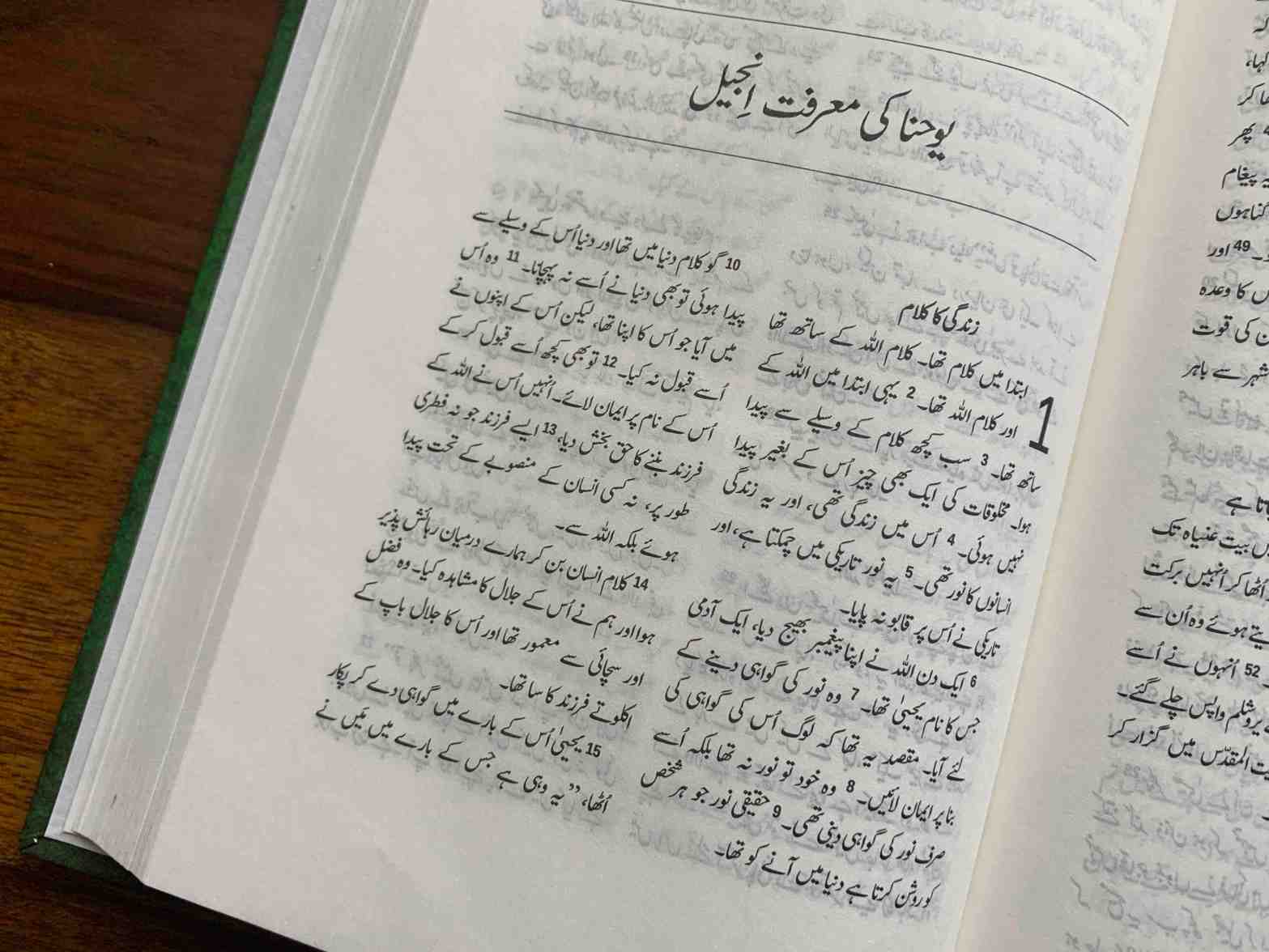
If you want to follow Khudawand Isa al-Masih, then it is vital that you also study His teachings. His teachings are found in the Injeel Sharif. The Injeel Sharif is composed of 27 books with a total of 260 chapters. If you read three chapters a day, you can complete the entire Injeel Sharif in three months. It only takes about fifteen minutes to read three chapters of the Injeel Sharif. Doing this will help you grow greatly in your spiritual life. Please take this challenge to study the Word of God so that you can grow in your spiritual life.
If you cannot read, you can listen to the Word of God. Put an audio recording of the Injeel Sharif on your phone and listen to it every day. Listen to it repeatedly, and your spiritual life will grow significantly. As you grow in studying the Injeel Sharif, you will grow closer and closer to God.
Khuda Hafiz, my friends.
 No Cousins Left
2 thoughts on “Command #4 – Study the Word of God”