
This blog post is a transcript of a teaching that someone made about Step #8 in our discipleship process, Steps 7-14 are the Eight Commands of Masih, which is a simple way of understanding what Hazoor Isa al Masih desires for His disciples. Click here to go to the previous lesson.
Aslammu Alaikum, my friends.
This teaching is the second of the eight commands of Khudawand Isa al-Masih, about a ritual called baptism. In the previous lesson, we looked at the story of a sinful woman repenting and believing when she came to Khudawand Isa al-Masih. In that story, Khudawand Isa al-Masih told a parable, “A creditor had two debtors. One owed five hundred denarii, and the other fifty. Since they could not pay it back, he graciously forgave them both. So, which of them will love him more?” (Luke 7:41-42) The point of this parable was that this sinful woman had an enormous debt to God. God had forgiven her debt through the sacrifice of Khudawand Isa al-Masih. Because she had been forgiven much, she loved Khudawand Isa al-Masih very much.
Have you repented of your sins and believed in Khudawand Isa al-Masih? Repenting and believing is the first step in becoming His disciple. Today, I hope that you will follow Him.
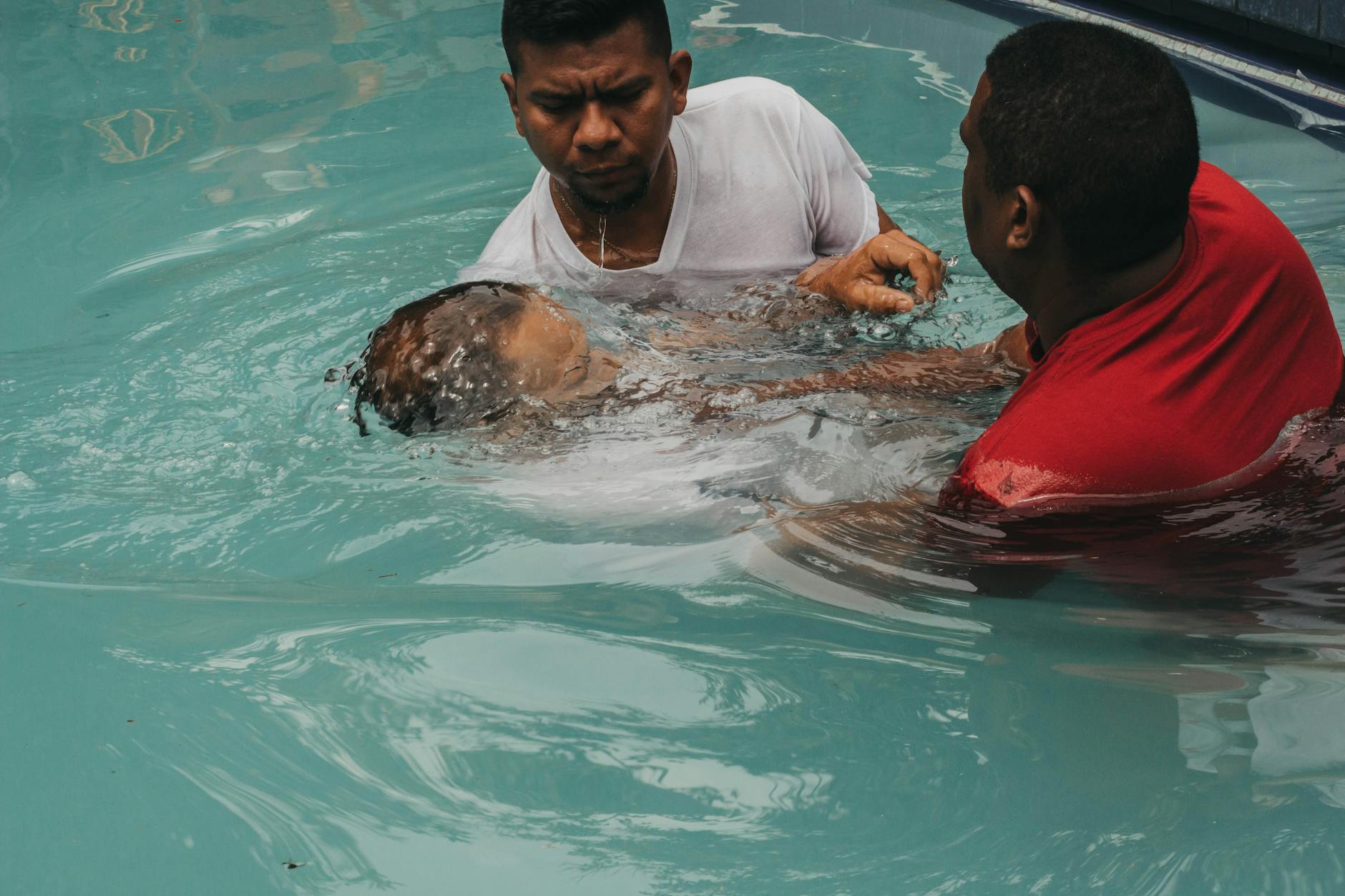
After we repent and believe, followers of Khudawand Isa al-Masih take baptism to show their repentance and faith. Taking baptism is a significant step in becoming a follower of Hazrat Isa al-Masih. In the story today, you will learn more about what it means to take baptism. Today, we will look at a story from Acts 8:26-38 from the Injeel Sharif. In this story, God used a follower of Khudawand Isa al-Masih named Philip to help another man become a disciple of Khudawand Isa al-Masih.
An angel of the Lord spoke to Philip: “Get up and go south to the road that goes down from Jerusalem to Gaza.” (This is the desert road.) 27 So he got up and went. There was an Ethiopian man, a eunuch and high official of Candace, queen of the Ethiopians, who was in charge of her entire treasury. He had come to worship in Jerusalem 28 and was sitting in his chariot on his way home, reading the prophet Isaiah aloud.
29 The Spirit told Philip, “Go and join that chariot.”
30 When Philip ran up to it, he heard him reading the prophet Isaiah, and said, “Do you understand what you’re reading?”
31 “How can I,” he said, “unless someone guides me?” So, he invited Philip to come up and sit with him. 32 Now the Scripture passage he was reading was this:
He was led like a sheep to the slaughter,
and as a lamb is silent before its shearer,
so he does not open his mouth.
33 In his humiliation justice was denied him.
Who will describe his generation?
For his life is taken from the earth.
34 The eunuch said to Philip, “I ask you, who is the prophet saying this about — himself or someone else?” 35 Philip proceeded to tell him the good news about Hazrat Isa al-Masih, beginning with that Scripture.
36 As they were traveling down the road, they came to some water. The eunuch said, “Look, there’s water. What would keep me from being baptized?” 38 So he ordered the chariot to stop, and both Philip and the eunuch went down into the water, and he baptized him.”
What do we learn about Khudawand Isa al-Masih from this story? First, we see that other prophets had come to prophesy about the coming of Khudawand Isa al-Masih. In this story, the eunuch was reading from the 53rd chapter of Hazrat Isaiah alaihissalam, who taught about the sacrificial death of Hazrat Isa al-Masih for our sins. This points to the importance of Hazrat Isa al-Masih. Many prophets told about the coming of Khudawand Isa al-Masih. In fact, there are over 300 prophesies about the coming of Hazrat Isa al-Masih in the Kitab-e-Muquddas from prophets that came from before Khudawand Isa al-Masih.
We also see that Khudawand Isa al-Masih can bring seekers to Himself. This eunuch was out in the wilderness without anyone to teach him. But God saw him, and God sent an angel to send His messenger to this eunuch. Here we see the greatness of God. He knows all things and can bring genuine seekers to Himself.
What do we learn about people in this story? The story of the eunuch should inspire us. Here was a man who lived in a nation that did not worship the true God. However, this man was seeking truth. He was so curious that he travelled thousands of miles from Ethiopia to Jerusalem to seek the truth. In Jerusalem, he had found the Word of God and was reading it, but he had difficulty understanding. Today, many people are seeking God, like this Ethiopian eunuch. I hope that you are one of them. If you are, I hope that you will be ready to follow Hazrat Isa al-Masih, like this man did, as you learn more about Him.
We have two great examples to follow in this story: (1) Philip and (2) the Ethiopian eunuch. Philip was ready to obey God no matter what. When an angel appeared to Philip, he was told to go from a city into the wilderness. He did not question what God commanded. Instead, he obeyed. Then, when he saw the chariot of the eunuch, the Spirit told him, “Go and join that chariot.” Indeed, this was a risky step since the eunuch was a rich man with guards. But Philip immediately obeyed.
In the same way, we should be ready to obey God immediately, no matter what. Also, Philip gave a great example of being prepared to teach the Word of God. He understood the meaning of the passage from Isaiah 53. He explained from that passage how to follow Hazrat Isa al-Masih. This means that Philip knew the Kitab-e-Muqudddas well and was ready to teach from it. In the same way, we need to learn to help others follow God.
The Ethiopian eunuch is a beautiful picture of seeking truth and obedience. First, his desire for the truth was so great that he travelled thousands of miles at great expense in his search for God. He studied intensely, as we see when he was reading the writings of Hazrat Isaiah alaihissalam. He was ready to listen to Philip to learn the truth. Then, when he found the truth, the Ethiopian eunuch was immediately prepared to repent and believe. He demonstrated his faith through baptism. He said, “Look, there’s water. What would keep me from being baptized?” In this statement, the eunuch said that he had repented and believed.
Have you repented and believed in Hazrat Isa al-Masih? If you have, then you should also follow Him in baptism. As with the Ethiopian eunuch, baptism is a special washing when another follower of Hazrat Isa al-Masih immerses us completely in water. Because Hazrat Isa al-Masih is so powerful, we only need to take baptism once in our life. From baptism, we are made clean by His power and grace. In our baptism, we become part of the people of God.
Romans 6 in the Injeel Sharif teaches more about the meaning of baptism. “Or are you unaware that all of us who were baptized into Masih Isa were baptized into His death? Therefore, we were buried with Him by baptism into death, in order that, just as Masih was raised from the dead by the glory of God the Father, so we too may walk in newness of life. For if we have been united with Him in the likeness of His death, we will certainly also be in the likeness of His resurrection.” This passage from the Injeel Sharif teaches the spiritual meaning of baptism. When we go beneath the water in baptism, we die to our old lives with Hazrat Isa al-Masih. Just as He died and was buried in a grave, we also consider ourselves dead to our old lives.
Then, when we come out of the water, we are given a new life with Hazrat Isa al-Masih. Just like when He rose from the dead, we come out of the water of baptism into a new life. Do you want to have a new life with Hazrat Isa al-Masih? Then you should follow Him in baptism. Please contact us if you have questions about how to take baptism to follow Khudawand Isa al-Masih.
Khuda hafiz, my friends
Click here to go to the next step in learning how to follow Hazoor Isa al-Masih.
 No Cousins Left
3 thoughts on “Command #2 Baptism (Pak Guzl)”